


As Scotland’s seafood industry braces for what many expect to be a difficult 2026, the Scottish Ocean Cluster is entering a decisive phase of its own development. After two years of groundwork, evidence gathering and early collaborations, the cluster is now moving from exploration into formalisation – with the aim to define its role, secure long-term backing and convert growing interest into tangible economic value for coastal communities.
The timing is perfect. Donna Fordyce, CEO of Seafood Scotland and lead for the Cluster, told WF that with the country’s fishing sector facing quota reductions, rising costs and persistent structural pressures weighing on the wider industry, the ability to extract more value from existing raw materials – rather than increasing volumes – has become increasingly critical. Against this backdrop, the cluster’s ambition is clear: to help Scotland’s seafood sector improve resilience, profitability and innovation by unlocking higher-value uses for by-products that have historically generated little or no return.
“Scotland’s seafood industry has always been very much about minimal margins,” Fordyce said. “The price of raw materials here is high. Energy and labour costs are high too, making the cost of doing business high. But the waste it generates can be a profit margin, and a lot of companies have recognised this.”
Since launching in March 2025, the Cluster — founded by Seafood Scotland with the Industrial Biotechnology Innovation Centre (IBioIC), Zero Waste Scotland, Opportunity North East and Aberdeenshire Council — has attracted more than 90 expressions of interest from companies across Scotland and beyond, signalling a strong appetite for scaling up by-product utilisation and safeguarding economic value. But while momentum is building rapidly, the Cluster is also acutely aware of its constraints. Funding is currently secured only in the short-term, human resources are limited, and interest from industry is accelerating faster than formal structures can be put in place. The coming months, therefore, will be about sharpening focus – deciding not only what the cluster could do, but what it should do.
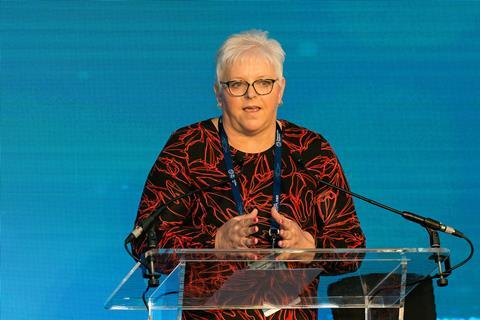
To steer the next phase, towards the end of 2025, the Cluster has appointed Dr Tracy White as Project Manager. She brings invaluable experience at the intersection of seafood and biotechnology, with a history of supporting companies in their development of high-value products from by-products.
White is excited by the growing interest in the Cluster. “We’re almost at the point where we could run before we walk,” she said. “People are so keen to be involved and to get help and support from the Cluster.”
Defining priorities in a resource-constrained environment
At the heart of the Cluster’s near-term agenda and White’s first priority is the development of a robust business plan. This will set out strategic priorities for the next three years, alongside a clear operational plan for the coming financial year. While continued reliance on public funding is expected in the short-term, work is also already underway to explore how the cluster could transition towards a more sustainable, mixed-income model over time.
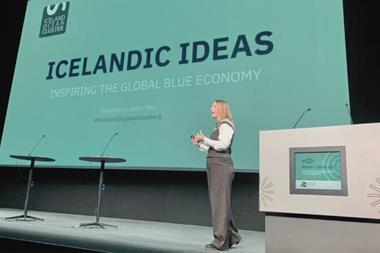
Options being considered include membership contributions, project-based funding, consultancy services and other commercial mechanisms, informed in part by international examples such as the successful Iceland Ocean Cluster. Fordyce stressed the aim is not to replicate Iceland’s model wholesale – Scotland’s industry structure is markedly different – but to adapt lessons around long-term resilience and value creation.
At the same time, those involved are keen to stress that Scotland is starting from a different – and arguably stronger – position. Unlike Iceland at the outset of its cluster development, Scotland already has a well-established biotechnology sector, meaning much of the scientific capability, infrastructure and commercial expertise needed to unlock higher-value applications is already in place.
Industry validation is a central part of this process. In January, the Cluster will host a series of regional engagement events across Scotland, designed to test assumptions, challenge proposed priorities and co-design the Cluster’s operating model with industry.
With more than 90 organisations already signed up to be involved in the Cluster, the emphasis is on consolidation rather than expansion – ensuring the Cluster remains demand-led and commercially relevant.
The early 2026 roadshows will also help the Cluster further validate the data it has gathered on the volumes of by-products being generated across the industry.
“Eventually, it could boil down to support for individual companies, but at the moment, the way we are viewing this is from the perspective of what are the resources, what are the market opportunities, and what are the opportunities for Scotland,” Fordyce said.
From waste problems to system-wide opportunity
While still early-stage, the level of inbound interest has surprised even those closest to the initiative. More than a dozen projects are already underway, with a growing pipeline of additional opportunities emerging organically, often without active promotion. This has reinforced the need for discipline: the Cluster knows it must avoid overextension while building the credibility and capacity needed to deliver.
Current projects span a range of applications, from relatively accessible industrial and agricultural uses of seafood by-products to more advanced biotech opportunities such as enzyme extraction and novel materials. The more straightforward applications are expected to reach market more quickly, largely due to fewer regulatory hurdles, while higher-value biotech pathways will take longer but offer greater long-term upside.
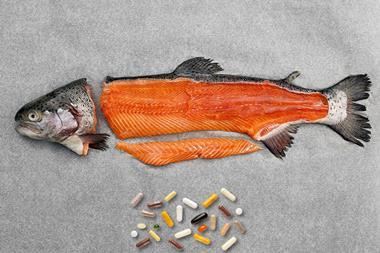
Shellfish by-products have emerged as a particular focus. Unlike finfish trimmings – which often find outlets such as fishmeal and fish oil – shells are more difficult to dispose of and frequently represent a cost rather than a revenue stream for processors. This has driven interest in applications ranging from bio-based materials to construction inputs, positioning shellfish waste as a potential early “proof point” for the Cluster’s approach.
“There are a lot of companies testing the water,” White said. “But what’s ultimately needed is a mindset change – for people to grasp the wealth of opportunities the Cluster presents.”
Crucially, the cluster’s role is not simply to introduce ideas, but to act as a connector, translator and de-risker – bridging the cultural and technical gap between seafood processors, biotech companies, academics and investors. By developing opportunities before taking them to industry, the Cluster aims to move conversations away from abstract concepts and towards clear value propositions grounded in commercial reality, Fordyce explained.
This, she highlighted, represents a shift from an initial focus on solving individual company waste problems to a broader, system-wide perspective: understanding Scotland’s volumes, capabilities and market opportunities in order to attract investment and build scalable solutions.
An essential part of this go-between work is getting the language right when talking to seafood industry stakeholders as opposed to academics and experts on the biotech innovation side, added White. “There’s often a degree of inertia among established companies, and so I think part of the Cluster’s role will be to take these firms by the hand and guide them through what’s possible and the transition process – building a kind of collaborative network around them – so that they can get the most out of the raw materials they are producing.”

How the Scottish Ocean Cluster took shape
The origins of the Scottish Ocean Cluster can be traced back to pre-Covid discussions around circular economy principles and the challenge of adding value to seafood by-products in a sector defined by tight margins. For many processors, income from by-products represented their only profit margin – if any margin existed at all. Some paid for waste removal; others relied on minimal returns simply to break even.
Early conversations therefore focused on low-risk, “low-hanging fruit” opportunities, such as pet food and basic valorisation. Progress stalled during Covid and Brexit, both of which hit Scotland’s highly export-oriented seafood sector hard. But as the industry began to emerge, attention shifted towards automation, leadership development and long-term resilience.
A turning point came when participants in Seafood Scotland’s Future Leaders Programme visited Iceland and were exposed to the Iceland Ocean Cluster’s model of 100% utilisation. In Iceland, sharp quota cuts had forced a fundamental rethink of value creation, driving innovation across food, health, materials and biotech.
Inspired – but mindful of Scotland’s very different industry structure – Seafood Scotland, IBioIC and the Institute of Aquaculture at the University of Stirling convened an initial workshop in January 2023 with stakeholders from the seafood industry, the biotechnology sector and academia to test their appetite for exploring novel valorisation opportunities. More than 80 participants attended – confirming strong interest, while the involvement of a keynote speaker from the Iceland Ocean Cluster, alongside several companies from Scotland’s thriving biotech community, helped crystallise the opportunity.
Progress remained gradual through 2023 and early 2024, constrained by funding and seafood industry pressures. A more structured approach was agreed in 2024, with a small steering group formed by the Cluster’s aforementioned founders.
Parallel workstreams built an evidence base, including international benchmarking, by-product volume mapping, processor audits, compositional analysis of Scottish species, and a review of existing biotech capabilities. Engagement with the Iceland Ocean Cluster deepened through advisory work and participation in a global network focused on adding value to waste.
Throughout, the guiding principle has remained consistent: the cluster must be industry-led, demand-driven and commercially grounded – not a cluster for its own sake.
“Everything we do has to benefit the industry. We’ve also got to support our coastal communities and contribute in terms of economics and innovation – utilising not just the materials that we have but the knowledge, understanding and science that are here as well,” Fordyce said. “This is an excellent opportunity to do that – a huge opportunity for our seafood industry and for Scotland.”
Looking ahead: opportunity, pressure and mindset change
As the Cluster heads into 2026, expectations are high – but so are the challenges. The coming year is expected to focus heavily on education, awareness-raising and building trust, both within industry and beyond. Changing mindsets– moving away from seeing by-products as a problem and towards recognising them as a strategic resource – will be as important as delivering early technical successes.
External pressures are likely to reinforce this shift, White said. “Rising consumer awareness around sustainability, provenance and natural ingredients, combined with increasing scrutiny of supply chains by major buyers, is pushing businesses to demonstrate more sustainable practices.”
These forces are expected to act as a tailwind for the Cluster’s ambitions. For now, it stands at a pivotal moment – buoyed by interest, grounded in evidence, and facing the important task of turning potential into durable impact for Scotland’s seafood sector and coastal economies.