
- News
- Industry Database
- Events
Icelandic Fisheries Exhibition
IceFish Conferences
The largest commercial fishing exhibition in the North. Co-located with the Icelandic Fisheries Exhibition, the IceFish Conferences bring the seafood sector together for three days of insight, innovation and connection. Visit the IceFish Website Visit IceFish Conferences
- Special Reports
By-Product Solutions
Smart, Connected Seafood Processing
Land-Based Aquaculture Technology
Greener Fishing
January-February 2026 March-April 2025 July-August 2025 November-December 2025 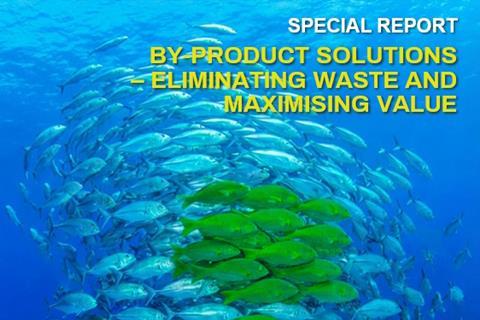



Cutting waste and maximising value Robotics, analytics software and other Industry 4.0 technologies are helping to scale-up productivity New production systems are escalating the industry’s contribution to global food security Fisheries are becoming increasingly responsible and sustainable thanks to new technologies and initiatives Read More Read More Read More Read More
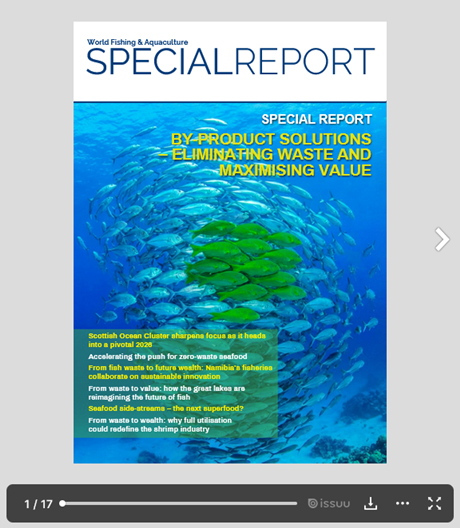
By-Product Solutions
Eliminating Waste and Maximising Value
A word from the editor…
The rapid emergence of seafood by-product utilisation isn’t a sustainability sideshow; it’s becoming a core business strategy. As this latest WF Special Report shows, across geographies as different as Scotland, Iceland, Namibia and North America’s Great Lakes, the same hard truth is forcing change: quota pressure, rising costs and social licence constraints mean the future of seafood lies in extracting more value from what’s already harvested, not in landing more fish.
Arguably what’s most striking is how quickly the conversation has shifted from “waste management” to system-wide value creation. Indeed, there’s a maturing recognition that by-products aren’t peripheral, but potentially the margin. Moreover, in a sector defined by high input costs and thin returns – shells, skins, heads and viscera are no longer liabilities; they’re latent balance-sheet assets waiting for the right infrastructure, partnerships and market logic.
The common denominator is mindset. Full utilisation succeeds when industries stop treating by-products as problems to be disposed of and start managing them as strategic resources. Meanwhile, clusters, when disciplined and industry-led, provide the connective tissue – uniting fishers, processors, scientists, investors and more besides.
For me, what shines through in the report’s content is that in a constrained seafood future, the winners won’t be those who catch more, but those who waste less and value more.
- Jason Holland, Editor, World Fishing & Aquaculture
jholland@worldfishing.net
This is Premium Content
Already a member? Sign in now

Scottish Ocean Cluster sharpens focus as it heads into a pivotal 2026
The popular initiative is moving from exploration to action, while defining its role, priorities and long-term sustainability in a rapidly evolving industry landscape
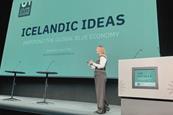
Accelerating the push for zero-waste seafood
With a sharpened strategy, the Iceland Ocean Cluster has set its sights on supporting the global scale-up of the 100% fish revolution
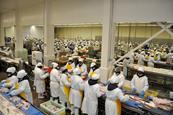
From fish waste to future wealth: Namibia’s fisheries collaborate on sustainable innovation
The southern African country is looking to lead the way in transforming fish waste into valuable new products
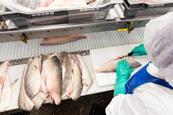
From waste to value: How the Great Lakes are reimagining the future of fish
Once focused narrowly on lake whitefish, the 100% Great Lakes Fish Initiative has evolved into a region-wide effort to rethink how fish are harvested, processed and valued
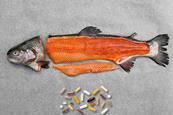
Seafood side-streams – the next superfood?
New data from Hailia reveals certain by-product-based products can far outshine prime fish fillets when it comes to providing consumers with essential nutrients
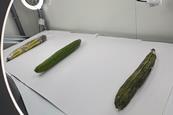
Turning what’s left behind into what comes next
Icelandic blue biotech company Marea is turning overlooked biological side-streams into functional biomaterials, starting with an edible coating made from spent microalgae that extends produce shelf-life while reducing reliance on plastic packaging
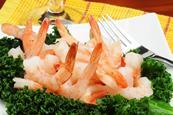
From waste to wealth: Why full utilisation could redefine the shrimp industry
A new, much-awaited industry-backed report examines how residual material from shrimp processing can be transformed into valuable products

