





From waste to wealth: Why full utilisation could redefine the shrimp industry
The global shrimp industry is built on efficiency, scale and export-driven growth. Yet behind every tonne of shrimp that leaves a processing plant lies a substantial and largely underutilised resource: heads, shells and processing residuals that represent both a financial burden and an environmental blind spot.
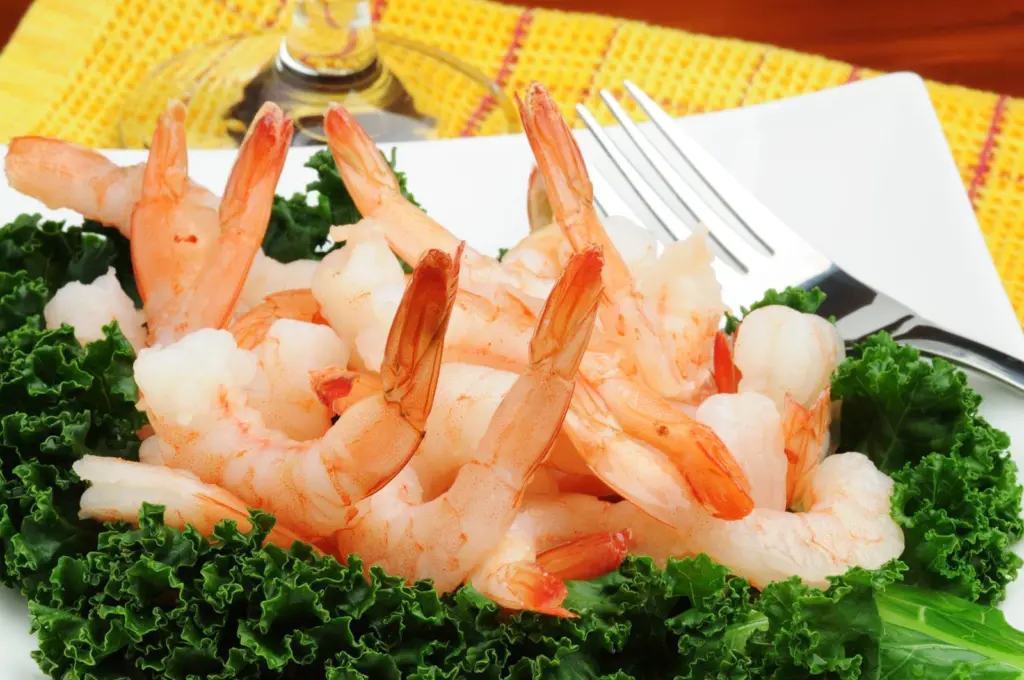
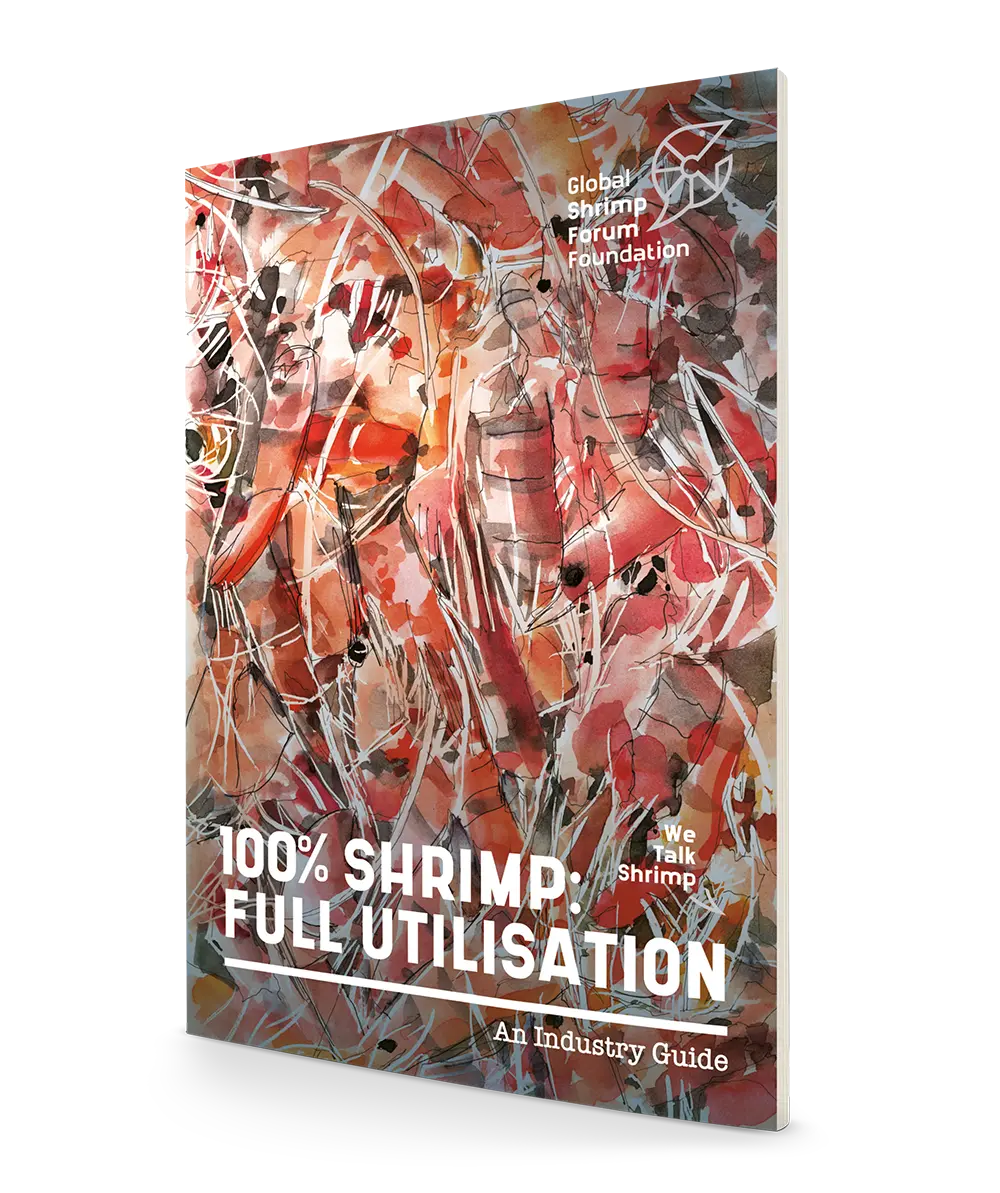
According to 100% Shrimp: Full Utilisation of Farmed Shrimp, a new report published by the Global Shrimp Forum Foundation, more than 827,000 tonnes of shrimp residual material are generated annually across just 10 major producing countries. The real figure, the authors argue, is likely closer to one million tonnes, once China and other producers are accounted for.
Much of this material is still treated as waste – sent to landfill, incinerated, or sold into low-value applications – despite its proven nutritional, biochemical and functional potential. The report, supported by industry interviews, data analysis by Kontali, and expert technical input, makes a clear case: full utilisation of shrimp is no longer a theoretical sustainability ideal, but a practical economic opportunity.
A long-recognised problem, now reaching urgency
The concept of full utilisation is not new. FAO and other bodies flagged seafood loss and waste more than a decade ago. But shrimp has lagged behind other species in translating that recognition into systemic change.
“It’s estimated that up to 30% of shrimp biomass is lost before it even leaves primary processing,” said the report’s author Melanie Siggs during a recent webinar. “That’s lost value, lost nutrition, and lost opportunity. It simply doesn’t make sense – economically or ethically.”
What has changed is context. Shrimp producers are facing sustained margin pressure, volatile prices, rising energy and compliance costs, and growing scrutiny around environmental performance. At the same time, demand for alternative proteins, bio-based materials, and circular economy solutions is accelerating across sectors well beyond seafood.
This convergence, the report argues, makes now the right moment to rethink how shrimp residual material is viewed and used.
From “waste” to “residual material”
One of the report’s deliberate choices is terminology. The authors consistently refer to shrimp heads and shells as “residual material”, rather than waste or by-products.
“Waste frames this material as something negative,” Siggs explained. “In reality, it has economic, nutritional and functional value. Language matters, because it shapes how businesses think about opportunity.”
The term “by-product” was also avoided, due to regulatory associations with animal by-products that can complicate innovation and market development. Residual material, the report argues, is a neutral and accurate descriptor: what remains after primary processing, but still has value to offer.
Where shrimp residuals go today
Drawing on interviews across Ecuador, India, Vietnam, Thailand, Indonesia, Honduras, Mexico, Madagascar, Brazil and Bangladesh, the report paints a consistent picture of how residual material is currently handled.
In many operations, shrimp heads and shells are viewed primarily as a disposal problem. Processors often pay to have them collected and removed, while navigating strict environmental and hygiene regulations.
Where residuals are reused, they typically end up in:
- Landfill or incineration
- Low-value fertiliser or soil improver
- Shrimp meal, often sold cheaply
- Feedstock for chitin and chitosan production, again at low value
While these outlets are preferable to disposal, the report highlights that they rarely reflect the true potential of the material. In most cases, decisions are driven by cost avoidance rather than value creation.
The scale of the opportunity
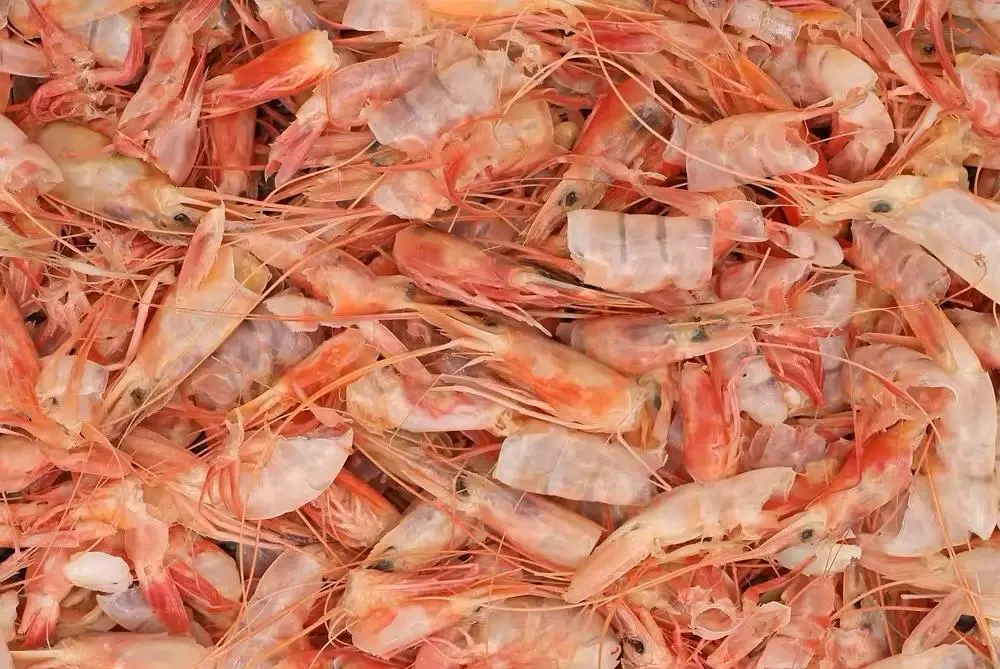
Using Kontali data, the report estimates 827,382 tonnes of residual material from farmed Litopenaeus vannamei and Penaeus monodon alone, across the 10 countries analysed. China was excluded due to data uncertainty, making the estimate conservative.
“Once you factor in China and other producers, the figure is almost certainly closer to one million tonnes,” said Willem van der Pijl, Managing Director of the Global Shrimp Forum.
That scale matters. It determines what kinds of projects are viable, whether investments can be justified, and whether downstream markets can be reliably supplied.
Crucially, the report emphasises that volume alone is not enough. Success depends on aligning scale with market demand, logistics, technology and regulatory frameworks.
Start with the market, not the material
One of the strongest messages running through the report – and reinforced repeatedly during the webinar – is that residual utilisation projects must be market-led.
“You cannot start with the technology and hope the market appears,” said Dr Pedram Dehdari, CEO Ensymm and CSO Karmic Global, a chitosan specialist with more than 25 years’ experience. “The application defines the quality, the process, the scale and the investment. Finished products are where profitability lies.”
The report includes a practical project roadmap, illustrating how companies might progress from shrimp meal to hydrolysates, chitin and chitosan. However, it is explicit that this is not a linear or mandatory pathway.
There is no cookie-cutter model, Siggs said. “Some companies may stop at shrimp meal. Others may partner into food ingredients, fertilisers or packaging. The right choice depends on geography, volume, markets and partnerships.”
Industry in action: turning cost into revenue
For some producers, the shift from disposal to utilisation has already begun.
Vannamei producer Grupo Granjas Marinas (GGM) in Honduras is commissioning a shrimphead meal facility designed to process all of its own residuals – around 10,000 tonnes annually – plus material from third-parties.
“For years, this was an expense,” said CEO Juan Javier Carlos. “We had to pay to get rid of heads and shells. Regulations meant we couldn’t landfill or burn them. It became a risk.”
The project had been discussed internally for more than a decade but was repeatedly delayed due to competing investment priorities and uncertain returns. What changed was a combination of tightening margins and growing sustainability pressure.
“We realised this could turn a cost centre into a revenue-generating operation,” Carlos said. “Shrimp meal is the lowest-hanging fruit. From there, we can look at food-grade ingredients, hydrolysates and eventually chitin and chitosan—but only once markets are secured.”
His advice to others considering similar projects is blunt: secure buyers first, control moisture and protein levels carefully, and do not underestimate operational complexity.
Beyond shrimp meal: high-value applications
While shrimp meal is often the first step, the report devotes significant attention to higher-value applications.
Chitin and chitosan – biopolymers derived from shrimp shells – are among the most widely discussed, with applications ranging from agriculture and animal health to biomedical materials and antimicrobial packaging.
However, the report cautions against viewing chitosan as a guaranteed upgrade.
“There is over a century of research on chitosan,” said Dehdari. “The bottleneck is industrial application. There is no turnkey solution, and many projects fail because they start without a clear application or quality target.”
Successful companies, he noted, tend to integrate bulk processing with finished products and, in some cases, spin off dedicated business units outside their seafood operations.
The report also highlights opportunities in food ingredients and flavour enhancers, natural colourants, biofertilisers and soil conditioners, and animal feed and immunity products
Siggs highlighted case study from Greenland which shows how coldwater shrimp residuals are being transformed into high-value food ingredients through strategic partnerships.
Geography matters
The potential for full utilisation varies significantly by region. Countries such as Ecuador, with large, vertically integrated producers, have the scale to develop in-house solutions. But the report suggests that the greatest need – and perhaps the strongest incentive – lies in regions facing tighter margins and greater structural pressure.
Vietnam, India, Indonesia, Honduras and parts of Central America stand out, particularly where aggregation hubs could serve multiple producers.
“In fragmented markets like India, shared processing hubs could unlock value that individual companies cannot access alone,” van der Pijl said.
Ultimately, 100% Shrimp is not just about technology or products. It is about changing expectations.
“If we expect the whole animal to create value, behaviour changes,” Siggs said. “Companies start wanting to process more shrimp, not less, because they want access to the residual material.”
That shift has implications beyond shrimp. It positions the sector as a supplier of inputs to agriculture, packaging, pharmaceuticals and bio-materials – industries with far greater economic and political influence than seafood alone.
As sustainability, traceability and circularity become core business requirements rather than marketing claims, full utilisation may move from optional innovation to competitive necessity.
The tools, knowledge and early examples are already there. The report’s message is clear: the journey will look different for every company, but the time to start is now.
Related Articles
 PROCESSING & REFRIGERATION
 SEAFOOD
 SEAFOOD