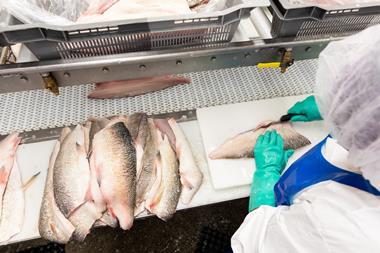




As global seafood demand rises and pressure mounts to make better use of marine resources, Finland’s Hailia is rethinking what many consider “waste”. The seafood tech company has developed an innovative process to transform fish filleting side-streams — including heads, fins and frames — into nutrient-dense food products that rival traditional fillets and even premium supplements. Underpinning these efforts, its latest research reveals that these previously undervalued parts of the fish contain dramatically higher levels of collagen, calcium, vitamin D, iron, zinc and omega-3s than fillets, thus positioning them as a potential “superfood” for the future.
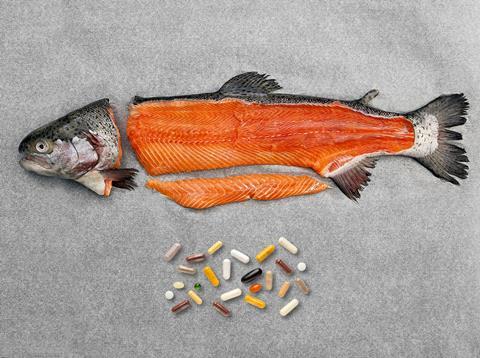
According to Hailia Founder and CEO Michaela Lindstöm, as well as further substantiating investments the company has made in developing its solution, these new findings also point to a major commercial and nutritional opportunity for processors, retailers and health-focused seafood brands – offering the scope to bring new, healthier seafood products to market.
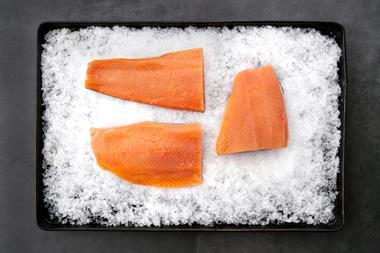
Specifically, Hailia’s analysis has determined seafood products made with salmon fillet side-streams can contain 20 times more calcium, five times more marine collagen, twice the amount of iron, and 10 times more zinc per 100 grams compared to salmon fillet products. As such, these nutrient-dense products can support skin, bone, and iron health directly through food – rather than expensive supplements. Furthermore, it bolsters the understanding that greater utilisation offers a sustainable and viable solution for processors looking to get more food and value from every raw material fish that passes through their facilities.
Proving a hunch
While they were very welcome, the study’s findings weren’t a great surprise to the Hailia team, Lindstöm told WF. “We had a good hunch from the very beginning that this would be the case.”
The study’s findings mirror previous examinations of plant-based proteins and particularly whole grains, whereby the food industry spent decades discarding the most nutritious parts – bran and germ – to focus on starch. “We’ve since learned that the nutrition isn’t in the white starch, it’s in what’s around it. Similarly, when we look at trends within the supplement space, these products are not being made out of fillets – they’re using bones, scales, skin etc. What we need to do more of is get these nutrients – calcium, collagen, zinc – into our foods rather than as a supplement,” Lindstöm said.
“Our data ticks boxes. It’s further affirmation of this discovery. It also shows the potential in the seafood industry to use this often-discarded nutrition. We’re sure processors had similar hunches, so now, with our data supporting these thoughts, and with the technology we’ve developed, processors and manufacturers can unlock the full nutritional potential of previously underutilised fish parts and create higher-value, nutrient-rich products.”
With consumers actively looking to eat the best, most nutritious foods, this is the logical next step, she insisted. “As well as being able to demonstrate the sustainability and profitability advantages of this utilisation, there’s now the extra, huge advantage of being able to market these products as a kind of superfood.”
Proven technology
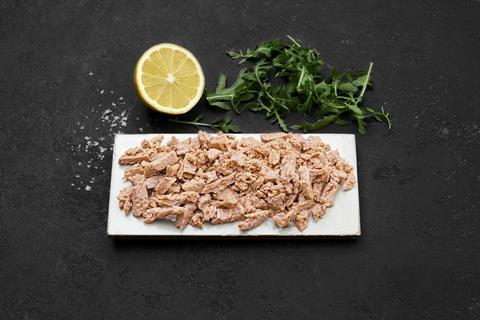
Hailia’s solution takes these often-discarded fish side-streams to produce a homogenised paste. With the familiar texture of cooked fish fillets, this paste can be used in various culinary applications. Also, once cooled, it can be further processed into a number of different product concepts, including fish sticks and canned fish.
In Finland, this technology is already up and running at an industrial scale. A year ago, Hailia partnered with fish processors Kalavapriikki and Hätälä to launch new food products made from salmon and rainbow trout side-streams. Among these was a pulled rainbow trout offering which was launched through Finnish retailer S Group. Sold as an affordable and convenient fish offering designed for busy weekdays, the product resembles cooked strips of chicken or ham.
The beauty of Hailia’s solution, Lindstöm said, is that it can create a fillet-like end-product. “That’s how we differ from the competition in this space – we’re actually making food. I haven’t seen any other food products made of side-streams yet,” she said.
“We’ve had these products in the market for over 12 months now, featuring in big industrial kitchens and foodservice. They’re using it as an ingredient in recipes, just as any other fish would be.
“It’s a very easy-to-use product. It’s very versatile, very affordable, and very sustainable. When you combine all these assets and the message that when you use it, you’re providing 20 times as much calcium and so on, it makes for a much more interesting ingredient.”
Lindstöm further maintains that its arrival in the market is a very timely one, with the seafood industry increasingly looking to target and capitalise on different market segments and trends, and with consumers looking more for foods with specific benefits, such as high protein or rich in omega-3s. Among its applications, Hailia has highlighted its health relevance, particularly in combatting such challenges as iron deficiency which affects up to 1 in 3 women globally.
Side-stream-based products offer a natural way to boost iron intake through familiar foods in our everyday diets, the company advises. It also noted that the marine collagen market has grown rapidly in recent years, driven by global demand from the beauty and wellness industries.
While most collagen supplements today are produced from fish skin and scales that are often imported and processed separately from food production, Hailia’s technology creates an opportunity to meet this demand more sustainably through whole-food applications, it said.
Expanding interest
Essentially, the solution provides the scope for the food industry to provide products that are both affordable and which are so much more nutritious than what’s be made available to markets before, Lindstöm said.
“In the last year – since 2024 – there has been a huge increase in interest in utilising these side-streams for food. We’ve been working hard on this since 2021/22 and talking to global seafood processors since 2023/24 and it’s been a big, big shift. There’s really great momentum going on.”
Rollouts beyond Finland aren’t too far away, and while some markets are naturally slower than others, she believes Europe is ready for this kind of product.
“There’s a lot of pressure on companies in developed markets to lower their footprints and to become more circular. In this regard, I would say Nordic countries like Finland and Iceland are among the most innovative and leading the way, but also certain European markets are very close to using more seafood side-streams, with many other regions of the world not too far behind. This is something of a global movement.”
Lindstöm also conceded that while Hailia has been one of the first movers in this particular space, it expects there to be much more healthy competition in the coming five to 10 years: “We would definitely welcome that. We very much believe in collaborative efforts,” she said.