


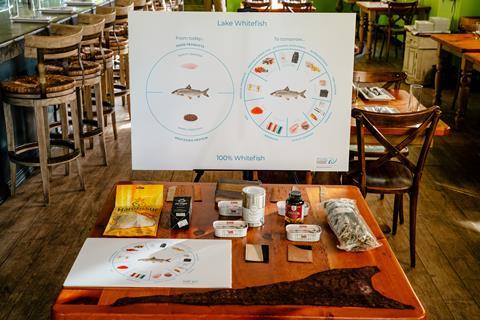
When the 100% Great Lakes Fish Initiative first began, its focus was deliberately narrow. Lake whitefish – commercially important, widely distributed, and ecologically comparable to Atlantic cod – was chosen as a test case. The logic was straightforward: Iceland had already demonstrated what full fish utilisation could look like for cod. Why not explore whether the same principles could apply in North America’s largest freshwater system?
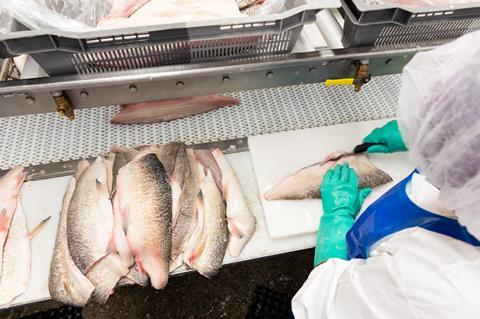
That question turned out to be far bigger than expected, explained the initiative’s lead, John Schmidt, Programme Manager for Great Lakes St Lawrence Governors & Premiers (GSGP).
“We realised pretty quickly that whitefish was only the beginning,” Schmidt told WF. “If we were serious about 100% utilisation, we had to expand – to other species, other sectors, and other sources of material we hadn’t initially considered.”
What followed was a steady, almost inevitable broadening of scope. Walleye, yellow perch, white sucker, and other commercially important species were added to the analysis. Aquaculture – often overlooked in Great Lakes conversations – also entered the picture. Then came sport fishing, where cleaning stations across Wisconsin, Michigan, and Ontario quietly generate thousands of tonnes of separated fish waste every year.
What began as a species-specific project evolved into a systems-level rethink of how fish are valued, processed, and discarded across the region.
Seeing the whole fish
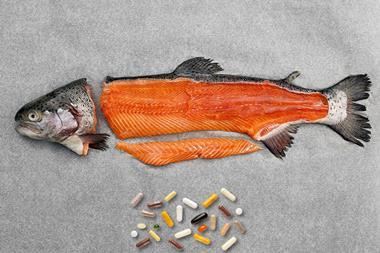
At the heart of the initiative is a simple but radical premise: if a fish is harvested, every part of it should be used. That philosophy, long embedded in Iceland’s seafood economy, has helped transform by-products into engines of innovation – collagen, pharmaceuticals, leather, nutraceuticals, and more.
Translating that model to the Great Lakes required data. With support from a major grant from the Great Lakes Fishery Trust, the initiative shifted from exploration to execution.
One of the most important outcomes was the creation of a publicly accessible, interactive map showing where raw fish material exists across the region. The map identifies where fish are caught and processed, the volumes involved, and what portion ends up as heads, frames, skins, viscera or scales.
“That map changed everything,” Schmidt said. “It tells us what exists, where it exists, and in what form. Once you know that, you can start matching material streams to real, viable products.”
Those products range from high-volume, near-term opportunities – most notably fishmeal and fish oil – to higher-value applications such as collagen and fish leather, which can require more specialised infrastructure. In some cases, the work involves adapting existing industries rather than building entirely new ones, such as exploring whether bovine leather tanneries could pivot to processing fish skins.
Turning good ideas into real impact
Good ideas, however, are not enough. To gain traction with policymakers, investors and industry leaders, the initiative needed to quantify its impact.
A comprehensive environmental and economic benefits analysis provided that evidence. The findings were striking: implementing a 100% fish strategy across the Great Lakes region could annually generate more than CAD 50 million in economic benefits, while avoiding an estimated 7.9 million pounds of carbon dioxide emissions and roughly 300,000 pounds of methane. Additional benefits include reduced landfill use and lower pressure on municipal wastewater systems.
“These numbers matter,” Schmidt said. “They move the conversation from aspiration to action. This isn’t just about doing the right thing – it’s about rural economic development, responsible natural resource use, and infrastructure relief.”
The analysis fed directly into a set of recommendations for governments and industry, including regulatory alignment, cooperative business models, and targeted investment strategies to de-risk early projects. Two recommendations emerged as particularly critical.
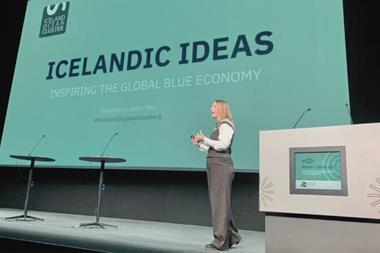
The first is the creation of a formal 100% Great Lakes Fish Cluster – a structured network of companies, researchers, processors, and investors, inspired by the Iceland Ocean Cluster model.
“Right now, there’s incredible innovation happening, but it’s fragmented,” Schmidt said. “It feels like random acts of kindness. A cluster gives you coordination, shared learning, and eventually the ability to invest collectively.”
The second priority is the development of a regional fishmeal and fish oil facility. Data from the mapping exercise show that sufficient volumes of raw material already exist within viable transport distances to support such a facility.
“We see fishmeal and oil as the engine that can pull the rest of the system forward,” Schmidt said. “It creates a reliable home for large volumes of material immediately, while higher-value products can be pulled out as markets develop.”
Why governments are paying attention
The initiative has resonated with policymakers because it aligns with multiple priorities at once, Schmidt confirmed.
Commercial fisheries are often located in rural, economically disadvantaged communities. Full utilisation offers a way to strengthen those livelihoods without increasing fishing pressure. Aquaculture, by contrast, represents a high-tech growth sector that states and provinces are eager to support.
Environmental motivations vary by jurisdiction. Ontario faces acute landfill capacity constraints. Ohio remains focused on nutrient loading and harmful algal blooms in Lake Erie. Sport fish waste, often ground into municipal wastewater systems, imposes real costs on local governments and treatment facilities.
“The environmental benefits aren’t abstract,” he said. “They show up in full landfills, strained wastewater plants, and lakes that people care deeply about.”
Importantly, the initiative has proven politically durable. Clean water, waste reduction, and economic resilience resonate across the political spectrum. Fishing, after all, is part of the cultural fabric of the Great Lakes region.
Communities at the centre
Community engagement has been central from the outset. To date, 44 organisations – including commercial fishers, processors, aquaculture operators, tribal groups, and small businesses – have signed the 100% Great Lakes Fish Pledge, committing to full utilisation.
The initiative has supported hands-on fish leather workshops with tribal communities, product prototyping for collagen and protein hydrolysates, and exploratory work on unconventional products such as fish milt and alternative bait sources.
In parallel, Duke University MBA students were brought in to identify small- and medium-scale business opportunities tailored to local processors and tribal enterprises – ideas that are proven elsewhere and ready to be replicated.
An online decision-support tool now allows processors to input their own data – species, volumes, by-products – and receive guidance on which valorisation pathways may be viable for them, along with relevant contacts and resources.
Momentum and the road ahead
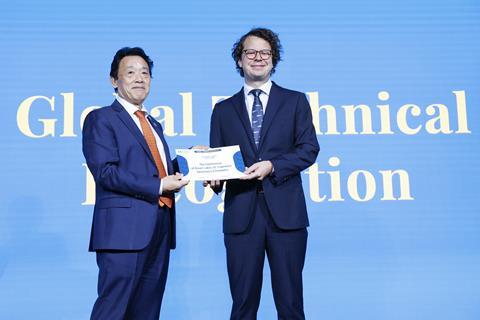
In the past year, the initiative has received both a Seafood Industry Climate Award and high-profile recognition from the United Nations. That external validation has helped unlock new conversations with funders, partners, and international peers.
“It tells people this work is serious,” Schmidt said. “It’s not speculative. It’s grounded, credible, and ready to scale.”
Next steps include formalising cluster governance models, advancing business planning for fishmeal and oil, expanding the raw-material map to better capture aquaculture and sport fishing volumes, and continuing product prototyping. Engagements with international cluster leaders in Iceland – and potentially Wales – are also planned.
The groundwork, Schmidt stressed, has already been laid.
“We understand the fish. We understand the volumes. We understand what they can become,” he said. “What we need now are entrepreneurs and investors willing to take the next step.”
For the Great Lakes, the opportunity is clear: to move beyond a linear model of harvest and discard, and toward a circular seafood economy where nothing goes to waste – and where value is created not in spite of constraints, but because of them.
Topics
- 100% Great Lakes Fish
- 100% utilisation
- Business & Finance
- By-product solutions
- By-products
- Circular Economy
- Fish Oil
- Fisheries
- Fishmeal
- Great Lakes St Lawrence Governors & Premiers
- Iceland Ocean Cluster
- Insight
- Interviews
- New Horizons
- Processing & Refrigeration
- Seafood Industry Climate Award
- Sustainability
- United Nations