



Across global biotechnology and food production systems, vast volumes of biological material are generated every day that never reach consumers. In many cases, these side-streams are treated as a problem to be managed rather than a resource to be developed. As pressure mounts to reduce waste, cut plastic use and improve food system efficiency, those overlooked materials are increasingly being re-evaluated.
In Iceland, blue biotech company Marea is working at the intersection of microalgae, circular bioeconomy and post-harvest food systems, with the explicit aim of changing how biological “waste” is perceived and used. Rather than focusing on primary production, Marea’s innovation lies in what happens after high-value compounds have already been extracted – specifically, in turning spent biomass into functional industrial materials.
The company’s first commercial application is an edible coating for fruits and vegetables, derived from microalgal (seaweed) biomass left behind after the extraction of astaxanthin, a high-value antioxidant used in supplements and cosmetics. Invisible, tasteless and applied directly at producers’ facilities, the coating is designed to extend shelf-life and reduce reliance on plastic packaging, without requiring major changes to existing post-harvest workflows.
Behind that first product sits a broader ambition: to demonstrate that by-products from algae, marine harvesting and even brewing can form the basis of a scalable biomaterials platform capable of supporting more resilient and efficient food systems.
Unlocking value from the other 95%
Natural astaxanthin production offers a clear illustration of the challenge Marea is addressing. Microalgae are cultivated under strict food-grade standards, yet the antioxidant extracted represents only around 5% of the total biomass produced. The remaining 95% becomes a residual stream that, for most producers, carries a cost rather than a value.
“From the perspective of microalgae producers, the logic is quite simple,” Julie Encausse, Marea’s founder and CEO, told WF. “Astaxanthin is highly valuable, but everything that remains after extraction is something they currently have to pay to dispose of in a compliant way.”
While small amounts of the residual biomass may be used as fertiliser, Encausse argues this is neither a scalable nor an efficient use of such complex material. “Biomaterials of this quality and complexity are significantly undervalued if fertiliser is the only available outlet,” she said.
Marea has developed a patent-pending, industrially scalable process that repurposes this spent microalgal biomass by separating and valorising different fractions, ensuring each component has a defined purpose. To the company’s knowledge, this is the first time this type of residual stream from astaxanthin production has been transformed into a functional biomaterial at scale.
In doing so, Marea positions itself between two value chains. On one side are microalgae producers seeking to reduce waste and disposal costs. On the other are fruit and vegetable producers facing mounting pressure to reduce plastic use while maintaining shelf life and product quality.
Why edible coatings, not bioplastics?
When Marea was founded, its initial research focus was on macroalgae-based bioplastics. That work gave the team a deep understanding of biomaterials, processing constraints and the realities of scaling alternatives to plastic. As the field evolved, Encausse and her team became increasingly deliberate about where Marea could make the most differentiated contribution.
Reducing reliance on plastic packaging has always been central to Marea, Encausse said. “But as the field matured, and as we watched the rapid progress of companies such as Notpla, Sway and Zero Circle, we became very deliberate about where Marea could make the most meaningful and differentiated contribution.”
The answer was edible coatings. The functional properties of spent microalgal biomass made it particularly well suited to coating applications, while coatings offered a way to reduce plastic use without simply replacing one packaging material with another.
For fresh produce, plastic has long delivered clear advantages, particularly in moisture retention and shelf-life extension. At the same time, regulators and consumers are increasingly questioning the ubiquity of plastic packaging, especially for short-lived products such as fruits and vegetables.
“The challenge we were most determined to solve was how to maintain freshness without defaulting to plastic,” Encausse said, “while also reducing potential long-term exposure to food–plastic contact.”
Practicality was a central design principle from the outset. The coating system was developed to be economical, easy to operate, easy to clean and energy-efficient, with application via simple spraying or brushing at producers’ sites. “If a solution cannot be integrated seamlessly into existing post-harvest workflows, it won’t scale,” Encausse said.
Performance without plastic
Marea’s edible coating, marketed as ICEBOREA, forms a breathable barrier around fresh produce, slowing moisture loss and spoilage without creating the oxygen-limited conditions sometimes associated with plastic films.
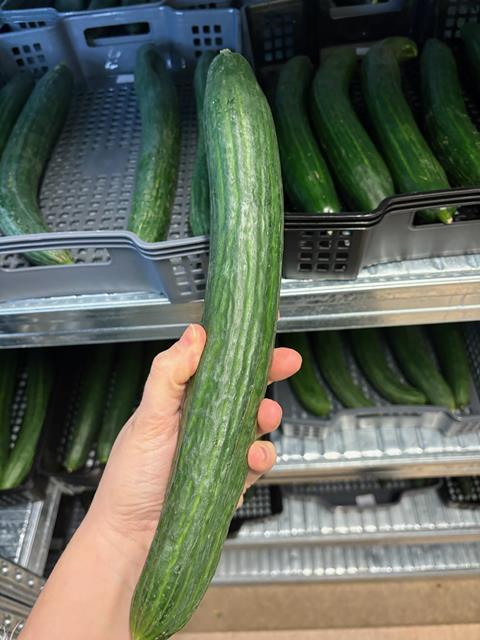
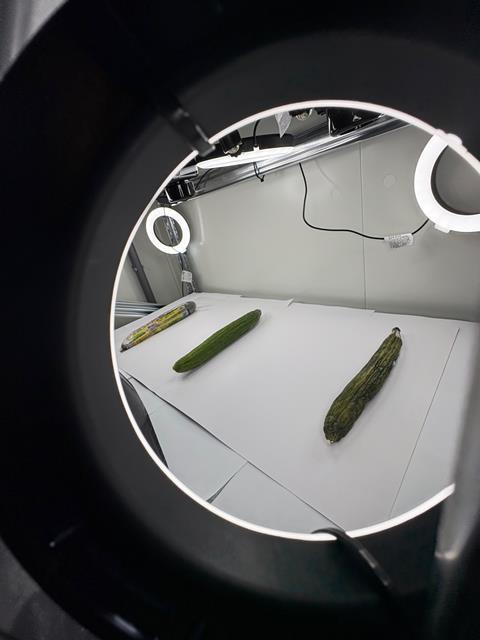
In trials with cucumbers, plastic wrapping prevented around 90% of moisture loss compared with uncoated produce. ICEBOREA achieved roughly 70% moisture preservation – well within the expected performance range for edible coatings and a substantial improvement over untreated controls.
Shelf-life results were more nuanced. Uncoated cucumbers remained acceptable for around seven to eight days under cold-chain storage. Those treated with ICEBOREA showed an additional five to six days of shelf-life. Plastic-wrapped cucumbers extended shelf-life slightly further, largely due to greater firmness retention.
However, differences emerged during longer storage. Plastic-wrapped cucumbers began showing signs of decay between days 14 and 16, alongside an earlier decline in vitamin C and phenolic compounds. Coated cucumbers, by contrast, retained nutrients more effectively and showed lower decay rates over time.
“Plastic remains the strongest option for absolute moisture retention,” Encausse said. “But it is not necessarily the best option for long-term produce quality. What our ICEBOREA coating offers is a balanced performance: meaningful shelf-life extension, improved nutritional retention, reduced spoilage, and the ability to achieve these outcomes without relying on conventional plastic packaging.”
Further formulation work is ongoing, particularly around antifungal performance, with the aim of narrowing the remaining performance gap while preserving breathability and environmental benefits.
Learning from the value chain
Marea is currently working with three use cases for its edible coating, starting with an Icelandic cucumber producer handling around 500 tonnes annually. Market trials are scheduled for summer and autumn 2026, once the company’s production facility in Iceland is fully operational. The facility will be powered entirely by local renewable energy, drawing on hydropower.
Working closely with producers has reinforced for Marea how complex post-harvest value chains really are. Decisions are rarely made by a single actor, and even small changes can ripple across infrastructure, logistics, distribution and retail.
“Innovation often stalls at the first reaction of ‘this would mean doing things differently’,” Encausse said. “When systems are functioning and margins are tight, resistance to change is understandable.”
To date, Marea has evaluated more than 4,000 cucumbers across thousands of formulation iterations and shelf-life tests. Progress, Encausse said, depends not only on technical performance but on producers, distributors and retailers willing to engage, test, fail and iterate alongside technology developers.
“That kind of partnership is what makes meaningful market trials, and eventual adoption, possible,” she said.
Beyond microalgae: hops and sea urchins
While microalgal biomass remains Marea’s first commercial focus, the company has expanded its approach to other side-streams, including spent hops from brewing and sea urchin processing residues, working with partners in Germany, Norway and Australia.
Deciding whether a side-stream is suitable for Marea’s platform involves multiple criteria. Volume availability, consistency of supply, seasonality, logistics and pricing all matter, as does whether the material represents a genuine problem for producers.
“In the case of sea urchins, for example, they are a serious environmental and economic issue in certain regions of Australia, while being largely irrelevant in others,” Encausse said. “Understanding where the problem exists, and for whom, is essential before anything else.”
Only once practical constraints and compositional variability are understood does Marea evaluate potential applications, based on functional properties and real market demand. “The material has to solve a problem, technically and economically,” she said.
A transferable model
Although Marea is rooted in Iceland, transferability beyond Europe is central to its strategy. Encausse argues that the dynamics seen in microalgae production – where attention is focused on one high-value output while residuals are overlooked – are repeated across aquaculture and agriculture globally.
Rather than building a single-material company, Marea has positioned itself as a biomaterials platform, designed to identify undervalued side-streams and match them to meaningful, scalable applications.
Redefining waste
Looking five to ten years ahead, Encausse hopes Marea will be known not just for specific products, but for helping shift perceptions around biological waste.
“I want our work to help change how biological ‘waste’ is perceived – from something to be managed or disposed of, to something with latent value waiting to be unlocked,” she said.
For Encausse, success is measured as much in mindset change as in market penetration: moving from linear systems toward ones that extract more value from existing resources.
“Efficient and resilient food systems will require biotechnology,” she said. “They will require us not to be afraid of chemistry, of coatings, of new materials, or of rethinking how we preserve and protect food.”
In a food system under pressure from climate, regulation and consumer expectations, Marea’s work suggests that some of the most promising solutions may already exist – hidden in what is left behind.