



Traceability tech targets seafood processing
In Canada, work is underway to help seafood processors digitise their data in real time. Hopes are high that this will improve the profitability and sustainability of a critical player in the global seafood supply chain.
Amidst unprecedented consumer demand, the need for the global seafood value chain to scale up productivity is becoming increasingly important. One way in which it can do this is by incorporating technology such as analytics software, robotics or artificial intelligence (AI) to boost performance in quality control and improve efficiency, traceability and transparency.
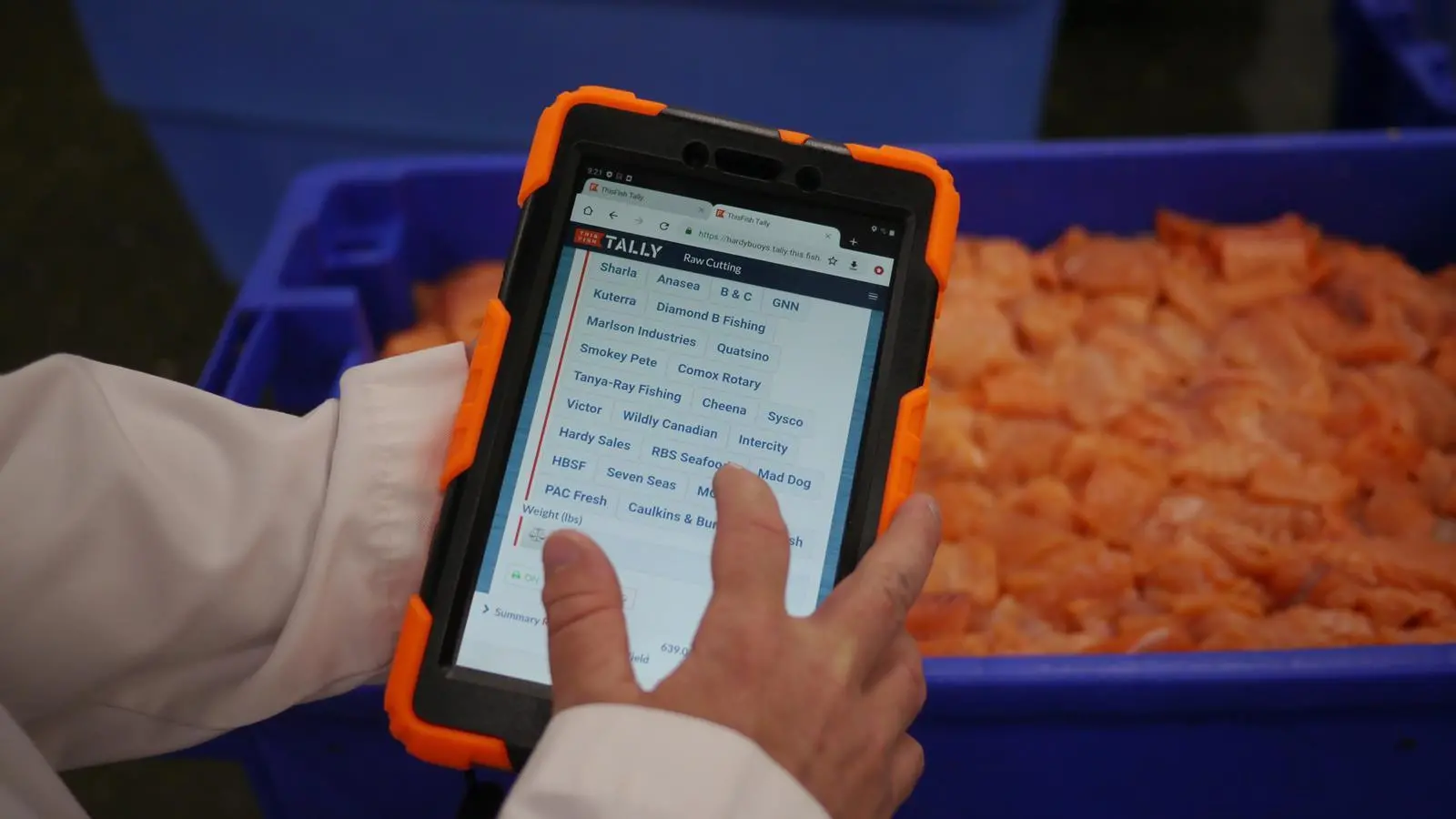
Canadian artificial intelligence firm ThisFish Inc. is working to digitise seafood processing with its new software Tally. According to CEO and Co-Founder Eric Enno Tamm, Tally was born as a result of gaps in the seafood supply chain, particularly among processors.
“I would describe seafood processors as a linchpin in the supply chain,” he said. “There are millions of farmers and fishermen on one side, and millions of retailers, restaurants and consumers on the other. In the middle, there are around 23,000 processing firms engaged in global trade, but most are still analogue and not very digitised at all. If you are going to have a transformative effect on the global seafood supply chain, the best place to start is the seafood processor.”
Data collection improvements
Tamm and his family have been in the commercial fishing industry in Canada for years. Having grown up in a small fishing village on the west coast of Vancouver Island, Tamm himself worked as a buyer of fish and in seafood processing plants.
Over the years, he saw first-hand the challenges involved in providing high quality seafood to the end consumer. In 2017, Tally was developed to help seafood processors reduce the cost of data collection and management, strengthen process control and improve compliance through strong traceability.
Customers can use it to digitise the unloading of fishing vessels, conduct quality control checks and digitise lab quality control and shipping logistics, Tamm said.
“One of Tally’s benefits is more efficient data collection,” he said. “A quality control manager may spend a couple of hours at the end of the day taking paper records, converting them into Excel and managing Excel records to produce reports. With Tally, everything is automated. Press a button and a record is generated.
“Also, if you don’t have strong traceability and can’t meet MSC or ASC requirements, you will lose opportunities to sell in particular markets, where often very strong traceability and compliance are required. Tally brings much more transparency to processing.”
It also offers real-time control over the many steps involved in processing.
“In a tuna cannery, for example, if there is a production problem on a Monday morning, this may not be picked up until Tuesday afternoon because paper records are given to someone who works a graveyard shift, digitises the records and puts them into Excel,” said Tamm.
“On Tuesday morning, a manager collects, analyses and puts together the Excel spreadsheets before realising that mistakes were made the previous day. With Tally, digital data goes into the system in real time so that supervisors and workers can spot and flag mistakes as they happen. This real-time nature gives people a sense that their business is under control, that they can see what’s happening in their factories, when and why.”
Optimised, predictive yields
ThisFish has also introduced TallyBot, an AI-enabled app that can be embedded in Tally for automating processes, predictive analytics and computer vision.
TallyBot can be programmed with standard algorithms for cost accounting, data validation and other calculations, and analyses the large datasets created by Tally to help processors maximise yields, improve quality and reduce data errors and non-compliance.
ThisFish has also developed a machine-learning algorithm for yield prediction in a tuna cannery and salmon processor. Based on the raw materials that each processor purchases and their previous production, the algorithm can predict what their yields will be and help them understand how they are performing each day, whether they are above or below the predicted amount of yield and by how much.
While hoping that this type of algorithm will mitigate low yields and waste as a way to improve sustainability, Tamm and his team are looking forward to the launch of their next product, Tally-Vision, at the Boston Seafood Show in March 2023.
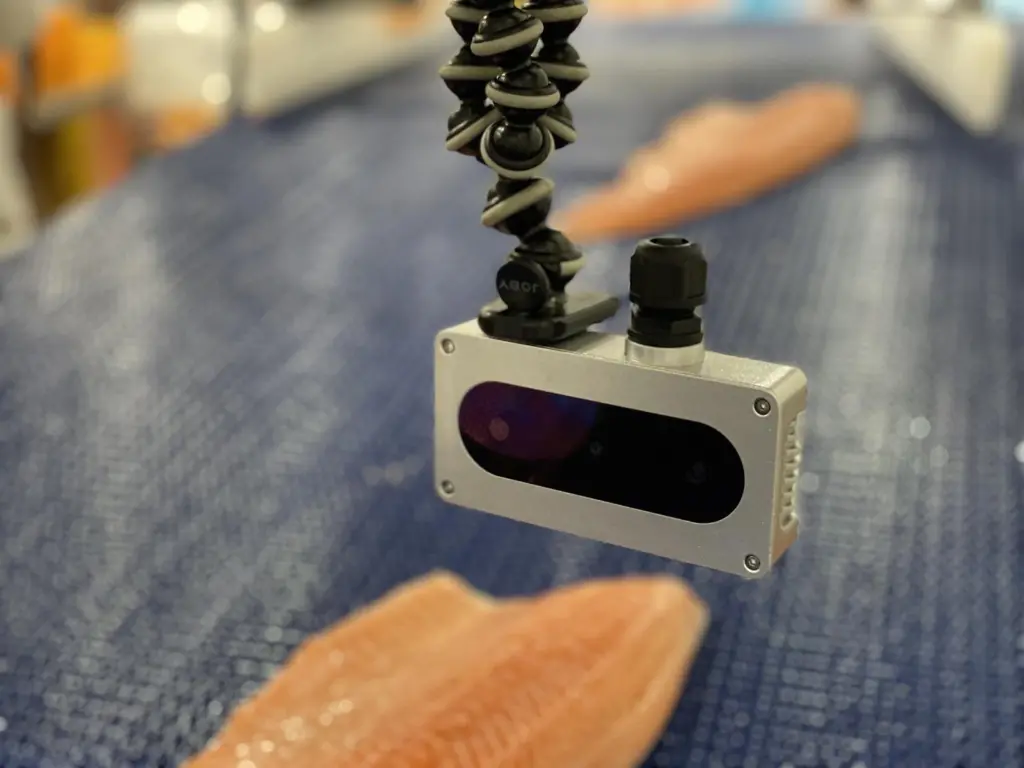
Tally-Vision is a video camera that is integrated into the Tally software and placed over a conveyor belt. The camera photographs every fillet before classifying them according to their size, colour distribution and five types of defects, such as gaping and bruising.
The number of fillets that have been processed during a certain time period, and how many were defective during that period, can also be checked. The data is then collected and sent to TallyBI, the business intelligence or analytics dashboard.
If yields are shown to have been negatively impacted, data can be sent back to the processor to determine what practices and conditions might have caused this. Tamm hopes that one day, this can extend to aquaculture to improve control over fish feeding and grow-out.
“We would like to take large datasets on fillet quality and link them back to all the data around farm practices, such as feed, farm location, handling during grow-out and any genetic cohort,” he said. “Over time, a machine learning algorithm can tease out what might be causing certain defects and why. Feeding this back to farms will be extremely helpful.”
Top down, bottom up approach
With a growing market and regulatory demand for transparency in seafood products, an increasing number of consumers want to know more about the sustainability and social responsibility of the products that they buy. Tamm says that for more companies to get on board with software like Tally and improve their transparency, a top-down, bottom-up approach is key.
“If you’re a company president who wants to go digital, but your production manager and quality control manager are resisting, you must convince them of the benefits of the technology,” he said. “You need a common vision of where you want to go. Usability is also important. If workers find the software difficult to use, there will be more resistance, while poor user interfaces can slow things down.
“You also need at least six months to a year’s worth of digital data to get your system working effectively. Determine your core business objective as well. Are there problems with warehouses or cold storage? Does inventory control need to be tighter? Focus on these and keep the scope of initial digitisation narrow to begin with.”
With more companies also using automated machines and equipment, Tamm believes that in future, the demand for data on the uptime and downtime of such machines will rise, leading to potential opportunities in the realm of the Internet of Things (IoT) and the installation of sensors on factory equipment to determine how efficiently equipment is being used.
Going forward, Tamm and his team plan to focus on potential IoT opportunities while continuing to develop Tally with existing customers.
Related Articles
 AQUACULTURE
 PROCESSING & REFRIGERATION
 PROCESSING & REFRIGERATION