

‘A people business’
Alongside its land-based processing and freezing solutions, Aalborg, Denmark-headquartered Carsoe has become a leader in the provision of onboard fish and shellfish processing equipment. It’s a sector that it became fully-invested in almost 10 years ago with the summer 2013 acquisition of bankrupt Carnitech’s seafood activities.
It’s a move that has paid off. After two years’ mainly conducting overhauls and refits on small vessels, Carsoe took some strategic steps with regards to advancing this new business area and capitalising on the expertise that existed within the former Carnitech team. Today, alongside its considerable Danish operations, the company has also built a strong business in Seattle to support the North American fleets, while its UK and Norwegian production facilities specialise in plate-freezers and palletising and packaging technologies, respectively.
Since 2015, with the core strategy to be a complete factory supplier, it has ensured that the business incorporates as many of the components that such a plan requires, explained Carsoe Group Sales Director Jeppe Christensen.
To this end, Carsoe recently joined forces with fellow Danish company Intech, which contributes with a large customer base within shrimp and fresh fish vessels as well as land-based processing. Intech had previously acquired KM Fish Machinery with its strong portfolio of KM fish gutting machines as well as equipment for land-based warmwater shrimp processing.
Of course, the big difference between providing land-based and onboard solutions is space. While land-based processing has the possibility of being able to allocate more square metres to operations as needed, a lot more planning is usually required for operations on the water.
“What’s crucial for vessels is having the ability to combine various processes on production lines in the most energy-effective and logistically-appropriate ways,” Christensen said. “And because these vessels don’t have unlimited power, it’s also key that they can incorporate different energy sources.
“It’s equally important that the factory working environments are as good as they can be for the crews onboard, and that everything runs as efficiently as possible, including utilising all of the space available and optimising the output.”
Market shift
Prior to the Ukraine conflict, the contracts won in Russia had been a major contributor to Carsoe’s growth in terms of market share and volume. The opening of its Seattle arm also helped greatly in this regard – giving it greater expertise in terms of onboard surimi production in particular.
But a lot has changed in the past two years, Christensen said. A lot of Carsoe’s more recent progress has been in the Norwegian market. “We are seeing quite a few orders there, and we’ve also been strong in the Greenland area – both with Greenland and Canadian vessels, as well as with a few Icelandic ones too.”
Though it’s not every day that a shipowner builds a new vessel (a typical order timeline can take anything between six months and 2.5 years), some of the larger companies have been building a series of new vessels and Carsoe has landed a few such contracts in recent times, including from Polar Seafood, the Russian Fishery Company (RFC) and Royal Greenland.
Nevertheless, with a newbuild project, often the period between the first down payment and the first fishing trial being executed is approximately 26 months.
“It’s quite a long relationship that you establish with the customer, and quite a few are returning customers because of that relationship and mutual trust that comes from such projects,” Christensen said. “This is a people business. While you need to have everything in order to be chosen as the preferred supplier – the right products, the right combinations, the right references, a history of successful projects etc., we’re not alone in this business area, so what’s also then crucial is the people – and the track records and longstanding relationships that they have with the customers.”
Innovative solutions
Among its most recent contracts, Casoe is providing the complete factory solution for the combined shrimp and crab processingvessel Ny Frøyanes, owned by Norwegian fishing company Ervik Havfiske. This “unique project” will see Ny Frøyanes haul crab traps through a moonpool, direct to the processing area, Christensen said.
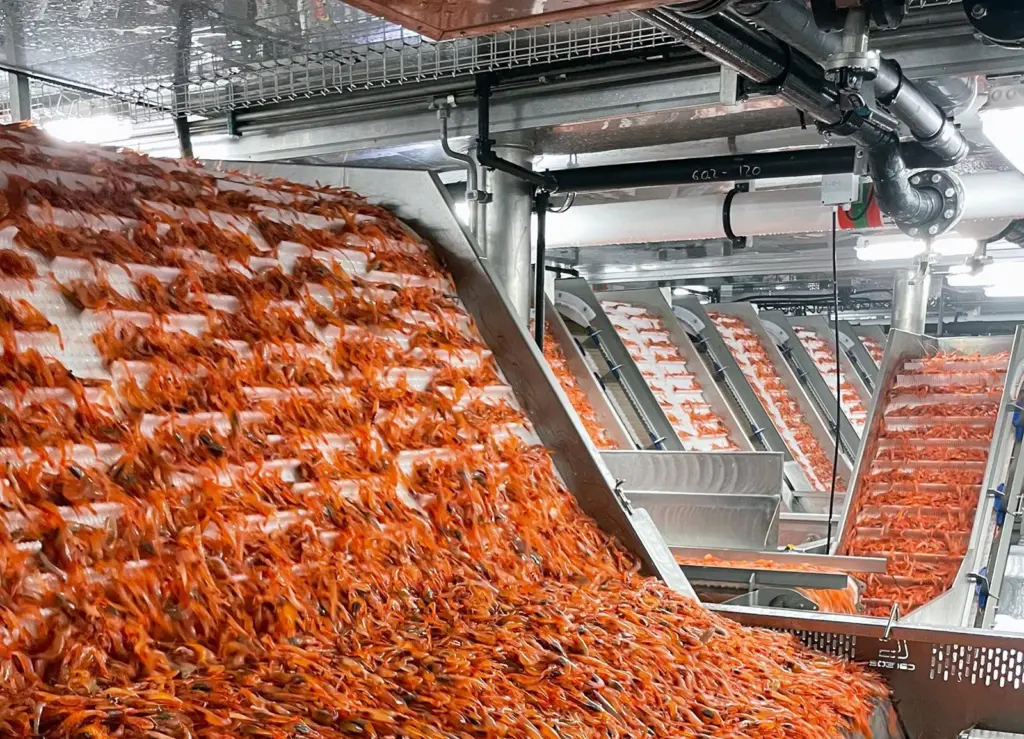
Together with innovative crab cooking equipment that eliminates steam from the factory, the crab line also includes a butchering station, and the grading and cleaning, freezing and glazing of crab legs, while the dual shrimp processing line includes by-catch separators, and grading and cooking, with the cooked shrimp frozen in two IQF freezers. In addition, five vertical freezers ensure a strong capacity for block-frozen shrimp.
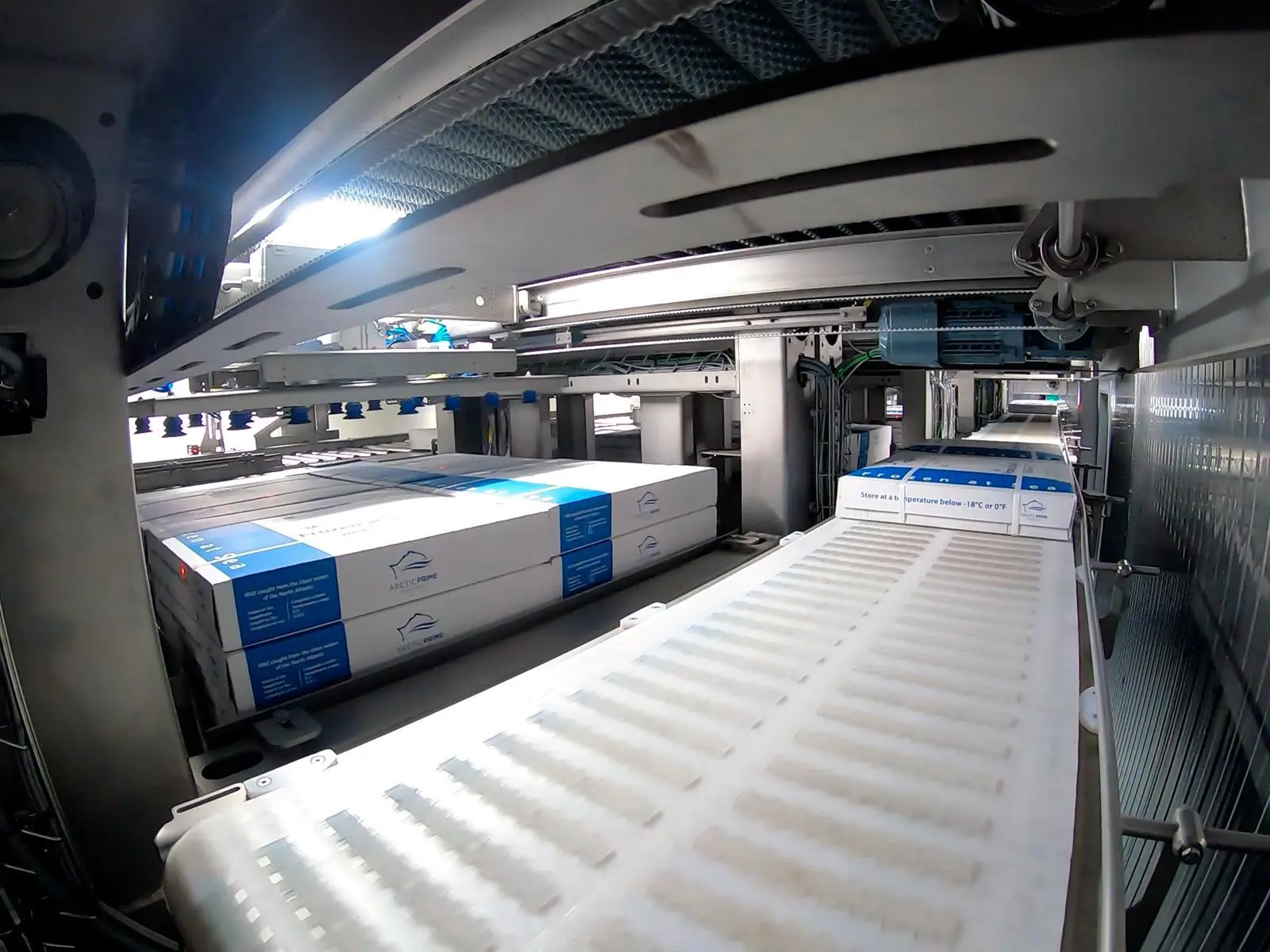
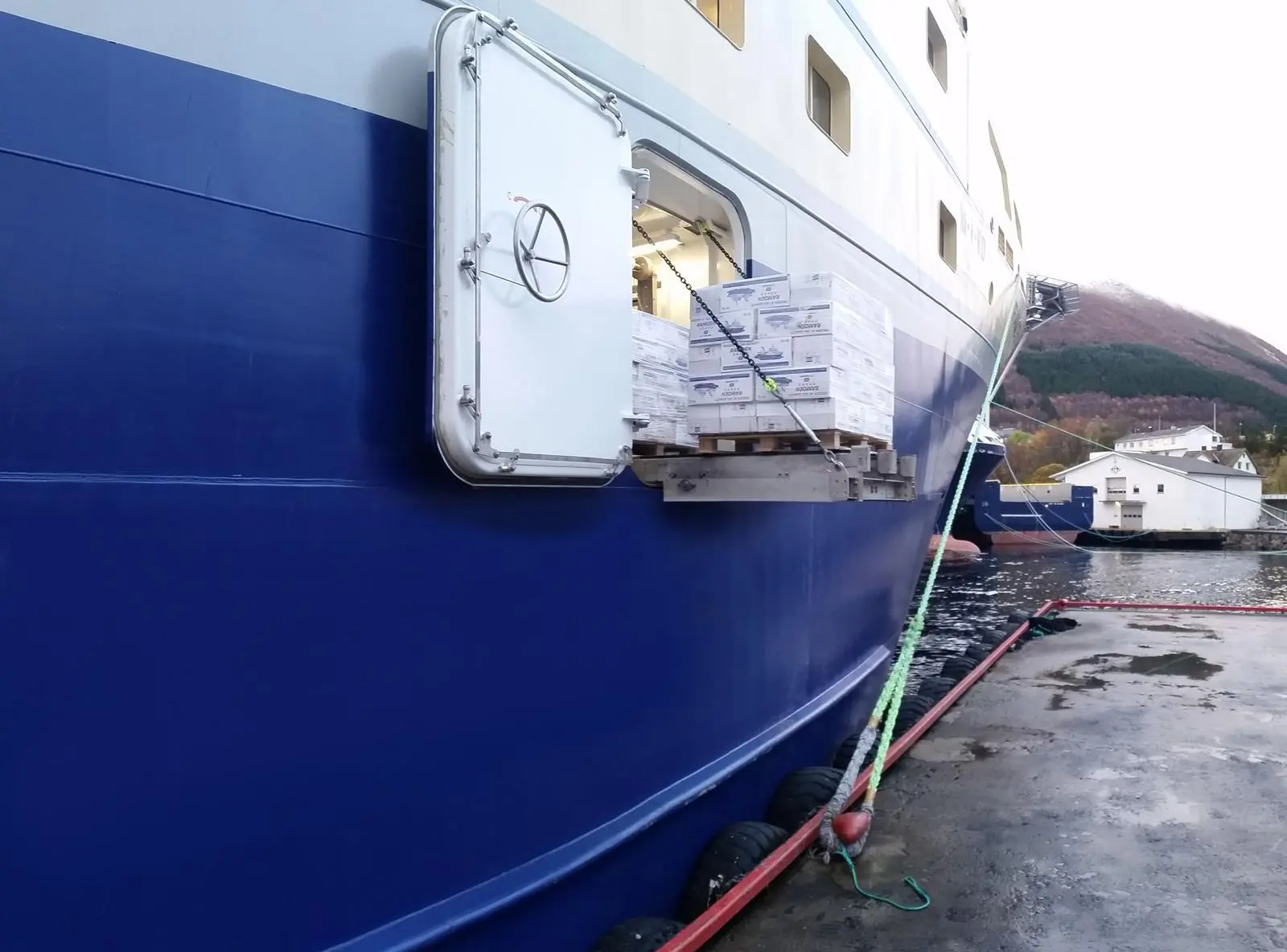
All finished products are routed to a compact solution for automatic sorting. Each product type is then palletised to ensure minimal onshore handling. The factory deck also includes an elevator to the cargo hold as well as an offloading elevator with flexible offloading height towards quayside, compensating for high and low tide.
The incorporation of elevators to move pallets to the cargo holds is saving a lot of space on the factory deck and is encouraging more vessel types to have palletising onboard, Christensen explained.
“Historically, no company has been willing to give away 10 square metres away to have palletising, but a lot of space can be saved and put to other uses if it can be combined with automatic handling and storing.”
Optimising value
Carsoe has also broken into the Norwegian longline sector with an order to outfit the processing deck of the new Leinebris. For this project, a processing deck has been designed with a flow of raw materials through heading and gutting stations to some V16 freezers.
High-capacity freezers are designed to make the fullest possible use of the space available and the automatic bottom unloading reduces manual labour and streamlines the production flow. Frozen blocks discharged from the freezers are passed to automatic palletising and handling, with integrated offloading elevators allowing discharging direct to the quayside with no need for cranes or additional manpower.
“This is a full-blown system, using all of the relevant automation available on the market in one package,” Christensen said.
New Leinebris has been ordered from the Tersan shipyard in Turkey, with the vessel scheduled for delivery in 2025.
As for where factory vessels are potentially heading, Christensen said there’s growing interest in systems capable of providing consumer-ready packaged products. In the case of shrimp, this hasn’t been easy to implement but there is the “second-best ability” to sort the products onboard the vessels and palletise them accordingly, so that instead of delivering a pallet with a mix of sizes, they can sort onboard so that the vessel owner can sell the products in their grades and sizes while still at sea.
“That saves tremendous time and money, eliminating handling, storage and sorting costs. This sorting and greater levels of it onboard the vessel is something that we’re seeing as crucial on all the newbuilds. Optimising the utilisation of the catch is key in all fields,” he said.
Related Articles
 AQUACULTURE
 PROCESSING & REFRIGERATION
 PROCESSING & REFRIGERATION