


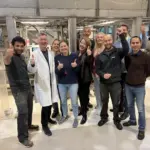



Total fish utilisation
With the exception of the guts, the whole of any fish can be inserted into the new food production machine developed by SuperGround. Thereafter, a patented process softens, heat-treats and grinds fish by-products such as the bones and other hard tissues, with no mass lost in the process. The outcome is a fish paste that can be used in multiple ways.
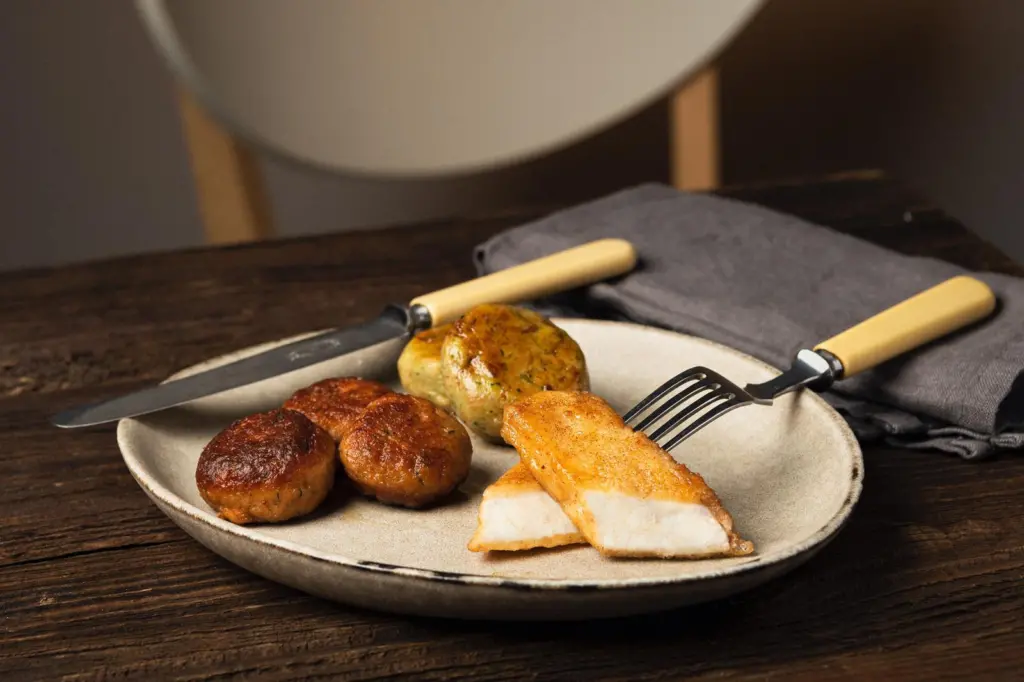
Around 15-30% of the resultant mass made from bones and other hard tissues can be added to such products as fish balls without affecting the taste. Similarly, up to 15% can be added to fish fillet products such as fish sticks. It can also be used as broth or sauce. Furthermore, in using hard tissues that naturally include a high volume of vitamins, calcium and good fats, the nutritional value of fish products will be increased.
The new solution was created out of the recognition that often between 20-60% of fish raw material goes unused for food, SuperGround’s Founder and Chief Innovator Santtu Vekkeli told WF.
This was around four years ago, with Vekkeli observing that across the seafood industry after fillets were separated from the fish, usually the rest of the hard tissue (fish bones, skin, scales etc) were either going unused as a production side-stream, or were being turned into animal feeds, or used as fertiliser and biofuel raw materials.
As such, and depending on the fish species, around 20-60% of a fish’s net weight wouldn’t be used as food, with the number of unused parts especially high with smaller fish species, such as perch.
“Some processing companies have created excellent side-streams for these raw materials, but many haven’t and these products are going to waste. Ours is a ready-made solution for them.”
A prototype SuperGround machine was developed three years ago to turn these hard tissues into a raw material, and Vekkeli estimates the latest units are capable of producing a lot more food in this way. He also points out that humans have a long history of eating fish bones and that now is a perfect time to reconnect with the raw material as a food – but in foods that consumers are already familiar with.
“I have seen so many start-ups that have made perfect products, but most were doomed from the start because they were not in formats that people are used to buying.”

Fast, simple process
From an environmental perspective, Vekkeli said he was keen to deliver “something that mattered” and which could “make a difference”; in this case, to enable companies to utilise the full potential of fish and its nutritious raw materials.
The SuperGround food processing technology and solution can help increase fish food production while also reducing environmental impacts, such as emissions and food waste, he said.
“With this solution, the seafood industry can improve its efficiency and sustainability levels, while consumers will see the fish products that they know becoming more nutritious and tasty.”
Each SuperGround machine can produce between 500 and 650kg of paste per hour, with the whole process of producing the paste taking only around three minutes.
“It’s a very fast, easy-to-use solution,” Vekkeli said. “No enzymes of chemicals are needed. You use any material that you have as long as the bones are included, we need them because our process needs collagen for optimum stability.”
What you put in, you get out, with 1kg of fish by-product mass equalling 1kg of paste, he explained.
“It’s just removing the collagen and fat from the hard tissue. The bone structure without any protein is soft; there’s no rigidity at all.
“I believe this concept and the possibility of getting 30% more food from the same fish has the potential to change the logic that surrounds using these materials. It could also lead to lower production, or perhaps fish product prices to come down.”
Lessons from poultry
The technology is also tried and tested. Last year, the company launched a very similar solution to utilise chicken bones and their nutritional benefits within poultry-based foods. Vekkeli highlighted that while seafood companies vary very differently in their practices and value generation, poultry processors are extremely alike with “practically identical” factories regardless of location.
“Poultry was perhaps easier because the products are very standardised. Chicken nuggets are very uniform – no matter who is producing them or where in the world you are buying them, they are virtually the same. But there are probably hundreds of different kinds of fish balls. Also, fish processing plants all have very different philosophies, along with very different raw materials and end-products.
“The way they deal with secondary product streams is also very different,” he said.
While the seafood industry’s reaction to SuperGround has been very positive, Vekkeli believes its launch will go a similar way as it has in the poultry sector, whereby with the concept now proven, a lot of companies are watching to see how the competition utilises the technology and solution and how consumers respond to the end-products.
As such, it’s likely the initial smaller units will soon be introduced in the Finnish fish market, but the first larger unit will go to one of the major overseas processors, he said.
“Our sales process is underway, and we’re now waiting for that first big-scale seafood company that’s willing to take that leap. We’re now talking with a lot of players in the poultry sector and will need to make a decision on industry partners soon…that took about four months. I think it will be the same case with fish.”
Related Articles
 PROCESSING & REFRIGERATION
 SEAFOOD
 SEAFOOD