


EXCLUSIVE: AI powers smarter fishing fleets
Catchwise is scaling its AI-driven platform to improve fishing efficiency, supporting over 300 skippers globally with data-led decision-making tools.
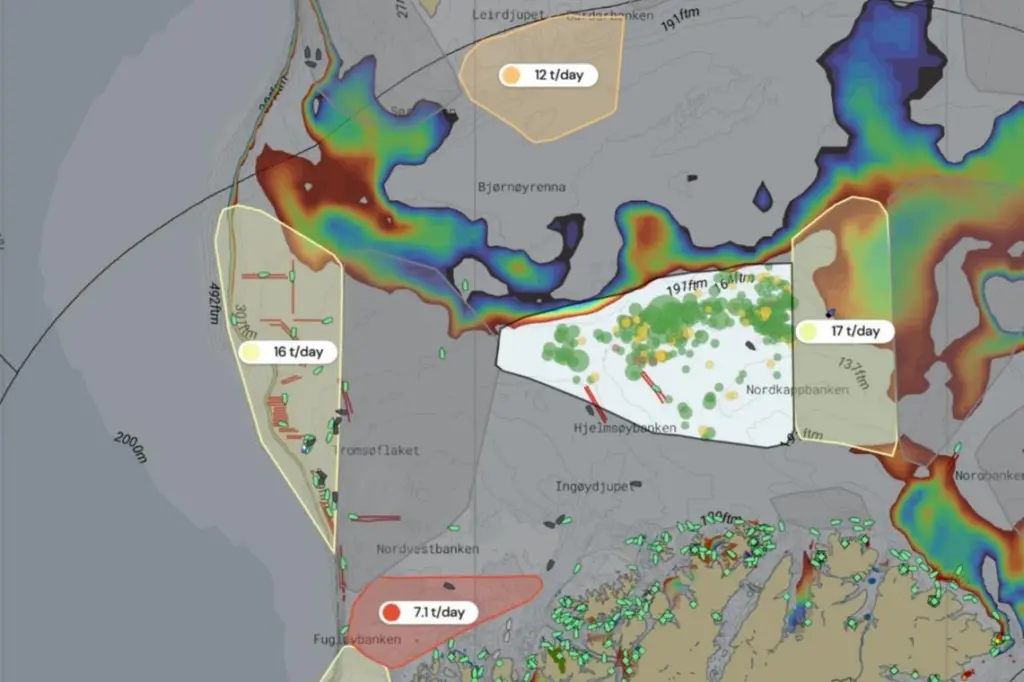
The company is accelerating deployment of its AI-enabled fisheries platform following pre-seed backing, expanding across seven countries within a year.
It’s positioning its technology to address mounting operational pressures in the wild fishery sector, where efficiency, cost control and sustainability are increasingly critical.
Faster fish finding
Catchwise helps skippers find fish faster and reduces fuel use by combining catch data, AIS and ocean conditions in one map.
The platform has already demonstrated a 6% efficiency improvement across 3,800 fishing trips, primarily through better targeting and reduced fuel consumption.
Some of the core data features it brings together in one place are historical catches, real-time vessel activity (AIS) and ocean conditions – to include temperature, plankton and ocean currents.
“We realised early that it’s easy to build something flashy and sell it to management, but if you want something that really works, you have to elevate the intelligence already onboard: The skipper,” says Ludvig A. Løddesøl, CFO/COO and joint-founder of Catchwise.
“We don’t replace the skipper. We make their experience more effective. AI predictions alone don’t work at sea. You need to combine them with skipper experience.”
User-centric approach
This user-centric approach has underpinned rapid adoption.
Catchwise reports growth from around 30 to more than 300 active skippers within a year, supported by continuous engagement with operators.
The company conducts weekly feedback loops with 20 to 50 skippers, refining tools to align with real-world fishing conditions rather than abstract predictive models.
Platform development has also accelerated significantly. Since securing early funding, Catchwise has expanded geographically while enhancing functionality, including fishery tagging, catch-condition analysis, global SAT-AIS integration, bottom temperature data and regulatory generative AI tools.
The system has also undergone testing across multiple pelagic and demersal seasons, alongside integration with onboard factory ERP systems.
But Mr Løddesøl emphasises that predictive AI alone is insufficient in complex marine environments.
“These skippers have immense experience and information, and building some AI predictions to tell you where to go fish is just too simple so it doesn’t work fully,” he says.
Instead, the platform combines data aggregation with practical usability, enabling skippers to apply their experience more effectively.
This operational philosophy mirrors wider shifts in port construction and coastal protection projects, where combining human expertise with digital systems is increasingly seen as critical to resilience and performance.
Commercial traction
Commercial traction is also building. Catchwise has expanded its customer base and published new testimonials, reflecting growing confidence among fishing companies seeking measurable efficiency gains.
Looking ahead, Catchwise intends to deepen its commercial footprint while continuing product development. Mr Løddesøl said the company will maintain its focus on affordability and impact.
“Support fishing companies earn more money, by providing their skippers with the best support tools,” he says adding that that leveraging historical data will be key to competitiveness as the sector evolves.
Market conditions are expected to reinforce demand. Tightening quotas, high fuel costs and geopolitical uncertainty are placing pressure on margins, making efficiency gains increasingly valuable.
“You don’t need a new engine or hardware to increase efficiency significantly,” Mr Løddesøl notes. “Catchwise has proven a 6% efficiency increase across 3,800 trips and we’re constantly working to increase that.”
Related Articles
 FISHING TECHNOLOGY
 PROCESSING & REFRIGERATION
 SEAFOOD