




Eye on the prize
Ensuring product quality is of paramount importance to seafood value chains, and to meet the growing demands and expectations of consumers, companies are increasingly adopting new quality control procedures, with many turning to smart, connected automated solutions.
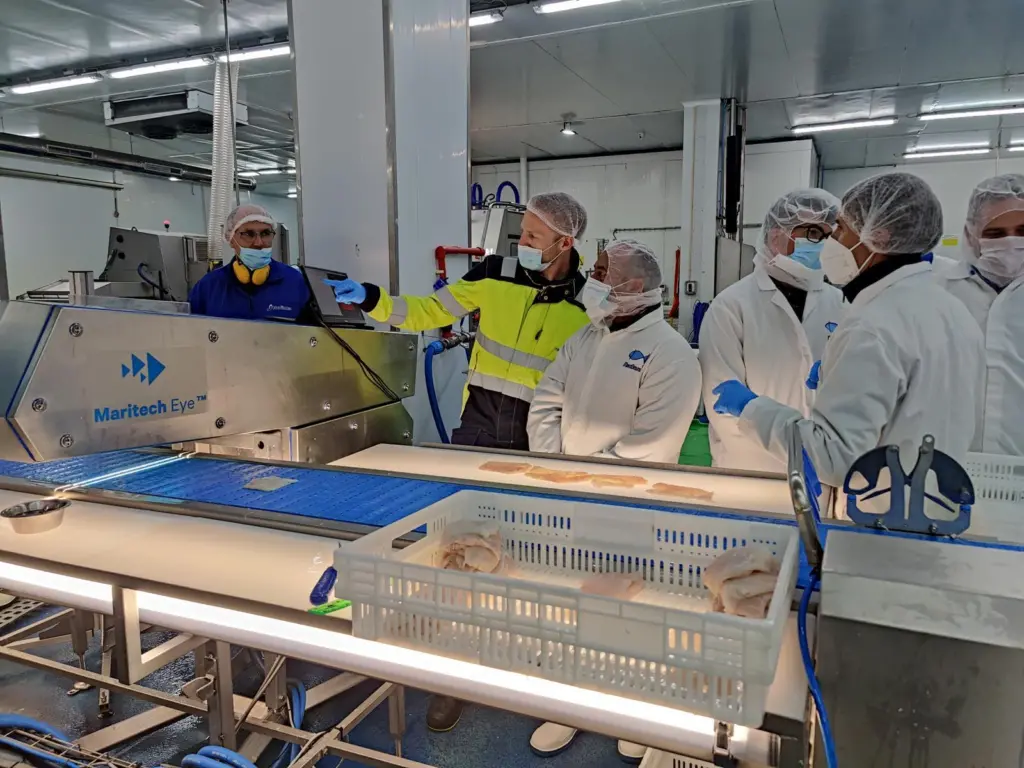
As far back as 2016, leading seafood software provider Maritech AS saw the potential for data-rich IoT (Internet of Things) technologies as a means to transform the processing sector and to make it a lot smarter. In order to get a good head-start in the space, the Norwegian firm acquired a company that was focusing on the development of both a software platform and sensors. It was also around the same time that Maritech became involved in the development of a new quality measurement technology – in a project with the Norwegian Institute of Food, Fisheries and Aquaculture Research (Nofima) and Norsk Elektro Optikk. This hyperspectral camera solution was detecting blood and nematodes – or roundworms – from whitefish fillets.
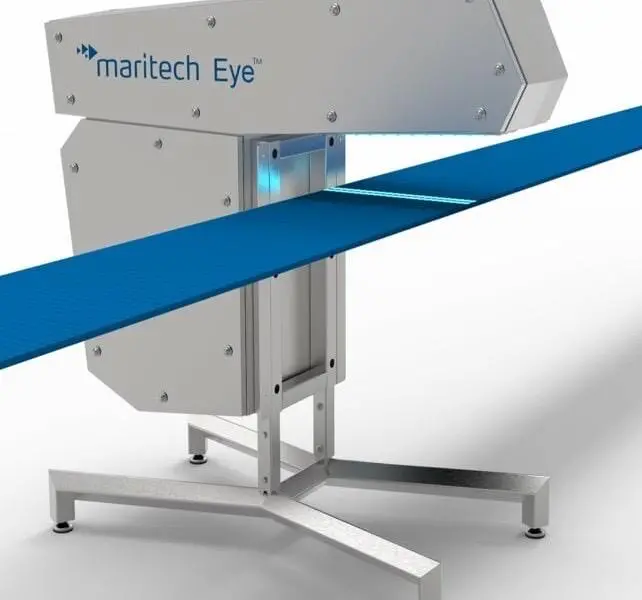
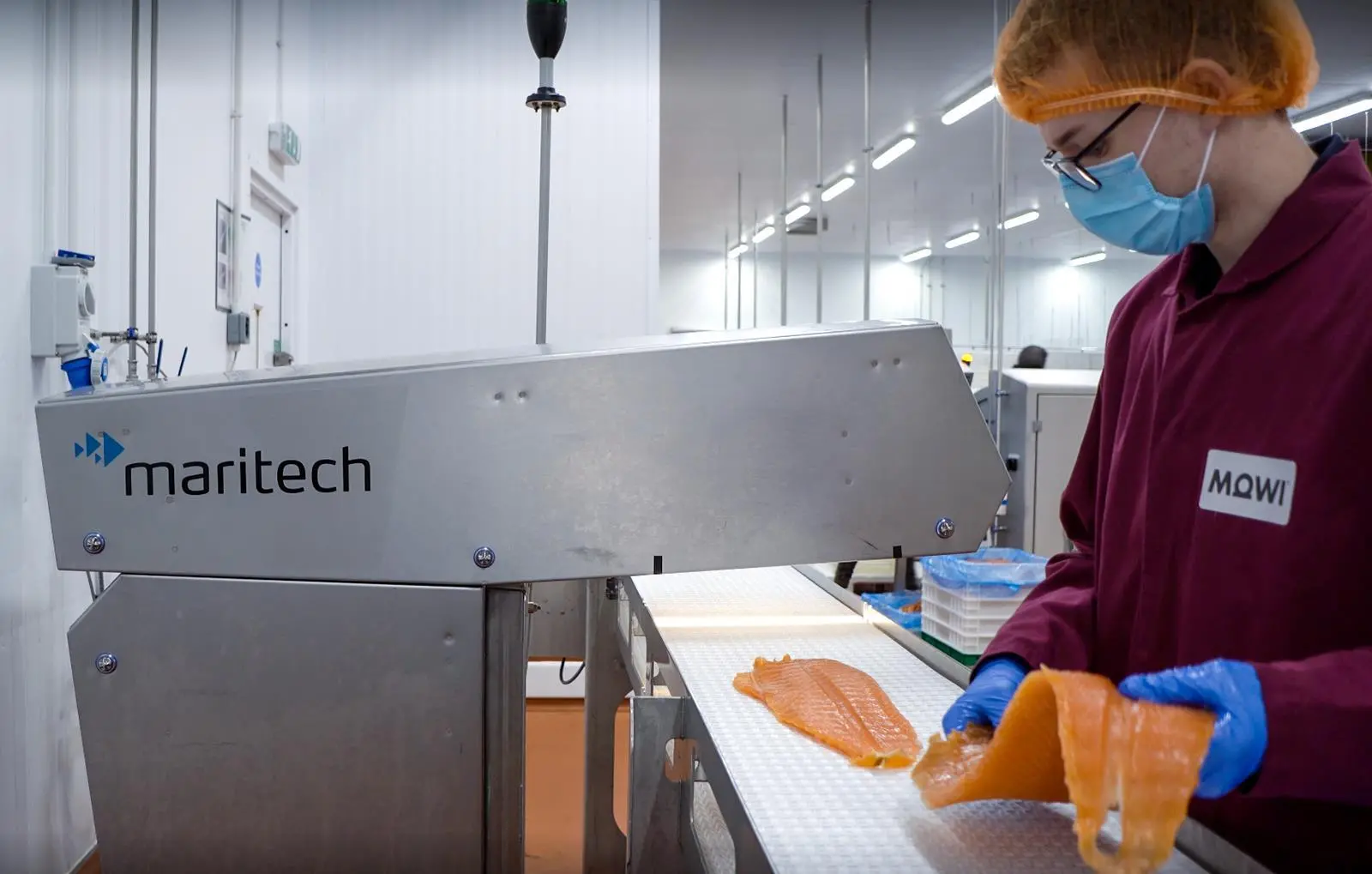
In November 2020, and following a four-year R&D project that has focused on building it into a system that could fit into the commercial processing environment, the finalised solution called “Maritech Eye” was delivered.
Maritech Eye is an industry enabler, Maritech EVP Technical Solutions, Per Alfred Holte, told WF. It works by scanning fish (red- and white-fish species – whole fish and also fillets) early on in the production process and at industrial speeds.
Not only has it been designed so that seafood companies can automate their quality assessments, offering much greater precision and efficiency than can be achieved through manual evaluations and sampling, it also provides the means through which price premiums can be achieved for the best cuts, while the rest of the fish can be used optimally in other product.
This in turn can help reduce waste and advance companies’ sustainability credentials, Holte said.
Multi-purpose solution
To come up with a tool that’s as practical as it is innovative, Maritech Eye has undergone a number of design adjustments. It has also been made capable of fitting in both onshore facilities and also in large factory vessel settings.
“This was important for us as a bigger share of the quotas are being fished by larger vessels, many of which have onboard processing opportunities,” Holte said.
To ensure it’s multi-purpose in its application, Maritech has also had the help of fish farming and fishing company Lerøy Seafood Group and salmon farming giant Mowi ASA.
“They and others have provided very good input to help us design a solution that fits in various settings,” Holte said. “It can be very cool working with cutting-edge technologies and world-class innovations, but when you put them into industry settings there’s always the question of will it work consistently well every day.”
He continued, “For the industry to get familiar with what it is and what it’s not, it was important for us to put the equipment out in several settings so they can familiarise themselves with it.”
Some units are now operating on a daily basis in the salmon industry, while in the whitefish space, Maritech presently has three different units on three different calibrations for fillets and whole fish.
Two Maritech Eye units are being placed onboard two of Útgerðarfélag Reykjavíkur´s fishing vessels. Their purpose is to automate the recognition and documentation of species in combination with size and other parameters related to various characteristics of whitefish catch. This information will also be sent to Iceland’s fisheries authorities, who could use it for research and to estimate the stock size. This could be used to optimise Icelandic quotas.
“If you can have the species recognition, size measurements and counting onboard these vessels then you can get a whole new level of insight into the fisheries – creating value for the fishing companies and also for the authorities,” Holte said.
Data leap
Maritech’s Head of Global Marketing Marie Gjære Gundersen told WF that beyond the company’s work track to standardise Maritech Eye’s application within the salmon and whitefish fillets and whole round whitefish sectors, which it has “got far with now”, it is now looking closely at extending its horizons into other processing sectors, with lobster and crab potentially offering the next stages.
“So far, we have focused with salmon fillets going because these are scalable, international operations with companies facing similar challenges, we’re similarly working in Iceland and Norway with whitefish, but there’s a lot more potential for this both inside and outside seafood,” she said.
“Within this year, we expect a lot of units to become part of operational processes. I believe that could be the turning point, whereby others will see that it’s reducing risks and increasing commercial potential,” Holte added.
“The industry is now seeing the opportunity that comes with transitioning from a situation where just small samples are judged by humans to scanning the entire production in real time. That’s a tremendous leap in the data volume that they can base good decision-making on.”
With regards to quality control in the processing environment, this information can be used objectively by machines to do the sorting tasks, especially for reliably assigning the right fish to the right product or purpose as early as possible, Holte said.
“That resource allocation has a strong connection to traceability and sustainability – enabling companies to make decisions on how to utilise resources in the best possible manner.”
Looking ahead and reinforcing his point that having factory workers make many thousands of quality judgements a day “is not good practice”, Holte believes the next step for automation will be to have vision systems conducting raw material inspections. This, he said, will allow the subsequent sorting to be automated and will be where the main value is generated on the processing side.
“This industry is modernising quickly and becoming more automated. By connecting this information backwards in the supply chain and also forwards into the market will create a lot of value in the top layer. That’s where we also have applications to support purchasing and sales.
“Information alone can be noise, but the right information at the right time, in the right process, in the right context – that’s where there’s huge opportunities. That’s also where we are working together with our clients to create dashboards and application solutions that support processors.
“We are focusing on enabling the value chain because especially whitefish is changing hands a lot of times on its way to end-consumers and so we’re very focused on how to secure traceability along the way and also enabling as much relevant data to flow as possible,” Holte said.
Related Articles
 PROCESSING & REFRIGERATION
 SEAFOOD
 SEAFOOD