



As well as being the world’s biggest seafood market, the European Union is also one of its leading processing regions, with a large proportion of an estimated 10.1 million tonnes of raw materials going into the industry ahead of consumption by the EU-27’s estimated 450 million residents.
According AIPCE-CEP, the EU Fish Processors and Traders Association, this volume comprises some 4.7 million tonnes of domestic fisheries and aquaculture production of 4.7 million tonnes (with 1.1 million tonnes going to non-food use) and 9 million tonnes of third-country imports (with the EU exporting around 2.4 million tonnes of products to overseas markets).
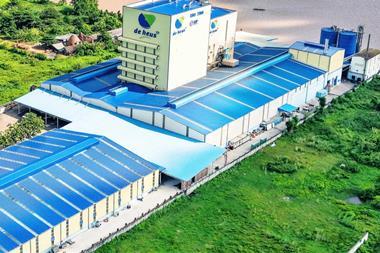
“The economic value of seafood processing in Europe and the trade is large – larger than many people think – with a direct value of €25 billion based on present prices. And if we count the multipliers of services, logistics etc it increases to €35 billion. It’s also a big employer with 135,000 direct employees across Europe,” AIPCE President Guus Pastoor told a recent AIPCE-CEP Webinar.
“We are talking about a lot of economic activities and a lot of participants,” he said.
For its part, AIPCE-CEP represents around 3,300 European processor and trader enterprises that have a combined annual turnover of €31 billion, and which directly employ 116,000 people, including many in rural areas. This makes upholding and growing European seafood processing a priority for the association, and an economic value driver for communities and regions.
“If we didn’t have these processing and logistics networks, then where would the seafood go that’s produced by Europe’s fishers and aquaculture businesses?” asked Pastoor. “There are many with a mutual interest in this business.”
Diminishing self-sufficiency
In maintaining a healthy trading and processing industry, EU’s reliance on third-country imports is increasing, explained Mike Turenhout, Fisheries and Trade Expert at CEP and the Dutch Fish Federation (Visfederatie).
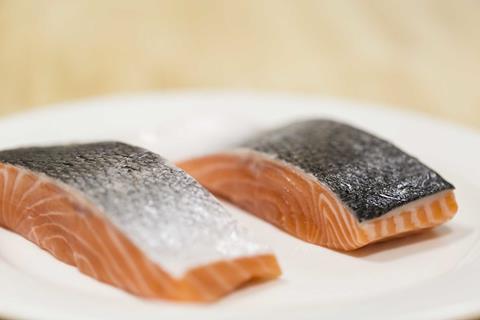
In 2019, this dependency stood at 59.3% but had climbed to 65.4% in 2021, he said. As for key species, the EU is sourcing 99% of its salmon – or more than 1.41 million tonnes – from third-countries, alongside 95% (891,000 tonnes) of its cod and 100% (808,000 tonnes) of its Alaska pollock.
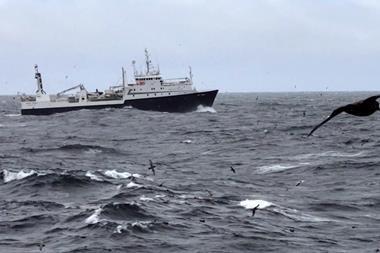
The EU’s increased seafood import dependence has increased in part due to the Ukraine-Russian conflict, which has driven up fuel costs for the European fleet. Indeed, many vessels haven’t been going to sea, Turenhout advised the webinar. Another major diver has been the consequences of the Covid-19 pandemic, with prices for species that feature prominently in the foodservice sectors dropping dramatically during lockdown measures.
Added to this, Brexit and the UK’s withdrawal from the EU on 31 January 2020 has unsettled the market, with the country becoming a third-country and its vessels having an important share of certain European quotas, and new tariff barriers being implemented, he said.
Specifically with regards to the Ukraine war, and in addition to the increased fuel and energy prices, the sanctions imposed on Russia have created large shift in the marketplace, said Turenhout. In the UK, for example, there is an additional import tariff of 35% on Russian seafood, while the US market has imposed a complete ban on imports.
“This has meant that those market’s whitefish products such as cod and pollock have had to be sourced from elsewhere. This has driven up the price of other products, such as Norwegian cod.”
Pre-conflict, Russia was the eighth-largest seafood supplier to the EU market, involving some 391,000 tonnes of seafood.
Supply utilisation opportunities
With regards to its outlook for 2023, AIPCE-CEP believes the current inflation level in the EU will decrease its purchasing power. In 2022, this stood at around 10%, resulting in increased costs for production and processing, while the purchasing power of the region’s consumers decreased.
The processing sector is therefore expecting a slight decrease in seafood consumption in the EU in the short-term but that this will grow again over the longer-term, said Turnhout.
Looking ahead, he added that the EU’s focus should be on improving its own seafood production, said Turnhout. According to AIPCE-CEP’s own analysis, the region utilises just 75% of the EU’s total available fishing quota.
“We need to find a way to optimise this utilisation and to get more raw materials to the EU’s processing industry. Another thing is that we need to invest in EU aquaculture production.
“I believe the EU is really pushing to increase aquaculture growth. There’s a strong focus there.
“Alongside this, there’s a need to simulate favourable EU trade policies, including new trade agreements and ATQs (autonomous tariff quotas), where we can bring in more raw materials with zero import duties for EU processing. Furthermore, we need to look at ways to further optimise and reduce logistics and storage costs.”
Ensuring future-readiness
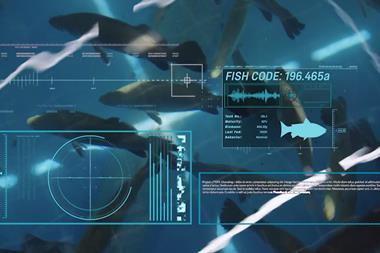
New technologies will also have an important role to play in Europe’s seafood processing future, Turnhout told the webinar.
“I think that smarter processing lines and new technologies will help the processing industry to produce more seafood, especially when it comes to adding more value to products and optimising the various parts of the products and by-products.”
The Secretary of the FAO Subcommittee on Fish Trade, Marcio Castro de Souza, agrees.
“An issue that’s important not just from a European perspective but globally is that Industry 4.0 can facilitate the traceability of products. This is still a very important and challenging aspect in many countries. So, as we incorporate more technical and logistical information in the value chain, we can trace back the products through the value chain. That can be a very important element in terms of the prize of reaching more markets because of sustainability.
“That’s something for the global scale this technological approach towards the sector can definitely bring more benefits, particularly in the approach of net-to-plate that is still missing in many countries around the world,” Castro de Souza said.
Turnhout also stressed the “high importance” of raw materials coming into Europe from third-countries.
“We have the ATQ systems, we have the free trade agreements, and we also have the IUU (illegal, unreported and unregulated fishing) system that prevents illegal fish from coming into the EU. These systems fit our processing industry, because we want to process as much seafood as we can in the EU and keep the focus on that. And not have a system or situation whereby it’s more beneficial to do the processing outside of the EU.”
Pastoor emphasised this point, adding, “Our joint ambition is to keep and grow seafood processing in Europe. The main restricting factor to this is not the output to the market; it’s the input of raw materials.
“With the EU’s low self-sufficiency, we need to provide the right circumstances for its production. Seafood imports are needed now and in the future.”
With the right platform – one that encompasses environmental and social sustainability, exploits the full potential of EU fisheries and aquaculture, and facilitates international trade – the long-term aspirations of the industry can be ensured, Pastoor insisted.
“If we can achieve all that, the market for seafood in Europe will surely grow and can provide more consumers with our nutritious, healthy and sustainable products now and in the future,” he said.