




Siemens: Automation to ensure fresh fish
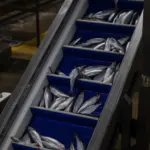
Quality control is key to ensuring fresh seafood. Historically, this has been done by processing staff who use their senses and experience to examine the condition of gills and eyes, the firmness and smell of flesh and the colour of skin to distinguish between a fresh product and one that is not of good quality. But now, machines are helping seafood processors to supply retailers and consumers with top quality products, quantifying the freshness of seafood to meet food quality and safety regulations.
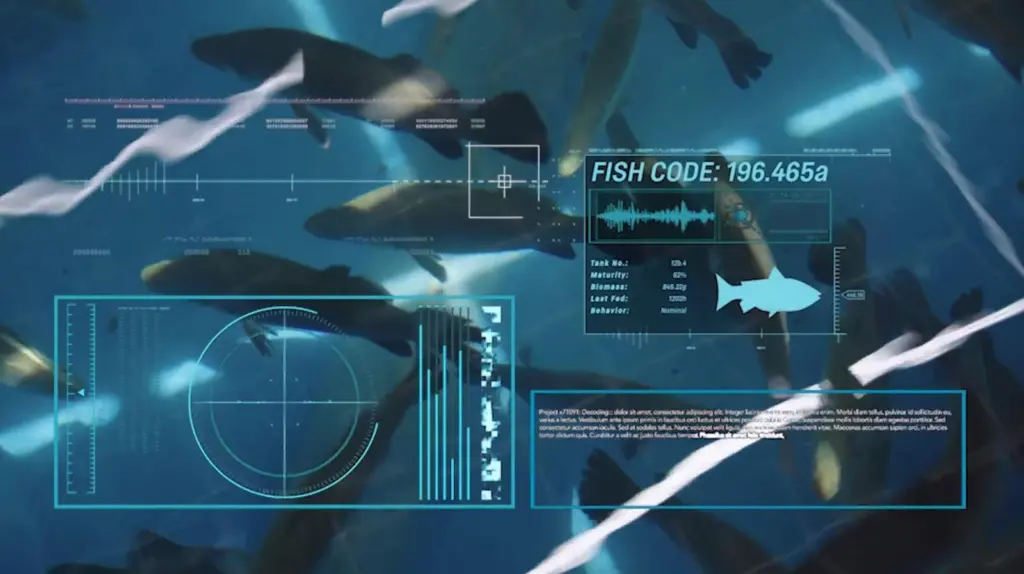
Torill Østingsen of Digital Industries Siemens insists that this type of automation is key to guaranteeing consumers the best-quality seafood.
“For Siemens, the food and beverage industry is a very important one to do business with,” she told WF. “Fisheries and aquaculture obviously fall within this industry, and we are seeing that aquaculture is becoming increasingly important as the oceans are dramatically overfished and more than 100 million tonnes of fish are consumed worldwide. If we are to protect the oceans while also meeting the demand for seafood, we will need automated processes across the seafood supply chain.
“Processors are one part of the supply chain where automated processes are crucial, because they must guarantee that retailers and consumers only receive top quality seafood. At Siemens, our focus is to help our customers obtain good quality, profitable food that has been produced in a sustainable way.”
Hyperspectral analysis
Because of the natural variability of fish and other seafood, producers often find it difficult to conduct physical measurements to determine quality or predict production outcomes such as yields.
During seafood processing, ice-covered seafood is delivered in large crates, taken out manually by warehouse staff, weighed and repacked. But this can result in a higher possibility of human error, or differences in interpreting results. For example, on a scale of one to 10, one person may interpret a result as three, while another interprets it as two. As it turns out, however, this is a perfect problem for machines and AI, which can take over the roles that people with specific knowledge have been responsible for, and produce the same results based on the same assumption, helping seafood supply become more predictable and profitable.
Efforts by researchers at Siemens to automate seafood processing have resulted in a range of potential solutions such as hyperspectral analysis, an optical analysis method that uses AI to ensure fish quality, and robotic fingers that can grip and repackage slippery items, making handling procedures more efficient.
Hyperspectral analysis is currently being used to analyse the surface of fish skin. When fish are slaughtered, the skin goes through a biochemical ageing process, losing elasticity and forming a thin layer of mucus. Proteins on the skin also break down and new chemical substances form, which can be easily detected by the human nose. Hyperspectral analysis involves irradiating with electromagnetic waves with wavelengths between 900nm and 1,700nm in the infrared spectrum.
Researchers then observe how much of the different wavelengths is absorbed by surface molecules on the skin and infer which molecules are present in what quantity. Fresh and not-so-fresh fish have been used to train an AI algorithm, which can evaluate the absorption pattern of a specific fish and state whether it is freshly caught, edible or of substandard quality.
Flexibility in AI
“Siemens, together with several machine builders and system integrators, is involved in several aspects of seafood processing,” said Østingsen. “We have a huge portfolio of equipment and solutions that range from software, automation, monitoring, networks, cybersecurity and process instrumentation to control products. In general, AI is still in the early stages in all industries, even though we have been talking about digitalisation for a while. But there is a lot of flexibility with it, and it can be used in several areas of seafood processing to help the sector reduce maintenance, increase production and earn more money.”
With industries like aquaculture becoming more and more important for global food production, Østingsen said seafood producers will have to be open-minded and be able to share information, collaborate with technology suppliers and spend time and money on new technology in order to improve efficiency, product quality and overall productivity.
“Aquaculture, seafood processing and other industries are curious about technology such as AI, cutting-edge soft sensors, digital twins, and are focusing on it a lot,” she said. “These solutions can accurately detect the level of freshness and overall visual quality and reduce food waste. Our next steps are to understand our customers’ needs and help them grow, stay profitable and competitive. We aim to use our vast know-how and experience in various industries to share information and collaborate in order to accelerate digital transformation.”

Related Articles
 AQUACULTURE
 PROCESSING & REFRIGERATION
 PROCESSING & REFRIGERATION