




Case study: Separating meat and oil onboard
Three years ago, Starbound’s owner, Aleutian Spray Fisheries Inc, decided to cut the then 240-foot vessel in half to expand its processing operations and to add a meal plant, oil plant and two surimi lines. The retrofit was not just on the ship, it was a complete overhaul of the processing operations and required Flottweg Separation Technology. This new equipment is used to separate meat from liquid.
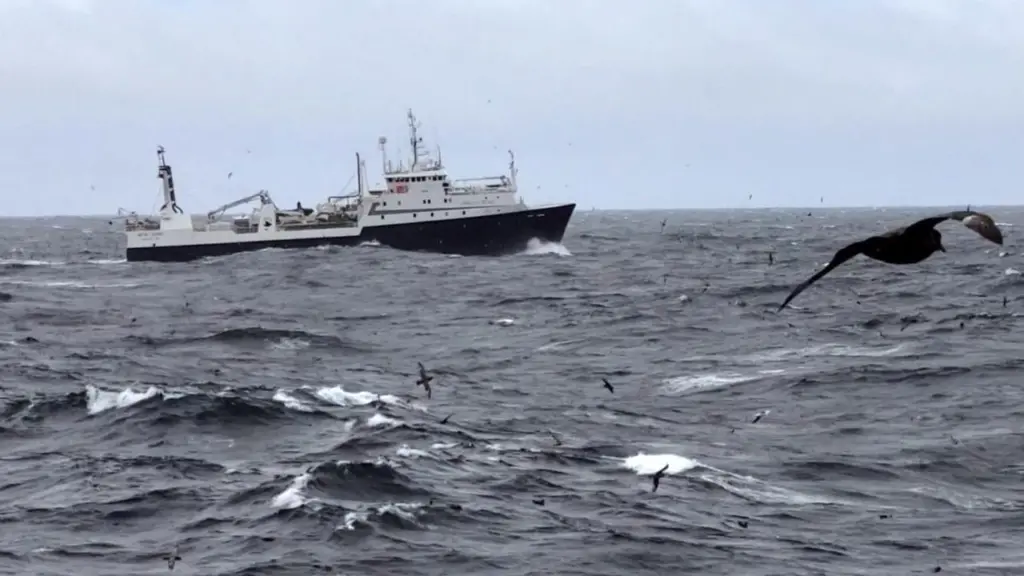
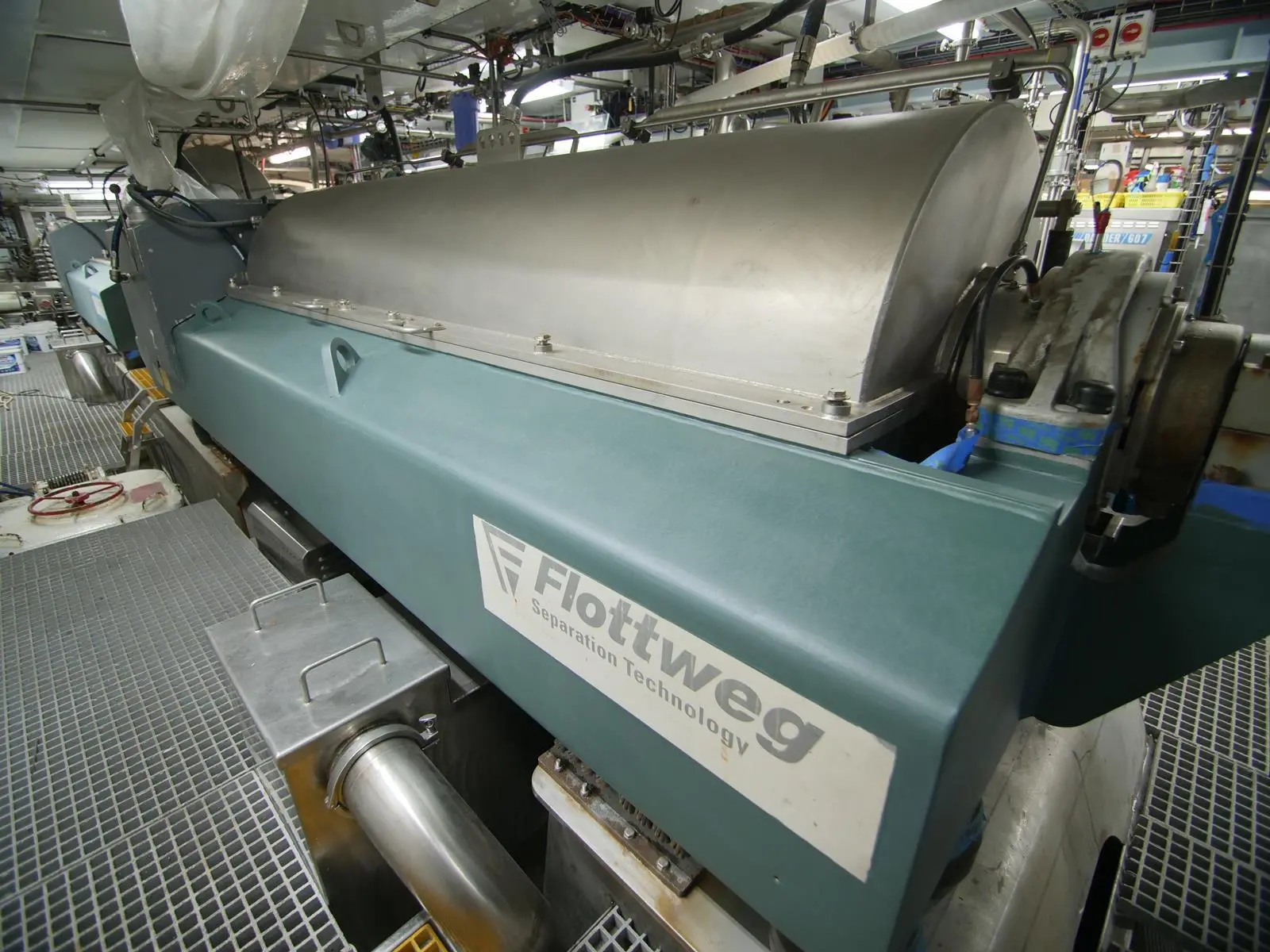
“Before we got the decanters and the tricanter, we only had a recovery line. This means we only took meat off the frame,” Starbound’s Operations Manager Karl Bratvold said. “The tricanter came into play for the fish oil. The two decanters are for our primary and secondary surimi line.”
The Flottweg equipment was needed to increase productivity.
Starbound’s expansion project took 10 months to complete. And while the vessel performed water tests, it was impossible to test production without any fish. This meant that the first real test of the equipment happened at sea on the first fishing trip after the construction was completed.
“That’s the tricky part,” Bratvold said. “You can’t test the facility if you have no fish. We re-did the entire factory. Without testing, this equipment had to work, or there was a wasted fishing trip.”
The performance of the equipment exceeded expectations.
“It went really smooth,” Bratvold said. “We had never used tricanters. The decanters have been great and allowed us to produce even more than we expected. There is a learning curve as you go along, but from start-up it’s been very smooth.”
The factory occupies an entire level on the ship. With about 130 people onboard, the factory staff is about half of that. The other half is fishing crew, boating crew, cooks and other personnel.
“When we return from a 10-day trip we have a 30-hour offload before going back to sea,” Bratvold said. “When we return to shore, everything has been processed. We do primary- and secondary-grade surimi onboard and use the decanters to make fishmeal. We use the tricanter to separate the solids from the fish oil and then we also make boneless-skinless fillets, and mince. When it comes back to the dock it’s ready for market.”
Product is shipped to McDonald’s, Burger King and other major chains worldwide. The meal goes to Asia and most of the oil is used domestically.
How it works
The modular design of the decanter centrifuge means it’s possible to adjust to all kinds of separating tasks.
The Flottweg decanter has an adjustable impeller. Normally, the clarified liquid runs out of a decanter without pressure. As an alternative, it is possible to transport the clarified liquid away using an impeller. This means it runs out in a closed system under pressure. In Starbound’s variant, an adjustment mechanism alters the position of the impeller. As a result, the liquid can be removed at different diameters, thereby also optimising the separating performance.
An adjustment mechanism causes the position of the impeller to change, therefore changing the separation line of the liquids.
The structure and function of the tricanter are similar to those of a decanter (two-phase separation). The decisive difference between these two machines concerns the way the liquid is discharged. There are two liquid phases in a tricanter: a “heavy” liquid phase (higher density and discharged under pressure), as well as a “light” liquid phase (lower density and discharged without pressure). An adjustable impeller discharges the “heavy” liquid phase, which the operator can use to adjust the pond depth of the heavy liquid without difficulty during ongoing operation.
Typical applications for three-phase separation are:
- Processing of sludges containing oil from refineries, oil ponds etc
- Extracting animal/vegetable fats and oils
- Starch manufacture for separating wheat starch and gluten
Advantages and customer benefits include:
- Greatest possible purity of the liquids to be separated (by using the impeller)
- Other processing steps/separating stages can be dispensed with, or are no longer required, thereby offering cost savings for the plant-owner
- Adaptation to changing conditions (product in the feed) possible at any time
- Possible automation
The results
“We went out to find a decanter and tricanter and found Flottweg,” said Bratvold. “They have been fabulous. I appreciate Flottweg so much — from sales to parts to service. They do what they say they are going to do. They show up, and there’s been a tremendous amount of support.”
Bratvold added that Flottweg listens to how the machine is being used and then adapts and modifies it accordingly.
“We are in a remote atmosphere and only have a limited time, so this is a big deal for us to be able to get the parts and the service and have people respond to us. The technical support has also been great. We have questions, and they answer them quickly. We have lots of questions, so it’s been really helpful.”
Related Articles
 AQUACULTURE
 PROCESSING & REFRIGERATION
 PROCESSING & REFRIGERATION