


Deliver tuna best-practice
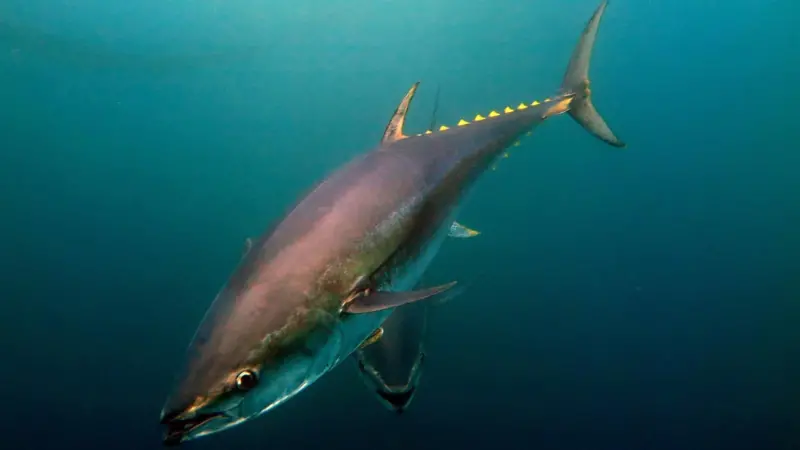
There has been a profound loss of nature in the Western Central Pacific Ocean (WCPO), but voluntary actions by tuna buyers can contribute to the recovery of vulnerable marine wildlife populations, suggests a new study conducted by the Sustainable Fisheries Partnership (SFP).
Highlighting that about 51% of the world’s tuna production comes from this region – mostly going to the North American and Japanese markets – the marine conservation organisation’s research finds that tuna buyers can help restore populations of sharks, sea turtles, and seabirds by encouraging the adoption of proven best-practices for longline fishing in their supply chains.
“Restoring biodiversity and nature is critical to the long-term sustainability of fisheries,” SFP Global Markets Director Kathryn Novak said. “Buyers of longline caught tuna from the WCPO have an exciting opportunity to drive targeted improvements that could rebuild populations of vulnerable marine wildlife, while providing a healthy protein to customers.”
Funded by the Walmart Foundation, the research identified substantial declines of some species of sharks, seabirds and sea turtle populations in the WCPO, many of which are listed as vulnerable, endangered or critically endangered by the International Union for Conservation of Nature (IUCN) Red List.
While many different factors caused these declines, it maintains that by-catch – the unintended catch of non-target species – is currently the key driver of the loss for many of these ETP species. Longlines have one of the highest bycatch rates for these species of gear types used in commercial tuna fisheries.
Advocating responsibility
The study recommends that buyers of longline-caught albacore and fresh/frozen yellowfin, albacore, and bigeye from the WCPO should require that bycatch mitigation best practices are implemented in their source fisheries by 2025, such as adoption of fishing techniques like using circle hooks, eliminating wire leaders and switching bait types.
It also advocates that the buyers should compel their source fisheries to have 50% observer (human observer and electronic monitoring combined) coverage by 2025 and 100% by 2030. In this regard, SFP points out that Thai Union, owner of the Chicken of the Sea and John West brands, has committed to implement 100% “on-the-water” monitoring of its tuna supply chain by 2025, including the deployment of electronic monitoring.
Additionally, the study outlines data-collection protocols that need to be implemented for electronic monitoring, and best practices for specific wildlife species.
“By-catch of ETP species in longline fisheries is a well-known problem. Thankfully there are proven best-practice options which can be adopted by the industry, such as the use of large circle hooks to reduce sea turtle capture, hook shielding devices to reduce seabird interactions and removing wire leaders to help reduce shark interactions,” SFP Ocean Wildlife Manager Alexia Morgan said. “The use of these best practices options offers the supply chain an opportunity to help reduce bycatch mortality of ETP species and subsequently help rebuild their populations to healthier levels.”
Tools at hand
SFP’s study also calls for better management and compliance by the Western Central Pacific Fisheries Commission (WCPFC), the international management body for highly migratory species in the region, and WCPFC countries.
At its most recent meeting in December 2022, the WCPFC did take action to prohibit the use of wire leaders to protect sharks in certain areas beginning in 2024, but voluntary action can be taken sooner, as recommended in the SFP report.
To help tuna buyers to better understand the ETP bycatch interactions in their source fisheries, SFP launched an ETP Bycatch Audit programme last year. It also launched its Solve My Bycatch Tool, an online instrument to help seafood buyers and suppliers find solutions to specific tuna by-catch problems.
Other tools include SFP’s Best Practices for Reducing Bycatch in Longline Tuna Fisheries guide.
According to the report, “What is urgently needed now is for major tuna buyers, particularly in North America and Japan, to require the use of these tools and encourage adoption of these recommendations at scale in longline tuna fisheries.”
Recognising that while restoring the populations of sharks, seabirds and sea turtles “seems like a daunting goal”, it states that it’s “absolutely achievable” in the WCPO and other regions if the market acts on these targeted recommendations, and also that these outcomes will also “bolster the reputation” of the seafood industry and strengthen the overall idea of sustainable seafood.