






EXCLUSIVE: Protected seabeds see life return
Bans on bottom trawling could play a crucial role in restoring biodiversity across Europe’s damaged seabeds after new research from Scotland’s South Arran Marine Protected Area found marine life rebounded significantly in areas protected from destructive fishing practices.
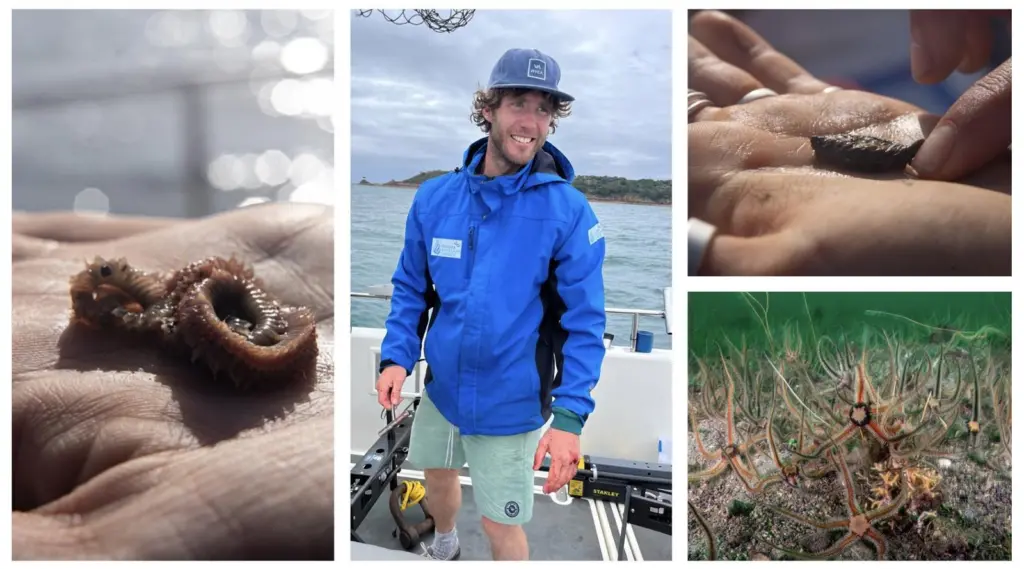
The study, led by Dr Ben Harris at the University of Exeter, found highly protected seabed zones contained roughly twice as many species as neighbouring fished areas, alongside far greater overall abundance of marine life.
Conducted under the Convex Seascape Survey, the research examined muddy seabeds in the Firth of Clyde, an ecosystem historically subjected to intensive bottom trawling. Scientists recorded thriving populations of worms, shellfish and other invertebrates in protected zones, overturning long-held assumptions that soft sediment habitats are biologically poor.
Researchers say the findings strengthen the case for stricter marine protections and full bans on bottom trawling in vulnerable areas, warning that only a tiny fraction of Europe’s seabed currently enjoys meaningful protection.
Dr Harris told World Fishing & Aquaculture that the lack of protection reflected ‘several overlapping mechanisms rather than a single point of failure’.
“Even heavily degraded soft-sediment systems can continue to support commercially viable fisheries,” he said. “The Firth of Clyde is a useful example – as cod stocks declined through the 1970s and 1980s, fishing activity did not simply stop, but shifted increasingly towards Nephrops.”
He added that society may also be suffering from a ‘chronic shifted baseline’, where ecosystems degraded over centuries begin to appear normal.
“Much of the European continental shelf is soft sediment, and these habitats are often perceived as relatively lifeless, naturally disturbed, and of limited conservation value,” Dr Harris said. “Our work through the Convex Seascape Survey challenges that assumption.”
Drawing on historical evidence and ecological theory, the researchers believe parts of the UK seabed were once far more structurally complex, featuring oyster beds, sponge grounds and richer fish communities before industrial-scale bottom trawling became widespread.
“The problem is that once those systems have been degraded for long enough, their altered state begins to look normal,” continued Dr Harris. “With few pristine examples remaining, it becomes difficult to demonstrate both the scale of past damage and the recovery potential of the seabed.”
The study also explored the seabed’s potential role in long-term carbon storage. Muddy sediments are known to contain large reservoirs of organic carbon, though researchers found biodiversity recovery occurred far faster than measurable increases in stored carbon.
Scientists said this did not diminish the climate importance of seabed protection. Instead, they argued it highlighted the need for long-term management.
“Per unit area, seabed sediments may not store or accumulate carbon at the same rate as some better-known carbon sinks such as peatlands, saltmarshes or forests,” Dr Harris said. “The opportunity lies in scale.”
He noted that the European continental shelf covers around five million square kilometres.
“If 10% of the European shelf were managed with carbon storage and biodiversity recovery in mind, that would represent an area of roughly 500,000 square kilometres,” he said. “The potential climate relevance could be substantial, particularly because these sediments can store carbon over long timescales.”
The findings come amid growing debate over the effectiveness of marine protected areas that still permit some forms of industrial fishing. According to the researchers, the strongest ecological recovery was observed in areas with the highest levels of protection.
Dr Harris said properly managed marine protected areas could also benefit fishing communities over time.
“The evidence that well-managed MPAs can benefit fisheries is strong, although outcomes depend heavily on design, enforcement, habitat type and local context,” he said. “Properly protected areas can increase biomass, body size and reproductive output inside their boundaries.”
He rejected suggestions that stronger seabed protections were inherently anti-fishing.
“If we recognise the true ecological potential of the seabed, we can manage it in a way that supports both recovery and long-term fisheries productivity,” Harris said. “Poorly managed exploitation can erode the ecological foundation of fisheries, while effective protection can help rebuild it.”
More than 1,500 species were recorded across study sites, yet researchers estimate only 0.2% of Europe’s seabed is fully protected from destructive fishing methods.
Professor Callum Roberts said the evidence showed recovery was possible if governments acted decisively.
“The evidence is clear: protection works,” he said. “What’s missing now is the urgency to act on it.”
Related Articles
 SUSTAINABILITY
 FISHING TECHNOLOGY
 FISHERIES