



New analysis released by the Alaska Marine Community Coalition and Ocean Conservancy has raised concerns about the scope and conclusions of two studies commissioned by the pollock fishing industry in 2025, arguing that the research understates environmental impacts and overstates economic benefits to Alaska.
According to the analysis, the industry-funded studies indicate that a significant share of the pollock fishery’s economic value does not remain in the state. The review found that 71% of labour income, 62% of jobs and roughly two-thirds of total economic output associated with the fishery flow out of Alaska, based on data contained within the industry’s own reports.
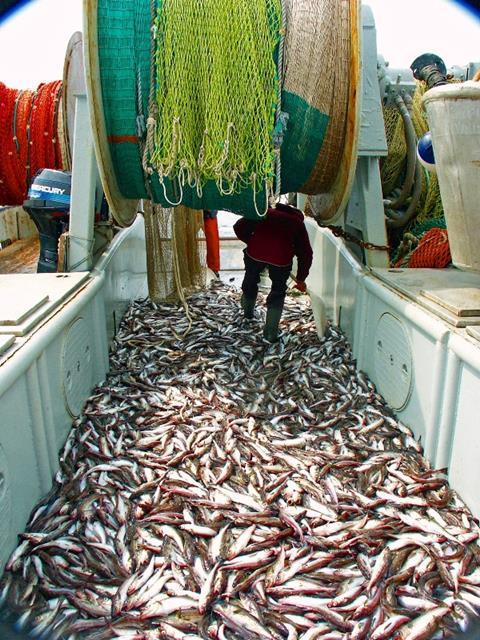
The pollock fishery, which supplies products ranging from surimi and breaded fillets to fast-food items such as the Fillet-O-Fish, is the largest food fishery in the world by volume. Since 1977, industrial vessels have harvested an average of 1.2 million metric tonnes annually from the Bering Sea.
Pollock plays a key role in the Bering Sea ecosystem as both predator and prey for fish, seabirds and marine mammals. The new analysis argues that the industry-funded studies did not adequately account for ecosystem effects or interactions with other fisheries and coastal users.
“The industry’s research leads with faulty assumptions and ends with incomplete conclusions,” said Dr Megan Williams, Fisheries Scientist at Ocean Conservancy and a contributor to the analysis. She said the studies failed to fully consider impacts on ecosystems, Alaska Native fishing rights and other fishing sectors.
The report also highlights long-standing concerns over bycatch. Since 1991, pollock trawl fisheries have caught more than 6.3 million chum salmon and one million Chinook salmon as bycatch, according to the analysis. Scientists and community groups have increasingly linked pollock fishing pressure to broader ecosystem changes, including declines in crab stocks, salmon populations and northern fur seals in the Pribilof Islands.
Beyond environmental considerations, the analysis challenges how the industry-funded studies framed economic value. According to the authors, the reports treated large-scale pollock vessels as the backbone of Alaska’s maritime economy, while overlooking the economic contributions of sovereign Tribal nations, small-boat fisheries, mixed-species harvesting and coastal infrastructure users.
The review also found that the industry studies did not fully account for government support to the pollock fleet, including US$ 50 million in recent federal seafood purchases and substantial historic subsidies, potentially overstating the sector’s independent economic strength.
In addition, the analysis questions whether infrastructure used by the pollock fleet – such as ports, processing capacity and logistics – is equally accessible to smaller operators and independent fishermen.
Another criticism centres on scenario modelling. The industry-funded studies focused on the economic impact of a full closure of the pollock fishery, without assessing partial reductions or alternative management approaches that could mitigate ecological risk while maintaining economic activity.
“Pollock trawling is a billion-dollar industry, but the industry’s own research shows that shockingly little of its profit stays in Alaska,” said Anthony Rogers, Fisheries Economist at Ocean Conservancy. He said the studies provided a limited snapshot and did not reflect how coastal economies adapt when fishing effort or access changes.
Michelle Stratton, Executive Director of the Alaska Marine Community Coalition, said future analyses should better reflect the diversity of Alaska’s fishing communities and economies, rather than focusing narrowly on catch volume and industrial infrastructure.
“Small-boat fishermen, subsistence families, and coastal communities carry responsibility and care for these waters and our coastal infrastructure every day, and our strength comes from a diversity of fisheries, communities, and ways of fishing,” she said. “Alaska’s future must be built with all of us at the table, and without the on-the-ground realities of coastal economies and fisheries included from the beginning, reports like this will inevitably fail to capture what real benefit – or risk – looks like in coastal Alaska.”