


Tuna side-streams – for a circular fish farming industry
As a key source of high-quality protein and other nutrients, seafood is an essential part of the human diet, and with the global population continuing to rise, demand is likely to increase by up to 60% by 2050. However, the supply is being hit by numerous challenges such as overfishing, by-catch of protected species, global warming and changing consumer preferences, while another challenge lies in sustainable protein production and being able to feed people without polluting marine resources.
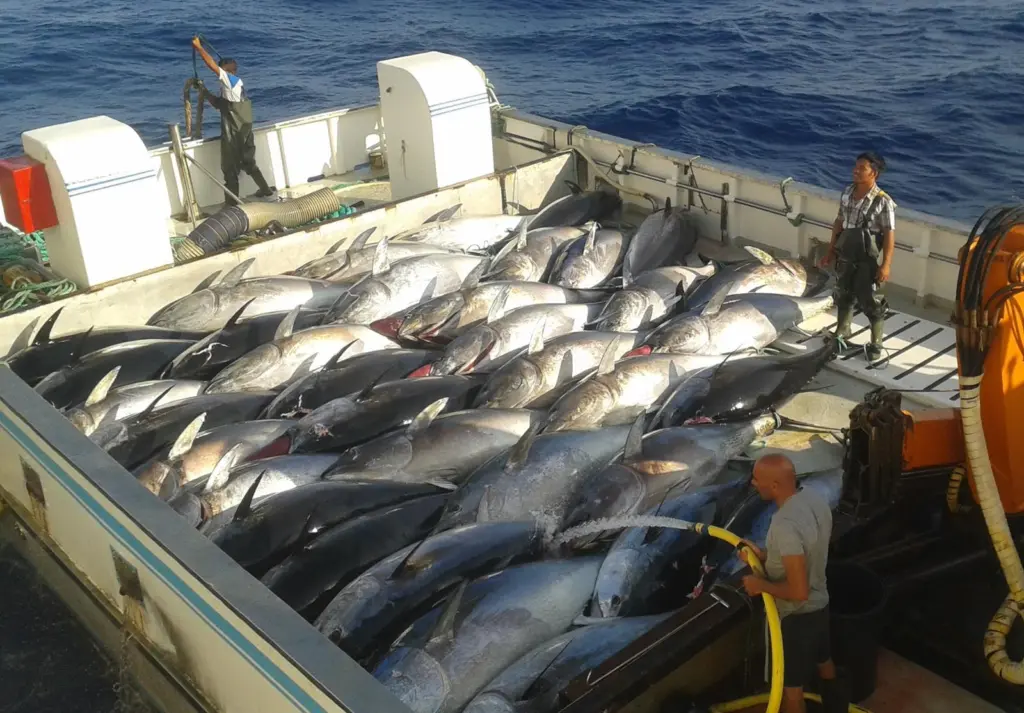
In Malta, consultancy firm AquaBioTech Group has joined forces with industrial partners and research institutes in Denmark, Norway, Iceland and Greenland for a three-year project called PROFIUS. It’s being funded by Blue Bio ERA NET and coordinated by Dr Ann-Dorit Moltke Sørensen at the Technical University of Denmark. The project aims to address challenges that prevent the reutilisation of lumpfish (roe and carcass) and tuna side-streams and to find new ways to use these by-products.
One issue associated with seafood production is the management of large amounts of side-streams such as skin, bones and viscera. These contain precious bio-compounds such as fish oil, proteins and peptides, collagen, gelatin, enzymes, chitin and minerals. However, they are frequently discarded, causing environmental problems.
According to AquaBioTech Group, the main reasons for wasting such potentially valuable products are logistic. Tuna harvesting vessels have little refrigerated space for fillets, so the side-streams are transported to processing plants at air temperature with consequent preservation issues. It is also very difficult to transport animal by-products with food due to sanitary requirements on vessels.
Another example is that the different components of side-streams are not separated as the process is time-consuming. However, separating the different parts is important – it would allow for products with a higher protein content, while some valuable bio-compounds can only be found in specific parts such as the skin or the liver.
Reutilisation
PROFIUS is aiming to develop preservation solutions to maintain the quality of side-streams and use them in new, innovative ways. It is also investigating new applications for lumpfish and tuna side-streams and analysing the logistical operations to make their use possible and commercially valuable.
“AquaBioTech Group’s mission is to improve aquaculture’s sustainability and efficiency and develop technologies and models that help address environmental and social challenges,” Dr Simona Paolacci and Dr Giovanni M. Cusimano, scientists at AquaBioTech Group told WF. “Our Research and Innovation department focuses on projects that aim to improve aquaculture systems and address environmental issues. The reutilisation of tuna side-streams is framed in this objective. In Malta, side-streams have been either incinerated or discarded into the sea with negative environmental impacts. We had the idea of applying the concepts of circularity and sustainability to transform waste into something valuable.”
Discarded tuna side-streams in the sea are also a source of pollution with consequent damage to marine ecosystems, while incinerating side-streams has a price to pay in terms of air quality and carbon emissions, said Paolacci and Cusimano. With the farming of Atlantic bluefin tuna (Thunnus thynnus) worth over €150 million in 2021 and a significant contributor to Malta’s economy, the industry has room to embrace sustainability and circular approaches more fully, ultimately benefitting farmers and the environment.
In Malta, adult and juvenile wild bluefin are caught offshore in the summer and transferred to floating sea cages where they are intensively fed and grown to market size.
Harvesting occurs from October to January. Whole fish are filleted on purpose-built vessels where prime cuts are stored in freezers, and the product is then shipped to the appropriate market. Off-cuts including the head, tail, fins, viscera and bone material have historically been discarded into the sea during harvesting, despite their potential to be developed into other products.
“Tuna side-streams are rich in protein, lipids, amino acids, vitamins and other valuable compounds that, if properly processed, can be used to produce fishmeal and fish oil,” said Paolacci and Cusimano. “Bioactive compounds, such as polyunsaturated fatty acids, collagen, gelatine and molecules with antioxidant activity can also be extracted from them.”
Aquafeeds
As part of the PROFIUS project, AquaBioTech has been investigating the transformation of tuna side-streams into fishmeal and fish oil to be included as raw ingredients in fish feed and tested in commercially relevant species. Biomolecules have also been extracted from side-streams such as the liver, head or mixed waste.
With the Norwegian University of Science and Technology, another PROFIUS partner, new extraction techniques are being developed, while other uses of tuna side-streams are also possible, for example as fishmeal and fish oil in pet food or as bioactive compounds for nutraceuticals, pharmaceuticals and human food. Hopes are high that turning tuna side-streams into alternative products will bring key benefits to Malta’s tuna farming, such as less water and air pollution, a secondary revenue and increased public acceptance of tuna aquaculture.
Tristan Camilleri is technical and regulatory manager at Aquaculture Resources Ltd, the operating arm of the Federation of the Maltese Aquaculture Producers, which represents 75% of Malta’s tuna farming. The federation implements projects that are deemed important and relevant to Maltese aquaculture, one of which is a new plant that treats side-streams from tuna processing for the pet food and animal feed industries.
“Bluefin tuna from aquaculture establishments has specific quality parameters that are targeted towards Japan’s sushi and sashimi markets,” said Camilleri. “The fish are particularly oily and of a very high quality that is not comparable to wild fish. This also applies to tuna side-streams, which makes them very attractive for the animal feed and petfood sectors.”
Mainstreaming
The new plant is a low-temperature rendering plant, where materials from the cooker are discharged to a tricanter (centrifuge) and separated into the solid phase (grax), oil and another liquid phase with solids (stick water). All material is processed less than 24 hours after harvest due to the short distances between the plant and tuna farms.
Raw materials are also inspected visually and samples taken for testing (histamine, total volatile basic nitrogen etc). With great interest from around the world in the plant’s fishmeal and fish oil, Camilleri is confident that alternative products from tuna side-streams will become more mainstream.
Aquaculture is continuously targeting new protein sources to rely less on marine and soy-based ingredients. According to IFFO estimations, around 30% of the global production of fishmeal and around 51% of fish oil are currently produced from fish by-products. Moreover, raw materials like insects and single cell protein (algae, yeast and bacteria) have been identified as valuable alternatives, said Paolacci and Cusimano. “We believe that producing fish feed from alternative protein sources will soon be a necessity and that aquaculture will head more in this direction,” they concluded.
Camilleri agrees. “The quantities produced at our plant depend greatly on the quantities of Atlantic bluefin tuna that are available for farming, and this is a highly-regulated sector based on quotas and total allowable catches,” he said. “However, with the circular economy becoming increasingly important, I hope that we will see more alternative products from tuna side-streams in other sectors.”
Going forward, AquaBioTech will focus on evaluating the fish feed formulated with different inclusion levels of tuna fishmeal and oil that is due to be tested in European seabass and shrimp. The company is also working to optimise the preservation of tuna liver using rosemary extract and targeting more bioactive compounds for extraction.
Related Articles
 PROCESSING & REFRIGERATION
 PROCESSING & REFRIGERATION
 PROCESSING & REFRIGERATION