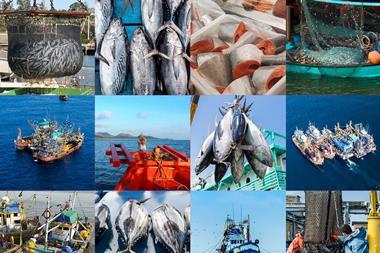




For decades, the industry has focused on raw material sales. Now, the world’s largest frozen fish exporter is prioritising domestic processing and exporting products with higher added value.
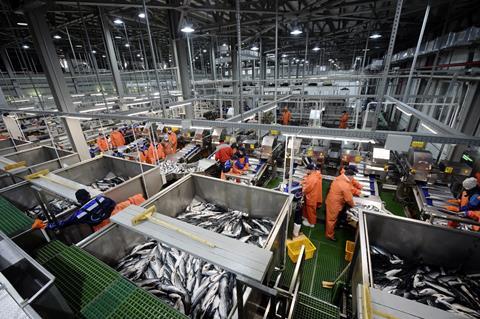
In 2024, Russia exported 161,000 tonnes of fish fillets, according to VARPE (the All-Russian Association of Fishery Producers), with the organisation also highlighting that this figure has near doubled over the last five years, thanks to substantial investments made by Russian seafood businesses in new fish processing capacities, including dozens of factory deck trawlers and onshore processing infrastructure.
Consequently, Russia last year became the world’s third-largest fish fillet exporter, following behind Vietnam (648,000 tonnes) and China (508,000 tonnes). Indeed, over the past two years, it has surpassed Norway, Chile, and the US on the list of the world’s largest fish fillet exporters, VARPE confirmed. The association further noted that the country holds a leading position in the global frozen fish market, accounting for 17.4% of the world’s export volume in 2024.
Russia’s fish fillet export growth is primarily being driven by a rise in sales of pollock portions, which account for around 70% of all its exports. Cod fillets, the second-largest category, has a 17% share of overseas sales, advised Russian government agency Agroexport.
Further industry figures confirm the growth trend has continued to gather momentum. In the first-quarter of 2025, fillet exports jumped 61% over the corresponding period last year to reach 50,000 tonnes. In monetary terms, these exports surged by 72% to around US$140 million.
The Russian fishing industry’s gradual transition to domestic fish processing capacities marks a significant shift for the global market, as well as for the seafood processing industries in countries like China and Germany, which have traditionally relied on Russian raw fish.
The growth in fillet exports is a direct consequence of the implementation of the 2021 plan by Rosrybolovstvo (the Russian Federal Agency for Fisheries) to develop the country’s fish processing sector. Under the initiative, the Russian government has targeted processing 80% of catches in 2030, compared to only 25% in 2021. Additional capacities for processing around 3.3 million tonnes of fish were also planned in the country.
Commenting in 2021, Rosrybolovstvo head Ilya Shestakov said: “Russia needs to accelerate the development of fish processing…This is important both for saturating the domestic market and for creating a more flexible product offer for deliveries to international markets.”
Sanction disruption
Unsurprisingly, the Russian fish processing industry’s development hasn’t followed the plans laid out four years ago, with a source telling WF that the sanctions imposed on the country over the war in Ukraine have effectively barred the way for Western technologies and equipment, and that this has led to massive delays in the construction of new fishing vessels and onshore processing infrastructure.
“Besides, investors are getting increasingly cautious about the development plans, as borrowed funds remain unaffordable,” the source added.
The impact of the Western sanctions on the Russian fish processing industry has been complex, argues Ilya Rakovskiy, Chairman of the Union of Fish Industry Businesses of Karelia, one of the key Russian fishing regions bordering Finland to the west.
“Processing factories in Europe were [partly] deprived of the high-quality and affordable Russian raw fish,” he said.
These restrictions make little sense, Rakovskiy added, highlighting that European countries have continued importing processed fish products from Russia, including those made of cod and haddock caught in the Northern basin.
In the previous years, fish destined for the European market was processed at factories in Northern Europe and Germany, but now it is processed in Russia or China instead, he said.
Rakovskiy also pointed out that the European certification of new Russian fishing vessels was suspended in 2023, and that meant all products from the factory deck trawlers commissioned in the country during the last two years under the government-run investment quotas programme are not allowed to export to Europe.
Again, he said, these restrictions inflicted “little to no pain” on Russian fish companies, as most of the quantities from these vessels have been redirected to the Asian markets.
Falling profitability
Other stakeholders maintain it’s wrong to say the industry hasn’t been stung by the general economic turbulence triggered by Western sanctions. There’s also been the suggestion that the biggest threat to the Russian fish processing plans comes from plummeting business profitability.
The average profitability of fish processing in the country has declined for the past five consecutive years. According to Russian state statistical service Rosstat, it was as high as 25% in 2020, when the government was hammering out its long-term industry development plan, but dropped to 15% in 2022 and dived deeper to 9% in 2024.
Indeed, the general consensus in the industry is that the current profitability level of investments into establishing new fish processing capacities makes no economic sense.
Aside from the sanctions, the high cost of borrowed funds emerged as the key problem for the Russian fish processing segment, remarked Anatoly Tikhonov, Director of the Centre for International Agribusiness and Food Security.
At the time of writing, the Russian Central Bank’s key interest rate stood at 18%, which makes commercial loans too expensive for the Russian fish processors.
According to the Russian Fish Union, an independent organisation uniting fishermen, processors and traders, fish processors need soft loans with subsidised interest rates and partial reimbursement of investment costs, adding that such measures have proved their value in other food industry segments during the previous few years, but acknowledging that this will require funding from the federal budget.
Expanding sales
Despite the strong economic headwinds, the potential for growth in sales of Russian fish and seafood to foreign customers remains vast, market players and analysts believe.
In 2024, Russia exported 49,600 tonnes of fish fillets to South Korea, 38,000 tonnes to China, and 23,600 tonnes to Belarus, according to Russian state veterinary watchdog Rosselhoznadzor. During the first-half of 2025, exports to South Korea nearly doubled, reaching 45,200 tonnes, while sales to China and Belarus slightly declined.
Russia sees potential in expanding its exports to “friendly countries” in Asia, Latin America, and Africa, Rosrybolovstvo’s Shestakov announced during an industry event in May 2025.
Already, since 2023, the country has kicked off sales to several new markets, including Montenegro, Albania, Bangladesh, Qatar, Morocco, South Africa, Angola, Tanzania, Niger, Chile and Panama, confirmed the Russian Fish Union.
“Russian fish products are finding buyers in new markets, despite sanctions that complicate logistics and payments,” it said.
Russia is expected to increase the value generated from fish exports to $6 billion in 2025, compared to $4.8 billion last year, thanks to switching from raw fish exports to the sale of products of advanced processing. According to Agroexport estimates, fish fillet exports alone are projected to generate $500 million for the industry.
Nevertheless, many observers believe the future of its processing industry will largely depend on future trade relations with Europe, with the feeling that restrictions on its seafood exports to the bloc would deal a heavy blow, especially for the pollock catchers.
A source in the Russian pollock industry stated that the restrictions, which have been lobbied for by a group of Eastern EU members over the past few years, would be a “catastrophe” for both sides. For example, the source said, around 85% of pollock consumed in Germany is of Russian origin, and there are no real alternatives to Russian supplies.
For Russia, the restrictions will mean that “pollock catchers will be running around offering huge discounts on their products to everyone”, the source said, adding that it’s likely investments in capacities for pollock processing will not be on the agenda if this is the case.
Topics
- Aquaculture
- Business & Finance
- Centre for International Agribusiness and Food Security
- Fisheries
- New Horizons
- Processing & Refrigeration
- Rosrybolovstvo
- Rosselhoznadzor
- Rosstat
- Russia
- Russian Association of Pollock Catchers
- Russian Fish Union
- Sanctions
- Seafood Exports
- Union of Fish Industry Businesses of Karelia
- Varpe