



There’s been a rapid adoption of artificial intelligence – or AI – in the aquaculture space in the past two years, with validation and significant advancements in these technologies replacing manual processes and enhancing efficiency, sustainability and profitability, particularly in the salmon and shrimp farming sectors.
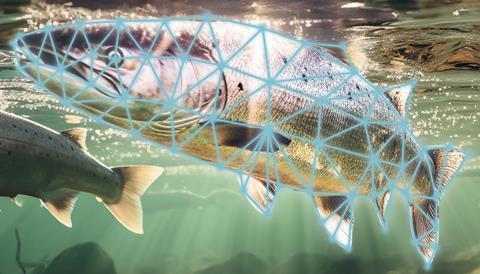
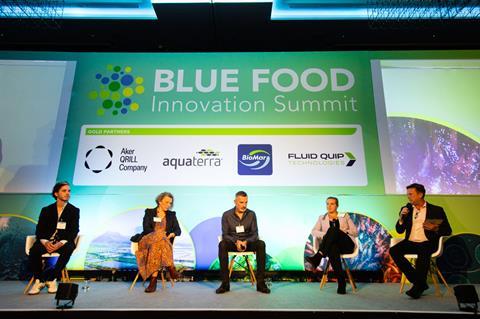
In using AI to replace previously manual processes, its functions in aquaculture differ from its general application where it tends to take a digital process, augments it and makes it super-efficient, Aquabyte AS Founder & CEO Steve Tucker told the recent Blue Food Innovation Summit in London.
“Very simply, if you’re counting lice on fish, measuring weight or biomass, looking at the welfare of fish, the behaviour of fish, or you’re trying to feed them more efficiently, or if you want to know about maturation, you’re now using technology to do it, and it’s become super important to do that, because the farming technology as well as the actual physical infrastructure of farming has changed a whole bunch,” Tucker said.
“If you look at the Norwegian market for salmon, for example, a great many pens are now submerged so you can’t even see the fish. You need technology to look at them.They’re in a different environment now than they used to be. So, you need to understand exactly how the fish are performing, how they’re feeding and how they’re growing….But you’re not going to buy products, solutions or features like the ones we provide, unless we’re also enhancing the efficiency, unless we’re saving costs for the farmers, or we’re increasing the yields.”
Companies like Norway-based Aquabyte are building revenue for fish farmers, but at the same time, they’re improving sustainability and helping producers to overcome the environmental challenges that they all face, Tucker said.
“For us, we’ve seen a really fast adoption over the past 12 or 18 months, where farmers globally (not just salmon farmers) have now accepted the real benefits of using the sort of predictive data and analytics that companies like ours provide. I think we’ve almost become part of the operational daily workflow. This is AI in action. This is making a difference, and it’s part of how I think farming has changed.”
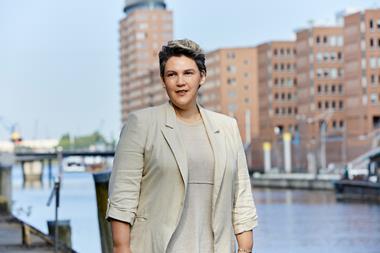
Progress was slow at the beginning, but as more features have been added and the adoption has incrementally increased, now technology developers and providers are being more creative with the application of AI into aquaculture systems and looking at further possibilities and opportunities, asserted Tidal’s Global Director Kira Smiley, Global Director of Tidal, a Google spin-out company that develops AI-powered solutions for the industry, including a platform that monitors environmental factors like temperature and oxygen levels, and also interprets fish behaviours.
“A positive feedback loop has allowed for more and more adoption, and as we’ve had a few years where we’ve been able to very rigorously validate this technology in many different conditions and in many different areas, farmers are starting to feel much more confident and comfortable with these types of technologies – they’re now willing to really scale up and increase. They’re taking this into everyday commercial use and adopting it in ways that many of their weekly decisions are made using these insights,” Smiley said.
Accelerated adoption
Kampi CEO Katie Sokalsky told the summit there’s been a significant uptick in the adoption of new tech among shrimp producers in the last five years. This, she said, was fuelled by early innovators, who initially invested in hardware – mainly smart feeders – and through long cycles of trust-building, where producers found the technology helped them to be more performant, so the realisation came that the old way of doing things could be improved upon.
“It has opened up that mindset. Shrimp is a huge industry, but we sometimes forget how nascent it is. Shrimp has really only been farmed in the last 30 years at scale, and so we’re undergoing this technical revolution, but we’re really only at the early, first chapters of what that looks like.”
Nevertheless, many farmers, including ones Kampi works with, have developed a taste for innovation and trying new things, Sokalsky said.
The company’s own AI-based mobile application, also called Kampi, was launched last year with the aim of enhancing the management of shrimp farms.
“We are an operating system. First, at the farms, we use AI to understand all the inputs of what they’re using – from feed to their costs. Our solver models will tell them, based on past cycles, the variables that stood out that either gave an uptick in performance or a decrease in performance. It helps them to very quickly do hypothesis testing of new equipment, new feeds or new feed inputs, or different ways of farming.”
She continued: “Having better precision around your information and an ability to link what is happening to profitability allows you to take those decisions much more quickly.
“It’s a long cycle for these sorts of decisions to happen. But I think once farmers get comfortable with having more precise information, the innovation loops get shorter and shorter – so helping them to innovate faster and achieve better profitability.”
There are important considerations to be made when looking at the adoption of such technologies, including a fast evolution of the ocean environments that are home to many aquaculture production systems, and also quickly evolving and adapting biology, Smiley said, adding that to adapt to all of these shifting dynamics, farmers also need to adapt in terms of the methods they use.
“There are many different tools, but at the end of the day, you need to know if these new tools work. And you need to see how that impacts their growth, their health and the final outcome of the harvests. That’s the beauty of having these types of technologies that provide real-time insights. And they will be important throughout the whole process, because no matter what new technologies and new methods of farming are implemented, you’ll need to see what the results are.
“Monitoring, in this sense, becomes critical. It allows and enables really fast iteration compared to what was possible in the past, with small samples or waiting an entire growth cycle to see what the food-to-feed conversion ratio was. I think that’s making it a really permanent thread into the future of aquaculture,” she said.
Opportunities on land
Meanwhile, the ReelData AI suite which is tailored to providing operational data and automation for land-based farms has brought some major improvements within the recirculating aquaculture systems (RAS) sector, confirmed its Founder & CEO Mathew Zimola, who confirmed the company has been getting deeper into the smolt and post-smolt space, due to it becoming “a really important trend” in Norway’s salmon industry.
ReelData was founded in 2019, and it has gone from having just five clients in its first five years to having its technology in some 25 different facilities today. These range from 50-gram fish to full harvest RAS and flow-through systems.
“What we’ve seen with the smolt and post-smolt producers is a trend where the industry is growing bigger and bigger fish before they move it out to the ocean. And with assistive technologies – especially AI – that can feed fish, one of the big things farmers were looking at was reducing the feed conversion ratio, which increases the numbers on their financials. But one of the big things we’ve seen is that assistive feeding technology really increases the growth rate of fish. [Farmers] are able to grow fish faster, get them out to the sea faster, and now the idea is they can flip production cycles faster. In a sense, taking on assistive technology at the earliest stage helps the total production of the industry – in its entirety, which is great.”
According to Zimola, integrating AI-based solutions into RAS presents an opportunity to get into the environmental parameters of the water system that fish are being raised in.
“The ocean-based side of the industry has to deal with environments, but in the land-based industry, you actually get to create the environment. It provides a neat industry where you can take a lot more control over systems and continuously push boundaries on health and welfare, and also the growth optimisation of these facilities. I think it’ll take a little bit of time to get there, but that’s our vision: getting more and more into this massive amount of data that comes from these facilities that you can actually use to create a change in that facility and in the environment of the fish,” he said.
Public approval
Moving forward, and crucially for the aquaculture industry as a whole, AI-based technologies provide scope to navigate what’s a very tough regulatory landscape, the conference heard.
Smiley acknowledged that with evolving conditions and lice pressure, for example, on salmon becoming so intense, there’s more scrutiny surrounding fish production. But, she said, having tools that allow producers to track how effective or ineffective different treatment methods are, or being able to markedly see an improvement over time will not only create internal benefits to allow companies to find the right solutions, they’ll also give opportunities for greater transparency.
“That, in some ways, can cause pressure, but then when you can show real measured improvement, and you can demonstrate that you are actually doing very well through the efforts that you’re taking, then it’s proof, and it allows for digital storytelling – to show that everything you are doing in fact supports sustainable aquaculture.
“I think AI can help be a tool for sharing truths and stories, and that will be important for changing some of the stigma that exists against aquaculture, because it’s truly a big opportunity for sustainable protein compared to so many other animal proteins,” she said.