

Genetics – the new frontier
Genetics in aquaculture and fisheries offers new approaches to tackling key challenges and improving our understanding of the interactions between genes and the environment
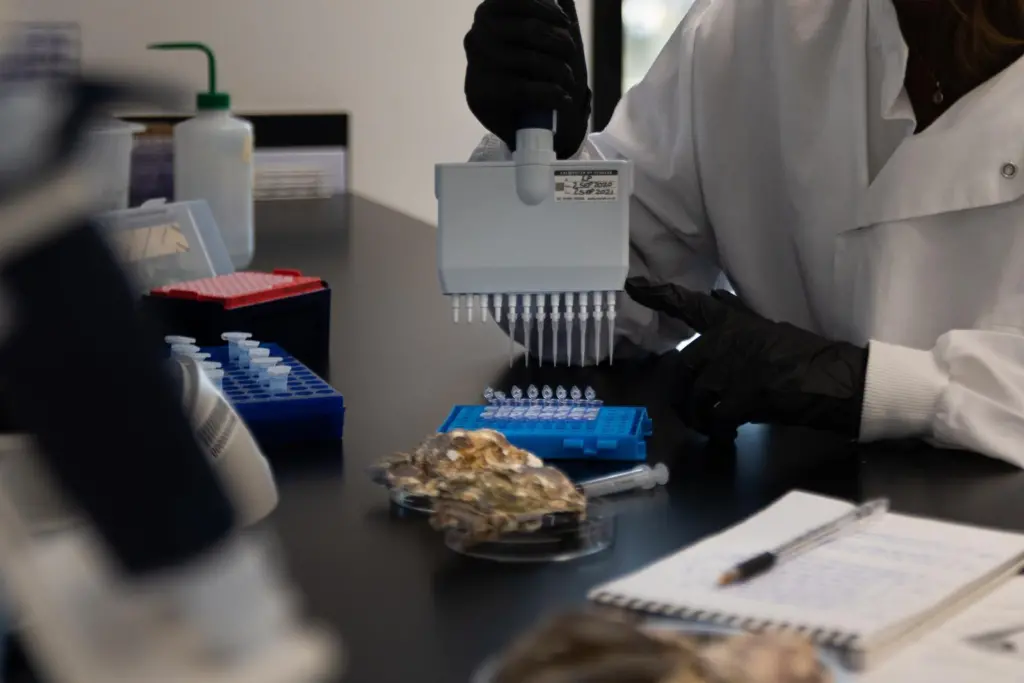
The advent of the genome era and the demand for global food safety have resulted in significant breakthroughs in fish biology and biotechnology. For fisheries and aquaculture, these discoveries have provided solid technical support. Genetics can play a fundamental role in the resilience, response and recovery of species to environmental change and provide fish breeding and management with key insights.
Amongst other things, genetics is today shedding light on how Atlantic cod are evolving in response to overfishing and environmental change. In a paper published in the journal PNAS, researchers from the Institute of Marine Research and the University of Agder (Centre for Coastal Research) in Norway show that three so-called supergenes are making cod better equipped for changes at sea.
Supergenes are combinations of genetic material that are strongly linked. They are responsible for a set of traits in an organism such as linking growth rates with reproduction capacity. They are the result of chromosomal inversions, which happen when a segment of the chromosome is inverted through a mutation. They are also described as units of several hundred different genes that combine to form a package. These packages contain a great deal of genetic variation, which makes a species robust and determines whether it will be able to adapt to environmental conditions.
“Cod have a very high economic value and there is a lot of interest in understanding their dynamics,” said Marte Sodeland, a researcher at the University of Agder and lead author of the study. “Populations have also been declining for some time and a lot of research efforts are underway into why that is. Our study is just one example of such efforts.”
Sodeland and her team found three supergenes in cod off Norwegian shores. The three were also found in different relative abundance in two distinct cod populations: inshore and offshore. The supergenes make the cod more diverse, adaptive and better equipped to cope with annual fluctuations at sea such as different temperatures and salinity levels. Changes such as these impact the entire ecosystem and cod’s access to food, but the supergenes help the cod adapt.
Past, present and future insights
The study, meanwhile, also showed that cod may have been overexploited since as long ago as the Viking period, and that the signature of overexploitation is etched in their genome. Sodeland said that the supergenes could reveal more about why cod have survived long periods of high fishing pressure.
“Genetic diversity in cod has been declining for a very long time, possibly up to a thousand years, and we know that the Vikings relied heavily on fisheries and exported their catches,” she said. “Intuitively, we think that back then, we couldn’t possibly have affected fish populations. But it seems that cod were popular very early on, which suggests that we have been impacting them for a long time. And yet they have developed the genes to withstand that pressure. The supergenes that we found are probably up to several million years old. With further research it’s likely that we will learn more about how cod have survived intense overfishing.”
The work of Sodeland and her team may also shed light on the future of cod stocks, which will have significant implications for fisheries management.
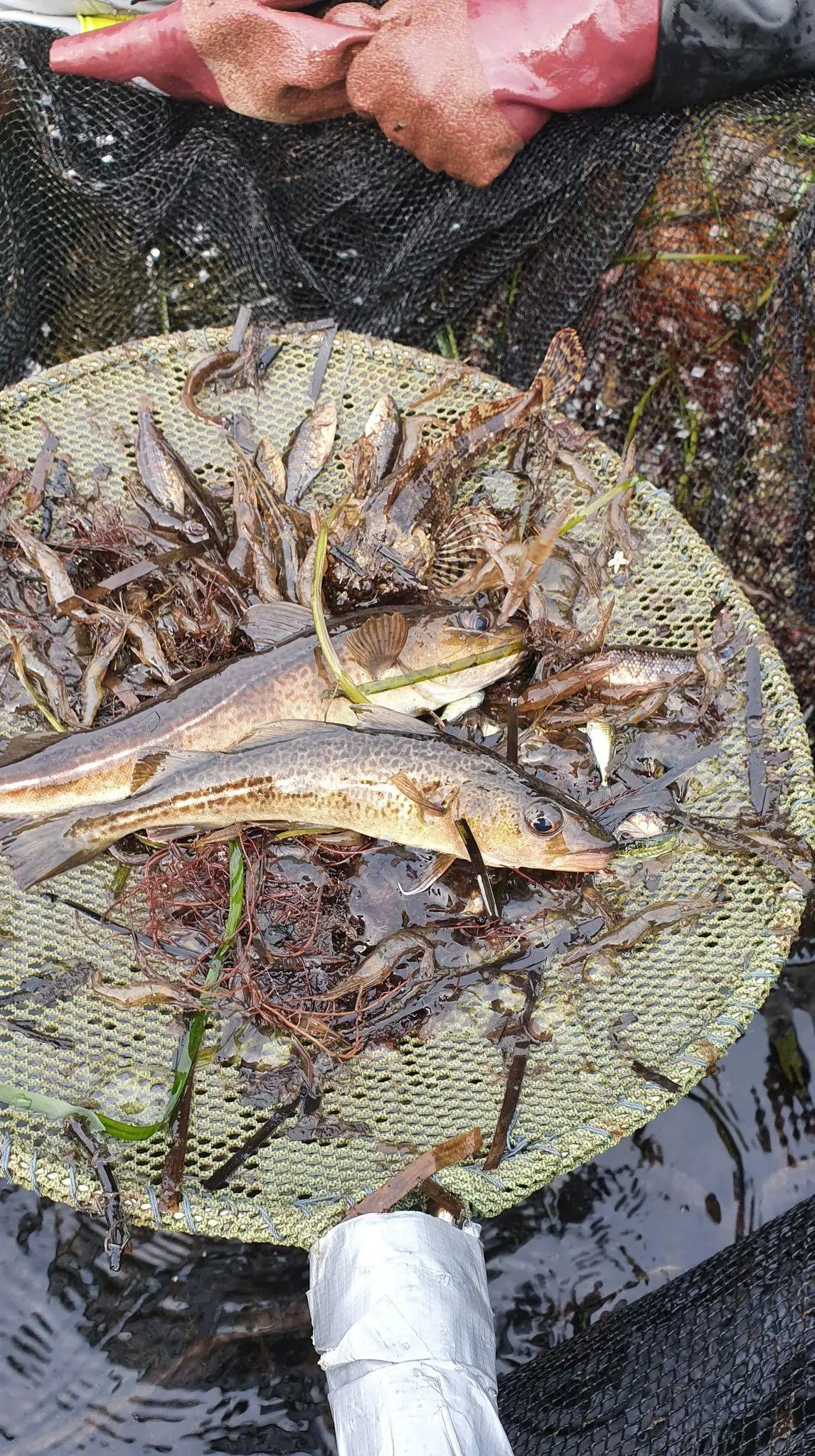
“If we know the genetic structure of a harvested stock, we can implement surveillance tools and inform fisheries management to make sure that we are conserving more of the species’ genetic variation, which is directly linked to, or determines, other measures of biological variation,” said Sodeland. “We need to further study the species that we are targeting through fisheries, to see what kind of genetic architecture they have and what this shows about our impact on them. This will enable us to detect genetics patterns in particularly vulnerable species and adjust our activities accordingly.”
Elevating disease resistance
Fin-fish and shellfish production can also be greatly enhanced through genetics. Aquaculture today faces many challenges. Animals have to cope with climate breakdown leading to warmer seas associated with less oxygen, and increased disease risk. Disease is the single biggest challenge facing aquaculture globally but genetic technologies have been a major breakthrough in combatting this, said Tim Regan of the Roslin Institute, University of Edinburgh.
“One example is a discovery by Professor Ross Houston of the Roslin Institute on genetic resistance to infectious pancreatic necrosis virus (IPNV) in Atlantic salmon,” he said. “This has allowed breeding strategies to overcome this once-devastating disease. Improved genetics also addresses other constraints related to sustainability, such as genetic selection for improving FCR or improved compatibility with alternative protein sources like plants or insects to reduce reliance on fishmeal and fish oil.”
In the UK, the rearing of species such as Atlantic salmon and rainbow trout relies entirely on genetic improvement technologies to safeguard high quality stocks. Examples include Genome Wide Association Studies (GWAS) where a population’s DNA is analysed to identify regions of the genome associated with a particular trait. The results can be incorporated into Marker Assisted Selection (MAS) to ensure better breeding programmes.
“Genetic technology has huge advantages,” said Regan. “In the case of disease, genetic resistance is more effective than antibiotics or vaccination, which require treatments throughout an animal’s lifetime, potentially increasing stress. There is also growing interest in land-based aquaculture systems for juvenile salmon. These have advantages and disadvantages, but genetics can help select animals that are better adapted to a given system.”
Still early days
There are some things to consider when genetic technology is applied. Although costs decrease rapidly year-on-year for these technologies, there are some challenges such as a lack of resources (e.g., reference genomes) and accurately matching genotype (genetic differences) to phenotype (traits associated with these genetic differences).
Broodstock for many salmon and trout breeding companies is generated outside the UK but there can be a mismatch between genotype and phenotype in different environments. Broodstock will have been selected for optimal performance in one environment, e.g., Norway, which might not manifest when the species is reared in different environments such as Scottish sea lochs.
However, better reference genome assemblies are being produced for Pacific oyster, flat oyster, lobster and the blue mussel. Larger companies can also afford the cost of genetic technology and conduct family-based breeding programmes where the effects of genetic variation can be studied with more accuracy and detail.
Compared with terrestrial livestock, selective breeding in aquaculture is in its infancy. Applying genetic technologies has huge potential to transform sustainable seafood production, says Regan.
“Improvements in FCR and disease resistance lead to less food used and fewer treatments needed, which in turn reduces environmental impacts,” he said. “Animals can also be adapted for breeding environments and improved husbandry, for example in hatchery settings, and this improves welfare.”
As genetics continues drawing attention, further work is still required. Many basic scientific resources are crucial and have not yet been generated for several species, for example reference genome assemblies. Basic lab model systems such as tissue culture techniques are also yet to be developed for almost every aquaculture species except salmon and tilapia. These models are crucial to a better understanding of diseases and allowing scientists to study particular tissues or genes in detail. They also enable adapting more powerful tools e.g., CRISPR to bridge the genotype-phenotype gap.
But the rate at which genetic technologies are being newly translated is astonishing, Regan said.
“This dramatically transforms our ability to answer bigger questions and generate more useful and impactful science, which improves sustainability and can really make a difference.”
Related Articles
 PROCESSING & REFRIGERATION
 PROCESSING & REFRIGERATION
 PROCESSING & REFRIGERATION