





An innovative new use for shrimp waste
By-products have been drawing attention for their potential to increase sustainability in various sectors, such as the food, diet supplement, animal feed and cosmetics industries. Over the years, these industries have been working to prevent waste by establishing ways to utilise the by-products that they generate along the way. Often these by-products are recycled for low-value applications.
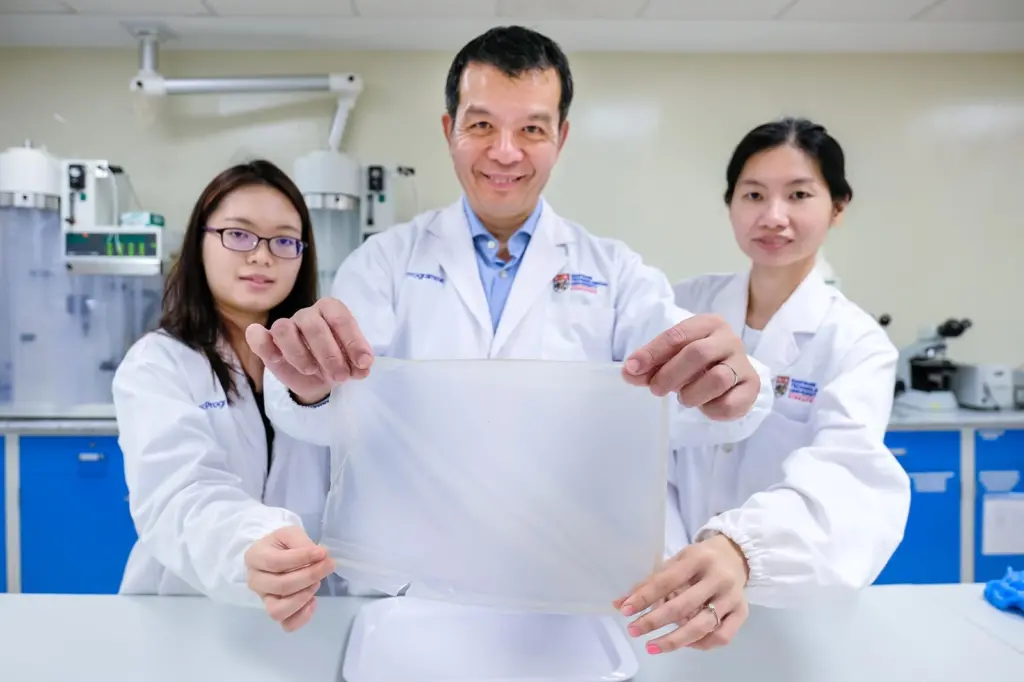
The use of by-products to maximise value has been a key focus for the seafood industry, including aquaculture and fisheries. One example of what might be considered a valuable by-product is shellfish waste. It is estimated that the seafood industry dumps around 6 to 8 million tonnes of this waste each year. Of this, 45-60% of shrimp, consisting of head, shell and tail portions, are discarded. But these have upcycling potential and could hold the key to creating higher value products, according to Professor William Chen at Nanyang Technological University in Singapore.
“The rising affluence of Asia in recent years has pushed up the demand for seafood consumption and related seafood processing industries worldwide,” Chen told WF. “This has also increased the amount of by-products such as shells, which have been treated as general waste, thus adding a burden to environmental sustainability. In some countries, these have been recycled as animal feed, and while this creates a rough framework of a circular economy, the value it adds is low. But shell waste is key to producing some very important products, for example biodegradable plastics.”
Chen and his team have developed a microbial fermentation method to extract chitin from shrimp shells. In general, the composition of shrimp by-products like shells is 20-30% chitin, 20-40% protein, 30-60% minerals (mainly calcium), and 0-14% lipids (muscle residues and carotenoids).
Now, the ever-increasing volume of these by-products is generating a particular interest in the extraction of chitin.
Scaling-up
Chitin is the second-most abundant polysaccharide in nature after cellulose. It has high commercial value in a wide range of applications such as drug delivery carriers, antibacterial agents and food stabilisers.
Chen and his team extract chitin from shrimp shells through de-proteinisation to remove proteins and demineralisation to remove the inorganic calcium carbonate on the shells. The chitin is then converted to chitosan to develop chitosan-based biodegradable packaging and clingfilm.
The team is currently scaling up in partnership with the food industry, including companies outside Singapore.
Chen said the innovation is cost-effective, does not generate secondary waste, and the extracted chitin is of higher quality compared to those extracted by harsh chemical treatment. Chemical treatment to remove proteins using sodium hydroxide (NaOH), for example, results in partial hydrolysis of the biopolymer, lowering its molecular weight. Meanwhile, the removal of minerals with hydrochloric acid (HCl) results in chitin with a high level of impurity content and polymer degradation.
“Chemical extraction methods are mainly based on strong alkaline or acidic solutions, which are costly and generate secondary waste solutions that are hazardous to the environment,” said Chen. “The quality of the extracted chitin is also suboptimal. Therefore, nature-based biological treatments such as ours are preferred to preserve chitin structure and reduce environmental pollution.
“In addition, the fermentation technology that we have developed is simpler in procedure, lower in energy consumption, and higher in quality of the extracted chitin as analysed for its high degree of deacetylation and molecular weight. We carefully select the microbes which are able to remove minerals and those which produce enzymes to remove proteins and lipids.”
Chitin and chitosan are renewable, biocompatible and biodegradable with non-toxic compounds that have many biomedical and food applications in addition to biodegradable packaging, Chen said. These may be anti-cancer drug delivery, antioxidant and anti-microbial (food preservation) applications, artificial skin or bone replacement materials. The extraction efficiency of chitin from shrimp shells is also higher, because the shell wall is thinner than that of lobsters or crabs.
Growing awareness
Although the generation of by-products from food processing is common, their utilisation has been low and their disposal is currently a huge challenge for processing industries with their adverse impacts on the environment and associated risks to human health.
For the seafood industry, by-products include more than just shells for chitin extraction, Chen said. There are also heads, tails, backbones, skin, scales and viscera from many other species. All of these can be upcycled for their high-value ingredients such as proteins and lipids. This is likely to reduce the generation of waste and add value to the circular economy.
“While we address the increasing amount of seafood products, there are other issues that we need to consider,” said Chen. “For example, processors can be unaware of the high value of chitin or the increasingly large volumes of waste that are being generated.
“Business owners may not be fully prepared for nature-based chitin extraction solutions or may lack the necessary logistics for waste collection. Through our work, we want the processing industry to see the business opportunity.
“Companies that generate the by-products may not need to venture into a new business of taking up upcycled products. Instead, they could consider partnering with those who are willing to take these upcycled products to create a value chain. In short, there should be a demand and supply value chain and everyone would benefit from the new opportunities.”
With Singapore being a small city state, Chen believes that it’s possible to develop test beds not just for upcycling innovations but also for value chain creation (integration of upcycled products into food production and other businesses) and the monitoring of supply chains (collection and distribution) using data analytics. This could then be amplified in areas beyond Singapore and, more importantly, used to develop upcycling innovations and to commercialise other food processing by-products.
Going forward, Chen and his team will be focusing on other areas, namely integrating a fermented solution rich in macronutrients (from shrimp shells) and micronutrients (from the microbes used for fermentation) into the food value chain. They are now exploring the possibility of creating nutritious consumer products in partnership with Vietnam Food (VNF), a company that specialises in processing shrimp co-products to create value-added ingredients for various industries.
“We hope that this will trigger the imagination of Singapore’s seafood industry,” said Chen. “To see that waste is not waste, but a misplaced resource, and that innovations need not be high tech and costly.”
Related Articles
 PROCESSING & REFRIGERATION
 SEAFOOD
 SEAFOOD