


There’s growing global acceptance that many of the traditional and still current uses of commercially-produced fish only capture a small fraction of the full potential value and that continuing on this wasteful path is economically unviable and unsustainable. This mounting awareness is being met with a rising number of initiatives that are seeking to use much more of fish in a wide variety of new ways that extend well beyond food.
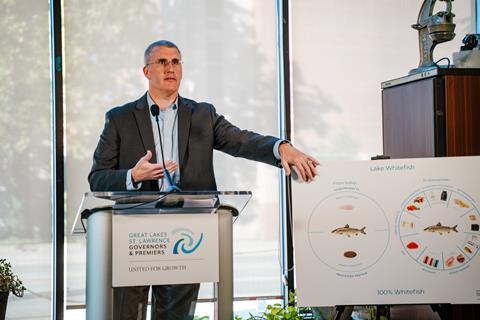
Recognising that a total fish utilisation strategy offers significant opportunities for North America’s Great Lakes St. Lawrence region, and that such a transition for its fish resources has the scope to drive greater economic returns, create jobs and further develop rural economies, the Great Lakes St Lawrence Governors & Premiers (GSGP), a Chicago-based organisation that represents the Governors of the Great Lakes States and the Canadian Premiers of Ontario and Québec, and its partners, launched the 100% Great Lakes Fish initiative in September 2022.
The project has been supported with grants from the Great Lakes Fishery Trust, the Great Lakes Fishery Commission and the Ontario Commercial Fisheries’ Association.
100% Great Lakes Fish’s launch followed a few years of research and data gathering: In the Great Lakes commercial fishery, the project team saw a tremendously undervalued and underutilised asset. Taking particular inspiration from some of the ongoing efforts in Iceland, which has dramatically elevated the utilisation of its cod catch across food and non-food consumer categories, GSGP is exploring the benefits that could stem from a similar approach with its own catches, starting with lake whitefish.
The primary goal of the initiative is to demonstrate a 100% fish model works for commercially-caught fish in the Great Lakes, GSGP Executive Director David Naftzger told WF.
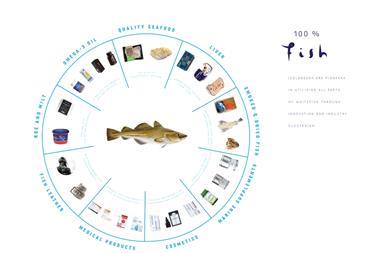
Highlighting that usually the 40% of a fish that’s fillet is consumed while the other 60% is discarded or used for low-value animal feed, Naftzger explained the project wants to identify new uses for that other 60%, such as protein and oil, collagen and leather, so that less is wasted of each commercially-caught fish from the Great Lakes.
“100% Fish holds great potential for the Great Lakes. By more fully using each fish and creating higher value products, we will create more jobs, grow our economy and improve the sustainability of our fishery,” he said.
Crucially, 100% Great Lakes Fish is the first project of its kind in the region – an area that includes eight US states, two Canadian provinces and five Great Lakes, which together make up the largest surface freshwater system in the world.
Positive evaluations
GSGP first learned of the 100% fish concept in 2017, after which a team then travelled to Iceland and the concept’s origins to learn more and see how it could be applied to the Great Lakes region.
It found that in the not-too-distant past, Iceland discarded around three-fifths of each cod – much like the current state of play in North America – but that today, with more than 90% being consumed or processed, the value generated by the products being made from each fish has increased from a level of US$12 to a remarkable $5,000.
In 2021, GSGP commissioned a report from the Iceland Ocean Cluster, which works across business sectors to maximise the beneficial use of the entire Icelandic cod. This report looked at the potential for a 100% fish approach to improve the management of silver and bighead carp which have been overwhelming the Illinois and Mississippi River systems in the Great Lakes states.
More recent work has focused on the commercial fishery in the Great Lakes themselves. In this regard, GSGP and its partners initially focused on lake whitefish, which has recently suffered a significant decline in stocks in many areas similar to the Icelandic cod decades ago.
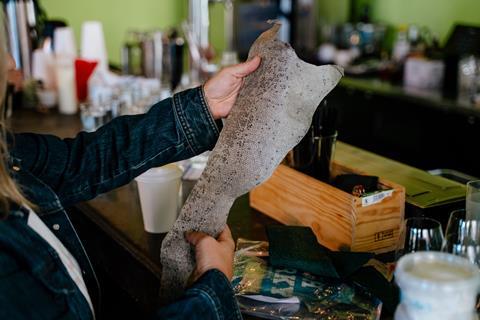
As part of the work, GSGP shipped lake whitefish to leading fish research lab Matis, in Reykjavik, Iceland, to conduct biotechnical testing. This assessed the various component parts of the fish and then the Iceland Ocean Cluster evaluated the potential for these parts to be made into commercial products. They identified collagen from the skin and scales and fish leather from the skin among the most promising products.
First by-products
Building on the success of the work with lake whitefish, GSGP expanded its focus to include all of the major commercially-caught fish species from the Great Lakes, including walleye (pickerel), yellow perch, lake trout and others that are not typically targeted, such as White Sucker.
Again, Matis conducted biotechnical testing and the Iceland Ocean Cluster identified potential new products. In this instance, they identified fishmeal and oil and protein hydrolysates as having high potential, along with those previously identified for lake whitefish.
In the near term, the Iceland Ocean Cluster estimated that products that can be made from each walleye would double or triple the amount now generated by just the fillet, Naftzger said.
“GSGP is already working to identify and develop potential prototype products such as protein hydrolysates, which can be used as a food additive,” he said, adding that a larger number of high-value products will support longer-term valorisation in future years.
Already, in just over one year, the project has:
- Expanded from just lake whitefish to four additional species
- Created new prototype collagen from lake whitefish skin and scales and prototype fish leather from multiple species
- Started the development of protein hydrolysates from walleye heads and frames, and commercial-scale fish leather from fish skins
- Identified opportunities for fish companies to develop fishmeal, fish oil and collagen
- Created a high-level template for a regional fish research centre where value-added products and equipment needed to produce them could be developed and tested
Developing a regional fish research centre is a key challenge that GSGP is working to overcome, Naftzger said.
“A specialised facility is needed that can focus on Great Lakes fish,” he said. “Most facilities around the world focus mostly or even exclusively on ocean fish. Further, the fish industry in the Great Lakes is made up of many smaller producers and is not vertically-integrated. Therefore, unique value chains and bespoke business models will likely need to be developed to best capitalise on 100% fish. A regional centre could greatly accelerate progress by bringing together biotechnical and business expertise and connecting it to the Great Lakes fish industry.”
Adding momentum
With regards to the impact that its endeavours have so far had, GSGP announced the 100% Great Lakes Fish Pledge in October last year, inviting regional fish companies to sign on to its commitment to productively use 100% of each commercially-caught fish by 2025.
Twenty-one companies have now signed on and have begun working with one another, GSGP and partners to take advantage of existing opportunities to use more of each fish while pursuing longer-term development of high-value products such as fishmeal and oil, protein hydrolysates and collagen, Naftzger advised.
“It is a great testament to the interest and excitement surrounding this initiative – interest and excitement that will lend itself well to further growth. We expect that more companies will bring new ideas to this campaign,” he said.
“We have generated significant awareness about the idea and kickstarted a regional conversation about what’s possible with fish parts. For example, who knew that fish leather is the second toughest leather in the world?”
The innovation won’t end there. GSGP is already planning on further expanding 100% Great Lakes Fish to include more species. Amongst other projects, Matis will be conducting biotechnical testing of cisco (lake herring) from Lake Superior in early 2024.
Similar to previous testing on other species, Matis will assess its various component parts. This analysis will then inform an evaluation of the potential for these parts to be made into commercial products.
GSGP is also exploring a value chain analysis for various 100% Great Lakes Fish products in order to identify potential economic and environmental benefits for the region. For example, how would commercial-scale fish leather be produced from a fisher to the fish processor to a tanner to a distributor to a retail outlet to a consumer?
It also plans to reach out to other sectors such as fashion, cosmetics, nutraceuticals and others to see where partnerships might be possible with various products.
A part of the analysis would include potential policy measures, investments, or other forms of support that may be needed from the Great Lakes States, Ontario, Québec or other governments to foster long-term growth, Naftzger said.
Having seen a “significant shift” in the mindset of companies in the region with regards to fish utilisation since the launch of the 100% Great Lakes Fish campaign, he said the concept of full utilisation now seems to be well respected.
“People often wonder why we hadn’t done it sooner. There is growing awareness of near-term opportunities to use parts of commercial fish in products such as liquid fertiliser or animal feed. And, some companies are already involved with new products like fish leather. These represent major accomplishments given the traditional nature of the commercial fish industry and the fact that most fish processors still operate much like they did decades ago. The long-term vision for 100% Great Lakes Fish is a more diverse and sustainable commercial fishery that generates more economic value, employment and environmental benefit for our region. This initiative has accomplished a lot in its first year. GSGP and its partners are committed to long-term success,” Naftzger said.
Besides its research partners in Iceland, the 100% Great Lakes Fish project team includes State and Provincial regulatory agencies (Illinois, Michigan, Minnesota, Ontario and Wisconsin); Tribes and Inter-Tribal Organisations (Chippewa Ottawa Resource Authority; Grand Traverse Band of Ottawa and Chippewa Indians; Great Lakes Indian Fish & Wildlife Commission; and Little Traverse Bay Bands of Odawa Indians): a binational treaty agency (Great Lakes Fishery Commission); and industry leaders (Motor City Seafood; Ontario Commercial Fisheries’ Association).

Topics
- 100% Great Lakes Fish
- Business & Finance
- By-product solutions
- By-products
- Collagen
- Fish Oil
- Fish Skin
- Fisheries
- Fishmeal
- Great Lakes Fishery Commission
- Great Lakes Fishery Trust
- Great Lakes St Lawrence
- Great Lakes St Lawrence Governors & Premiers
- Iceland Ocean Cluster
- Interviews
- lake whitefish
- North America
- Ontario Commercial Fisheries’ Association
- Processing & Refrigeration
- Special Reports
- Sustainability