

The 100% Fish initiative
There are around 10 million tonnes of targeted wild capture fisheries that are wasted every year. This waste consists of cut-offs from processing, heads, frames, guts, skin and scales – which are often thrown back into the ocean where they interrupt marine food webs or they are thrown to landfill, where this organic material breaks down releasing methane.
As the global aquaculture sector increases, this too creates processing side streams that add to this wasted volume and cumulatively contribute to the global carbon footprint associated with food waste.
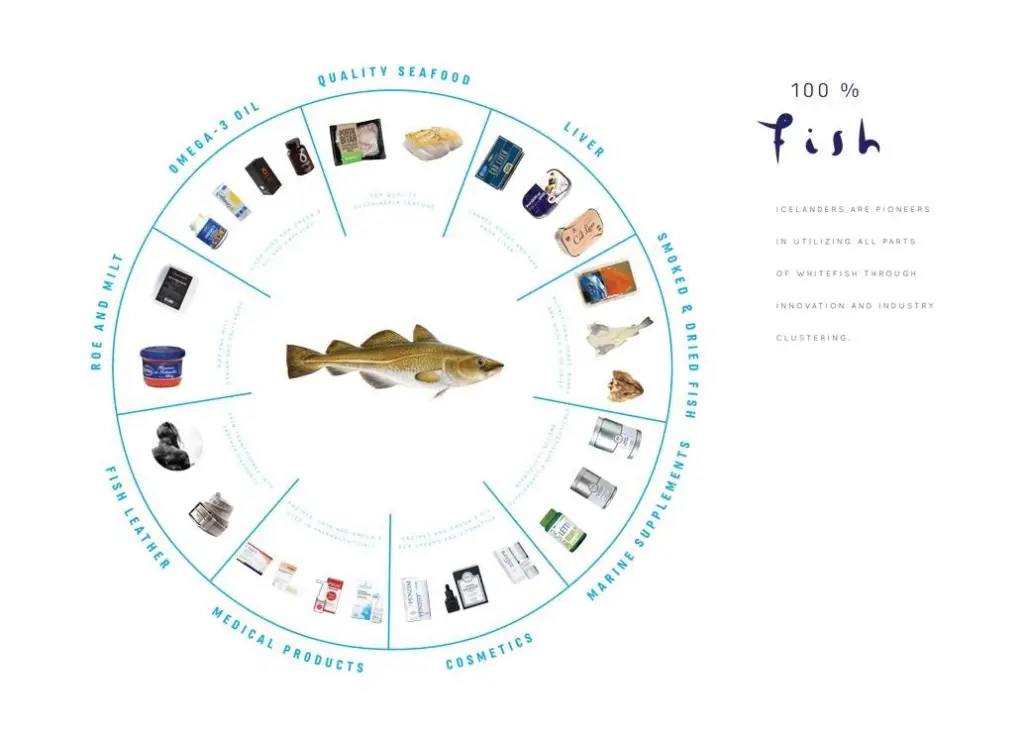
By creating value chains, functional businesses and products that sustainably and profitably use these wasted parts of the fish, not only does this reduce GHG emissions by providing incentive to save and use, it supports SDG 14 too. The impact of the saved waste in Iceland has been huge – for Atlantic cod now 90% of every fish is utilised instead of wasted and significant value has been created: supporting win-win for environment and economy with a single fish once valued at $12 to one with potential value of $4,750 – with new socially beneficial products provided to the market – addressing UN SDG 12 as well.

A global challenge!
The Iceland Ocean Cluster (IOC) was established in 2011 with the aim to strengthen relations between different parts of the seafood industry; the classical ones like the fishermen and processors, and the “new“ seafood industry; start-ups and R&D taking the seafood industry to new heights. Early on, the full utilisation of seafood became the main emphasis of the IOC on a global scale. The reason was simple; 10 million tonnes of waste was rarely talked about in the global arena!
The initial impact of the 100% Fish movement has been seen in Iceland, where it originated – driving a complete change in the narrative around seafood – where side streams are no longer thought of as waste but as an economic and biological resource.
Atlantic cod has gone from a fish where only the fillet (45%) of the fish was considered the product and often poorly handled to a fish that is now utilised more than 90% (including the heads, skins, bones, guts, and cut-offs) to create a wide range of commercial products across sectors, e.g., food, feed, cosmetics, nutraceuticals, textiles, and even biomedical applications.
Initiatives in different regions
100% Fish is now being adapted to new countries and new seafood species. In the Great Lakes, US & Canada, 50% of the volume of commercial catch was going to landfill, contributing to GHG emissions – the 100% Fish initiative has provided support for a regional initiative where business models have been created that have the potential to create value from 100% of the catch. In the next three years, these solutions will be implemented.
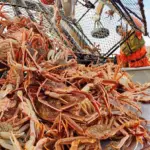
Comparable work is now being explored in Alaska for commercial fisheries where huge volumes of seafood are going to waste. Also, the Pacific Islands Ocean Cluster has about 60% of global tuna resources within its region. With support from 100% Fish initiative, it is starting to address waste, challenges and in the next three years, it will reduce waste and GHG emissions, retain and creating more value for the island and indigenous island populations.
The 100% Fish initiative is also supporting individual companies with large volumes of seafood waste, driving new value chain options that in the next three years could reduce waste in the shrimp, sardine and lumpfish sectors where much of the volume (40-80% of animal).
The scaling of 100% Fish in the next three years will be a significant step toward transforming the 10 million tonnes of fisheries waste and supporting the COP28 declaration on the transformation of food systems and to SDG 12 and 14.
More interest in zero-waste seafood
The 100% Fish movement is expanding rapidly and drawing huge attention from the seafood industry, media and not least the start-up world. As mentioned before, 100% Fish projects all around the world are becoming more noticeable – projects are from the industry, policy and research sectors and they are all important steps towards full utilisation and zero waste.
100% Fish is more than a single project – the initiative itself has launched a global movement, that provides a recognisable and leading platform inspiring widespread change and providing a conduit to bring together industry, the entrepreneurial community, researchers and policy makers. Furthermore, 100% Fish brings together leaders all around the world and communicates and showcases the best examples all over the world.
While 100% Fish started in Iceland, it is now an international initiative that is enabling large scale economic and environmental benefits.
Targeting 1 million tonnes!
As 100% Fish reaches new audiences, and new seafood sectors these beneficial impacts is growing to a global scale and contributing to regional economies all over the world.
Over the next three years, the 100% Fish initiative will be engaging directly with key actors (industry, research, innovation and investors) all over the world in countries, and seafood sectors that currently waste 50% or more of their seafood harvest.
A number of these projects have already been identified or commenced (Namibia, Korea, Greenland, Pacific Islands etc), and the team is currently connecting with stakeholders globally to identify where there is volume, momentum and market opportunity for new value chains from seafood side streams.
The visibility of the 100% Fish initiative goes a step further. By sharing the opportunities for value creation in the seafood sector, 100% Fish also seeks to inspire grassroots actions of its own all over the world. Cumulatively, over the next three years, we aim to share the 100% Fish message even more widely and reduce waste from global seafood both directly and indirectly – targeting around 1 million tonnes of waste to be saved and re-routed into commercially viable products.
This will mean 1 million tonnes of seafood that is saved from being thrown to sea or being disposed to landfill, a volume that will stimulate job creation, innovation and the research community. This will support health of wild stocks and reduce methane emissions equivalent to this saved volume.
Related Articles
 PROCESSING & REFRIGERATION
 SEAFOOD
 SEAFOOD