



Running for four years through to September 2025, a key research project is looking to develop healthy and nutritious foods through novel upcycling and extrusion technology. Called “HybridFoods”, the project is being funded by the Research Council of Norway and led by the Norwegian Institute of Food, Fisheries and Aquaculture Research (Nofima).

Nofima Senior Scientist and HybridFoods Project Manager Åge Oterhals told WF the project will develop technology for the formulation of a texturised intermediate product, including fish proteins.
“Further formulation of this to end-products/foods can be based on existing food concepts, ranging from burgers to different marinated products,” he said.
Oterhals explained that the main principle used in the project is based on high moisture extrusion.
After mixing fish powder with other plant-based ingredients, moisture is added to the mixture and it’s run through an extrusion process involving heating, kneading and formulation into a fibrous structure with the use of a cooling die. A PhD-student in the project focuses on this part of the research activity.
“We have already performed initial tests that confirm the possible technical formulation of a texturised product with the expected food-grade sensory and physical properties. The next steps will be to optimise extrusion conditions and study the influence of fish powder inclusion levels,” Oterhals said.
Texturisation is a method in which a dough is processed and kneaded in an extruder during heat treatment, before coming out through a cooling nozzle where a fibrous meat-like structure is formed.
Wasted resources
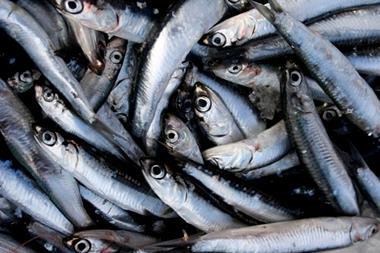
Asked about the main opportunities for the utilisation of this knowledge and technology, Oterhals pointed to the large quantities of fish by-products and by-catch that are currently wasted or thrown overboard by the fishing industry.
This, he said, is primarily due to a lack of technical solutions and economic incentives, noting that based on Norwegian statistics, as much as 144,000 tonnes of by-products are wasted, with 77,000 tonnes of this by industry trawlers.
“On a world basis, we are probably taking about millions of tonnes, and there is still a huge potential for value creation within the sector,” Oterhals said. “Introduction of the EU landing obligation aims to eliminate discards by encouraging fishers to fish more selectively and to avoid unwanted catches. Globally, it is estimated that between 7 and 10 million tonnes of commercial fisheries catches are discarded annually. However, there is still no obligation to land by-products after processing of the fish onboard the fishing vessel.”
Food-grade powder
Otherhals’ professional career within the fish and aquaculture industry dates back to 1988, since when he’s had a special research interest in the utilisation and processing of by-products into feed and food-grade ingredients.
“The idea behind the HybridFoods project goes back 20 years when I investigated the use of food-grade fish powder in food formulations. A research application at that time was not funded. However, the basic concept has matured during the years and based on last year’s increased interest in texturised plant proteins as meat replacers, was realised in a research project funded by the Research Council of Norway at the end of 2021, that’s planned to run until the middle of 2025.”
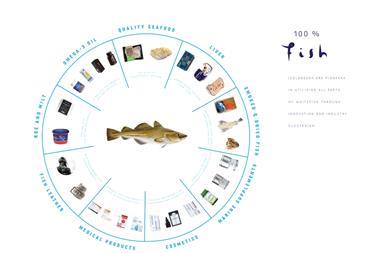
Two other research projects Oterhals led laid the basis for HybridFoods, both on the utilisation of whitefish by-products after processing of cod, haddock and saithe onboard industry trawlers.
“Depending on the type of main product, headed and gutted fish or skin and bone-free fillet, up to 65-67% of the fish ends up as by-product. Being food grade, this raw material can be processed into food-grade fish powder. We have in one of these projects – ‘Unlocking novel product possibilities and barriers for commercial utilisation of whitefish residual raw materials onboard factory trawlers’ (WHITEFISH) – developed a new process that significantly improves the sensory properties of a whitefish powder.
“However, development of a larger food market for such a product is still a challenge. The HybridFoods project aims to develop food formulation technology based on fish powder technology from the WHITEFISH project to expand such market possibilities,” he explained.

More effort required
While there is a lot of interest in this type of product development, especially in Europe, for now, HybridFoods remains in the research phase for development of technology and food concepts.
“Commercialisation will depend on interest from industry and scaling of the technology,” Oterhals said.
This makes it hard to estimate when products could become available on the market, he added. As such, he expects it to still be some years away.
Returning to the “huge amounts of fish by-products and by-catch that is still wasted”, he believes that a lot more can be done to progress the zero waste/maximum value approach.
“Fish by-products are food-grade after processing to the main edible products and should be treated as side-streams with potential for valorisation into food products. Fish by-products contain high value proteins, minerals, vitamins, and omega-3 fatty acids, and may significantly contribute to global food security if upcycled into the food chain,” he said.