

Raising the swell
EU aquaculture production is at record levels, but the sector still has plenty of ground to cover before it comes close to meeting the demands of the market.
When it comes to harvested volumes, EU aquaculture has historically fallen well short of the world’s leading producing nations, but a new study finds that the region’s seafood farming sectors have been slowly but steadily ramping up their output. The report also points to market conditions that are ripe for sustaining long-term growth.
The latest edition of The EU Fish Market, compiled and published by the European Commission’s European Market Observatory for Fisheries and Aquaculture Products (EUMOFA) reveals that the bloc’s aquaculture production reached a 10-year high of almost 1.4 million tonnes in 2017 and a value approaching €5.1 billion. Compared with 2007, this volume was 11% higher, while the value had almost doubled.
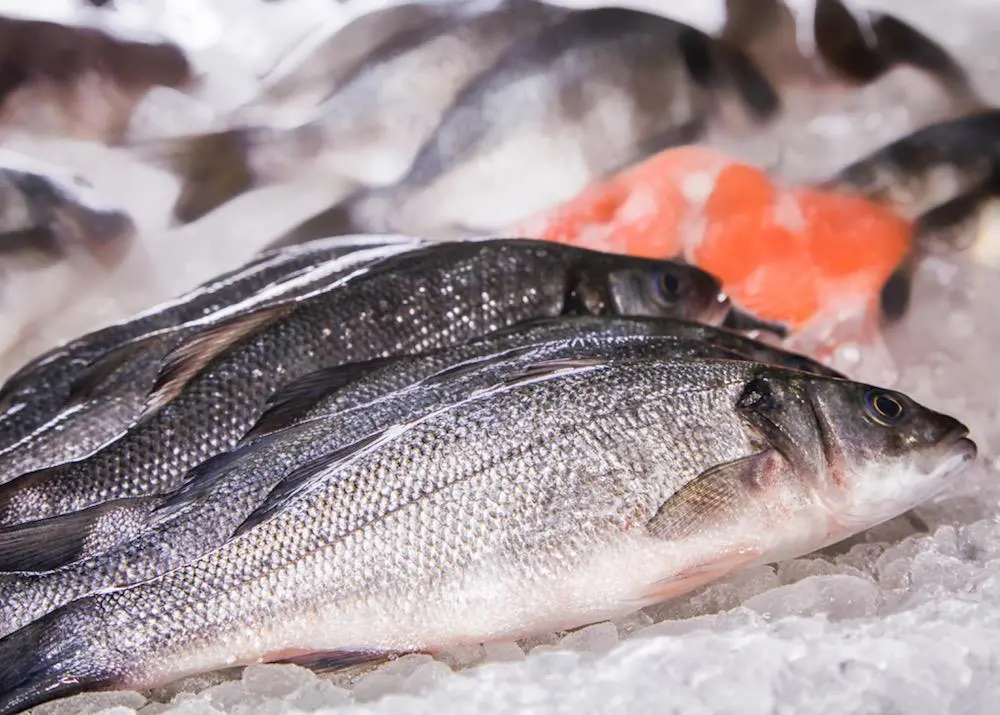
These surges can be largely attributed to the increased production and prices of key species such as Atlantic salmon, sea bass and sea bream over the course of the decade. In addition to the rising demand, EUMOFA identified that the quality of aquaculture products has improved, and there has also been increased development of some new species, such as meagre and Senegalese sole.
While a number of elements continue to hinder aquaculture volume growth across EU member states, in particular the bureaucratic red tape associated with licencing and access to suitable farming locations, in value terms, all of the commodity groups farmed in the EU reached record levels in 2017. The most significant growths compared with the previous year were registered by salmonids, which increased by 18% or €321 million. These species were followed by bivalves, which increased by 20% or €204 million, and freshwater fish – up by 19% or €55 million.
National expertise
Currently, EU aquaculture is led by a handful of member states: notably Greece for seabass and seabream, Spain for mussels and turbot, France for oysters, Italy for clams, and the United Kingdom (Scotland) for salmon. In fact, these five producing nations accounted for three-quarters of the region’s production in 2017 in both volume and value terms.
With regards to species, more than 40% of the value of EU farmed production in 2017 was represented by salmonids. In that year, 209,628 tonnes of salmon were produced in the EU, resulting in a total value in excess of €1.3 billion, while trout production reached 195,417 tonnes, generating a total value of €689 million.
Of the region’s other main finfish species, the sea bream harvest increased by 14% in both volume and value to 94,936 tonnes and €485 million, while sea bass production experienced marginal declines to 79,102 tonnes and €490 million.
For the same period, EU mussel production reached 464,240 tonnes and a value of €423 million, the clam harvest totalled 45,505 tonnes and €297 million, and 99,857 tonnes of oysters valued at €492 million were farmed.
Slipping consumption
But while there’s growing consumer awareness of seafood as a rich source of healthy, high-quality protein, EUMOFA’s study estimates that the EU28’s per capita consumption of fish products fell to 24.35 kg in 2017, meaning that EU citizens consumed, on average, half a kilo less than in the previous year.
This decline can be attributed to a reduced supply. Comprising domestic production and imports, the volume available to the market in 2017 totalled 14.6 million tonnes. While this was one of the highest amounts in the past decade, it was down 0.3% or 48,640 tonnes from the previous year, due to a reduced wild catch.
However, it should be noted that EU aquaculture contributed an additional 67,172 tonnes of seafood, or 5% more than it did in 2016, offsetting much of the fisheries’ shortfall.
The volume and value of seafood imported into member states from third-countries, meanwhile, continues to increase, as does the EU’s standing as a net importer of these products. In 2018, with domestic production totalling 5.4 million tonnes, imports reaching 9.2 million tonnes, and an export trade of almost 2.2 million tonnes, the EU trade deficit reached a high of more than €20 billion. In short, the consumer demand for seafood remains very high.
Indeed, according to the report, EU household expenditure on fish and seafood followed an upward trend from 2009 to 2018, when it reached €59.3 billion. This represented a 3% increase over 2017 and a 24% increase compared to 2009. In 2018, the households of all EU countries, with the exception of Sweden, spent more money buying these products than in 2017.
While Italy is historically the member state that spends the most on seafood, and Portugal has the greatest per capita expenditure, Spain recorded the highest increase of total outlay – spending an additional €400 million or 4% more than in the previous year.
Bigger picture
With world consumption and population both rising at unprecedented levels, the international seafood trade is becoming ever more competitive. Global aquaculture production now stands almost 112 million tonnes (latest estimates from the Food and Agriculture Organization of the United Nations – FAO), and since 2000, its share of total world seafood production (a combined 205.2 million tonnes in 2017) has increased continuously. Moreover, since 2013, aquaculture production and consumption has been higher than that of wild catches.
In each of the world’s top four producing countries, the majority of production originates from aquaculture: more than 80% in China, 70% in Indonesia, and more than half in Vietnam and India. It is also worth noting that aquaculture in China accounts for 57% of total global fish and seafood production.
By contrast, only 21% of EU production originates from aquaculture. But this in itself is an opportunity for the EU to be more self-sufficient and less reliant on imported products – specifically through aquaculture.
The EU’s aquaculture product supply in 2017 amounted to almost 3.5 million tonnes, with that domestic contribution of less than 1.4 million tonnes, and more than 2.1 million tonnes of imports. Member states also exported 230,000 tonnes of aquaculture products, leaving an apparent consumption that was shy of 3.3 million tonnes.
In comparison, the apparent consumption of wild fisheries products was 9.2 million tonnes, or 74% of the total. As such, the average EU citizen consumed 18kg of fish and seafood originating from catches and under 6.4kg from aquaculture.
But with wild fisheries only able to supply finite volumes of sustainable products and member states’ seafood demand largely being met by imports, there’s an increasingly heavy onus on EU aquaculture to overcome its various obstacles and establish pathways to much larger levels of production – thereby better positioning the sector to meet the strong future market demand for locally and responsibly produced seafood. Against such a backdrop, this is surely the ideal time for it to make some waves.