


With Russia considering punishing Norway for imposing sanctions on its leading fishing companies, the Northern Atlantic may soon see unprecedented conflict between two of Europe’s fishing superpowers.
On 8 July 2025, the Norwegian Government announced the imminent imposition of sanctions against Russian companies Norebo and Murman Seafood, with the explanatory allegation that these companies were involved in “surveillance and reconnaissance” activities regarding “underwater infrastructure in the offshore areas of Norway and allied countries.” The move marked a turning point in fishing industry relations between the two nations, which had survived decades of Cold War and was believed to be immune to political turbulence.
Speaking at an industry event on 27 August, Ilya Shestakov, head of the Russian fishing industry regulator Rosrybolovstvo, promised an unavoidable reckoning for Norway’s fishing industry unless the sanctions, which Russia considers unjustified and unlawful, are removed.
“The actions of the Norwegian side will inevitably lead to the destruction of an effective system of management and regulation of fishing in the North Atlantic,” Shestakov threatened.
Reasons for Russia’s anger are clear. Russian catches of cod and haddock in the Northern basin have already suffered as a result of the sanctions, local fishermen revealed during a meeting of the Territorial Fisheries Council in Murmansk on 20 August.
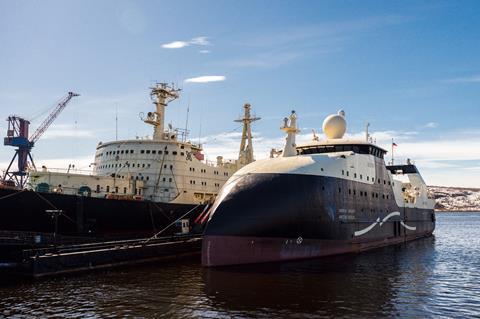
The restrictions affected 42 vessels, accounting for roughly 40% of catches in the Northern Basin – a term used in the Russian fishing industry to describe the Barents, Baltic, Norwegian and White Seas. Russian fishermen are worried that Norway could further harm the Russian fishing industry in the region.
If Norway bans Russian vessels from fishing in its economic zone, Russian commercial vessels will be left without catches, and Russians without fish, warned Vitaly Kornev, President of the Association of Fish Market Production and Trading Enterprises. “Russia has been primarily catching cod in Norway’s economic zone, as the Russian was completely depleted during the Soviet times,” he said.
Already imposed restrictions have triggered a price hike on the Russian cod market, Kornev noted.
In response to the sanctions, Shestakov threatened to ban Norwegian fishing vessels from working in the Russian waters. This idea raised a few eyebrows in the Russian fishing community, as Norway has never caught much fish in the Russian waters. In 2024, Norwegian fishermen caught only 6,610 tonnes of fish in the Russian territory, which is dwarfed by the 2.3 million tonnes they caught in their national waters.
Moreover, Shestakov’s threat has already partly materialised, as on 27 August, Fiskebat, the Norwegian vessel owners’ association, called on its fishermen to stay away from Russian waters until the situation is clarified.
Self-sabotage
In response to the Norwegian sanctions, Russian fishermen could resort to a strategy they used in the 1960s – at the worst point of the Cold War – in retaliation; catch all juvenile fish in Russian waters, Fomin said. “As a result, neither they nor we will have any fish.”
Calls to start catching juvenile fish in Russian waters to punish Norway for the sanctions have been repeatedly made on the Russian side over the last few months.
This strategy, if actually executed, is unlikely to affect Norwegian fisheries in the short-term, commented Anne-Kristin Jørgensen, Senior Researcher at the Fridtjof Nansen Institute. “However, given the precarious state of the cod stock, a strategy like this, applied over a longer period of time – say, several consecutive years, could perhaps do enough damage to the stock to put a large share of Norwegian and Russian fishers out of business. If worse came to worst, one might imagine a Newfoundland-like scenario – an irreversible stock collapse,” she added.
It also remains to be seen whether Russian fishermen would agree to execute such a plan, even if the authorities opt to go ahead with it.
“Although I can imagine some Russian fishers thinking ‘why should we protect the small fish for the benefit of the Norwegians’, I still find it hard to believe that they would consciously set out to destroy not only the livelihood of Norwegian fishers, but also that of themselves and their colleagues – not to speak of depleting the fish stocks beyond their capacity to recover,” Jørgensen said.
Russia is short of options on how it could bite back at the Norwegian fishermen for imposing sanctions, commented a source in the Russian fishing industry who wished to stay anonymous to discuss sensitive issues. “In terms of fishing in the Northern basin, Russia is heavily dependent on Norway, and Norway is not dependent on Russia at all,” the source said.
Overfishing and targeting juvenile fish are on the agenda, because nothing more sensible can be proposed.
“This will be like shooting yourself in the foot,” the source said. “For the Russian fishing industry, this would be a suicidal mission, as it would ruin everyone’s business.”
“In practical terms, Russia has limited means to seriously undermine Norway’s fishing industry without also harming its own long-term interests,” commented Anthony Heron, a Research Associate at The Arctic Institute. “Many key fish stocks, particularly cod, are shared resources that require careful management to remain sustainable. If Russia were to begin deliberately catching juvenile fish or unilaterally expanding its catch, it would ultimately be engaging in ecological self-sabotage.”
End of joint regulations?
Norway and Russia struck a deal on fishing quotas in the Barents Sea in 1976 despite Cold War tensions. The two neighbours have since renewed the agreement annually. However, this year negotiations between Russia and Norway on quotas for cod fishing in the Barents Sea have been on the verge of collapse for the first time in decades, Fiskeribladet, a Norwegian publication, reported, citing its own sources.
Unless the agreement is extended, each side will set quotas independently.
“If the Barents Sea cooperation breaks down, I don’t think Norway and Russia would throw caution to the wind and set enormous quotas for themselves. This did not happen in the Norwegian Sea either,” Jørgensen said.
With separate management, the two states would face a “collective action problem” – a term referring to a situation where individual actors, in this case, the two countries, have an incentive to act in their own self-interest, which could lead to overfishing and depletion of fish stocks. Over time, this could result in the “tragedy of the commons” in the Barents Sea, whereby shared resources are overexploited due to the lack of a common management system.
“The rhetoric we’re seeing may not be about actual fisheries strategy, but about signalling and political leverage. The Barents fisheries are one of the last functioning areas of bilateral cooperation with Norway, so threatening that stability is a way to exert pressure and demonstrate that no domain is immune from geopolitical tension,” Heron said.
According to Jørgensen, the current crisis is probably the worst in the history of the cooperation. “Russian authorities take a very serious view of what they see, and not unreasonably so, as a breach of agreement, as the principle of mutual access is enshrined in formal agreements between the parties. Norwegian authorities, for their part, have made it clear that Norway’s line is to align with the sanctions adopted by the EU. Given that, the situation long seemed deadlocked,” she said.
However, there has been another recent meeting between the parties, and both have a very strong interest in continuing the cooperation.
“If the Norwegian-Russian fisheries agreement collapses, both sides would technically be free to fish unilaterally, which would undermine decades of cooperative management and could rapidly lead to stock depletion. We’d essentially be returning to the pre-1970s era of open competition in the Barents Sea,” Heron said.
Russia and Norway may be on the verge of a fish war in which there are going to be no winners, the Russian fishing industry source said. “Everyone raises the stakes, hoping the opponent will crack. As neither side is willing to budge, this process can go really far.”
Heron added: “Whilst we may see more nationalist rhetoric and sporadic episodes of tension, I don’t expect a literal “fishing war,” Heron added. “The greater risk, I believe, is the loss of trust between scientific and state institutions that have worked together for their peoples for decades”.
Even if the all-out war is avoided, in the near term, the industry can expect increased politicisation of resources and more unilateral actions within exclusive economic zones. The ecosystem, however, Heron added, doesn’t obey political boundaries. “So, any long-term decoupling will carry environmental and economic risks for both sides,” he said.