


Alongside delivering deserved downtime to fishers and the communities they come from, these annual, open-to-all country-wide festivities recognise an industry that has supported countless generations, and which continues to be a global leader.
Iceland has one of the richest fishing histories in the world. Indeed, with its ideal location in the North Atlantic, fishing has been an integral part of Icelandic life since the Norse settlers arrived over 1,000 years ago. It’s perhaps surprising then that Sjómannadagurinn (Fishermen’s Day) didn’t exist before 1938. In 1987, this holiday, traditionally the first Sunday of June but running most of the weekend, was extended to all Icelandic sailors – celebrating all commercial seagoers and their families. Today, Fishermen’s Day is observed all around the country, but particularly in those areas where the fishing industry remains central to daily life and the local economy.
Varying in scale, festivities include everything from parades, live music and balls to funfairs and competitions. There are also plenty of activities on the water, with many working vessels festively decorated and opened to visitors. Essentially, Fishermen’s Day is a fun celebration of Iceland for Icelanders – honouring all those who work and have worked at sea as well as the many sectors that have evolved out of the fishing industry.
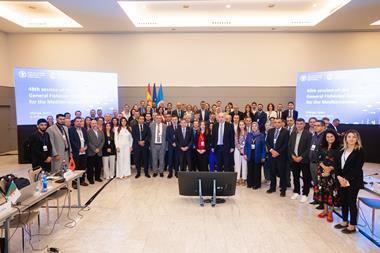
This year was the second consecutive year that WF was invited by Seafood from Iceland, part of Íslandsstofa/Business Iceland, to its shores along with some of the UK’s leading fish and chip businesses to experience Fishermen’s Day. This time around, the group included the top three takeaways (Yarm Road, Darlington, The Fish Works Largs and Kellaways Truro), as recognised by the National Fish & Chip Awards, together with the Frozen At Sea Fillet Association (FASFA), the trade organisation that represents international fishing companies, fishing vessels, and distributors of frozen-at-sea (FAS) filleted whitefish.
While 2024 took us to Reykjavik and then the Snæfellsnes Peninsula in the west, this year’s main destinations were Siglufjörður and Neskaupstaður in the north and east, respectively.
Surrounded by mountains and the fjords, Siglufjörður is Iceland’s northernmost town. It started out as a tiny shark fishing village, but since 1900, has grown to become one of the largest municipalities in Iceland and the capital of its herring fishing sector. Neskaupstaður, meanwhile, which is about as far east as you can go, has access to some of the North Atlantic’s most plentiful whitefish grounds. As such, the town has evolved from its traditional handlining roots to become the homeport of a modern trawler fleet.
It was in these two key fishing hubs that our group was warmly welcomed by some of the locally-based companies. As well as opening the doors to their operations, these leaders explained the strategies they are taking to further advance the fishing industry. This was a real coming together: On the one side there was the catching and processing sector with state-of-the-art vessels, processing plants, cold storage, and harbour facilities; on the other side was one of its biggest end markets – the iconic UK fish and chip trade.
Iceland is a significant supplier to this market, with several exporting seafood companies having strong, long-standing relationships with UK fish importers. At the same time, Seafood from Iceland works hard to strengthen the international business relations, brand and awareness of Icelandic fish.
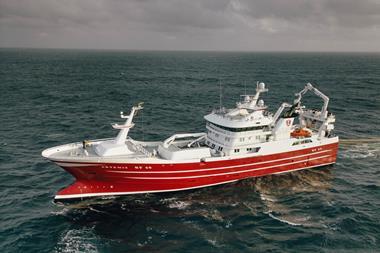
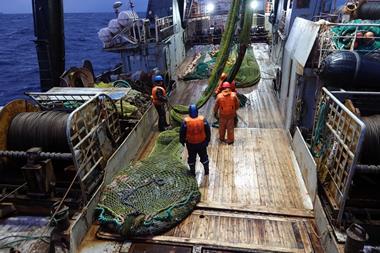
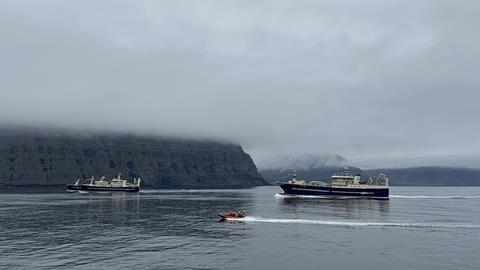
Emphasising these ties, on a trip out into the Neskaupstaður fjord, Graeme Burrell of Yarm Road (winner of the Fish and Chip Takeaway 2025) confirmed that fish caught by Blaengur NK-125 – the Síldarvinnslan-owned factory trawler we were travelling on together with the crew, their families and friends, and also several colleagues from the local processing plants – was being fried and sold in his shop that very day.
Back in the main town, celebrations were well underway, with rowing races, angling competitions and tug-of-war battles drawing crowds of locals. There’ll be similar scenes all around Iceland, explained historian and Fishermen’s Day expert Smári Geirsson.
Offering fresher than fresh
Our party’s whistlestop industry tour took us to the Siglufjörður operations of Ísfélag hf, a company that has evolved from a local icehouse into a fully-integrated fishing and processing enterprise. Founded in 1901, and headquartered in Vestmannaeyjar, Ísfélag is Iceland’s oldest active fishing company.
Ísfélag Sales Director Jón Páll Kristófersson described how – through modernisation, sustainability initiatives, fleet expansion, mergers and a public listing in December 2023 – the firm continues to successfully balance heritage with innovation.
Today, it runs a fleet of nine ships, comprising four pelagic vessels, one freezer trawler, two groundfish vessels, one prawn vessel and one longliner, while processing is conducted in three separate locations with two fish processing plants, two fishmeal and fish oil factories, a shrimp factory and a chitosan facility. Sales and exports, meanwhile, are mostly conducted through Iceland Pelagic ehf, Arctic Seafood and StorMar ehf. (Ísfélag owns Arctic Seafood and is a major shareholder in the other two companies.)
It currently has 8.9% share of the Icelandic groundfish and pelagic quotas, putting the company third overall (behind SVN and Brim), and has the fourth highest allocation of cod quotas, with a total 11,081 tonnes.
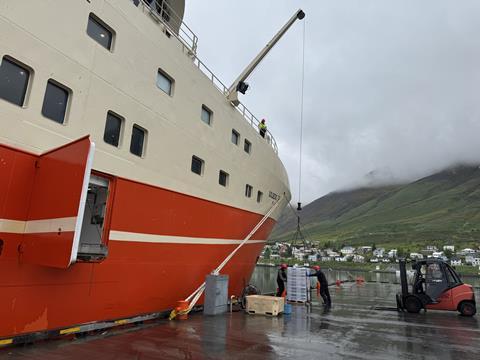
Freezer trawler Sólberg OF-1 is of particular importance to the UK fish and chip trade, with the 2017-built vessel catching and processing around 1,000 tonnes of raw material per month. In the eight years since its arrival, Sólberg has caught more than 100,000 tonnes of fish.
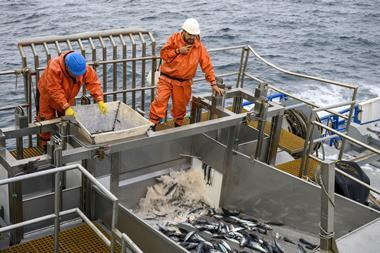
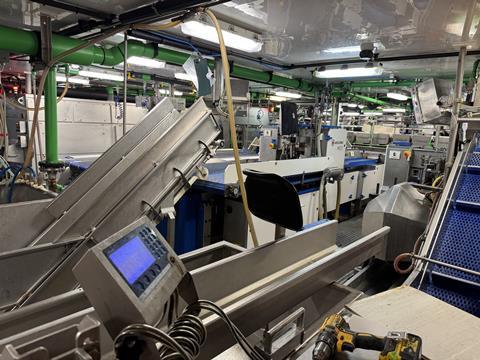
Onboard is a well-equipped processing plant that’s producing high-quality frozen products within four hours of being caught – “fresher that fresh”, Kristófersson remarked.
The vessel also has a factory that produces fishmeal and fish oil from all the raw material that doesn’t go into the FAS supply chain.
Sólberg’s FAS whitefish fillets are mostly sold under the well-known Rammi Frozen at Sea brand, which has been producing and selling these products since 1987, and the UK’s fish and chip sector is its largest market for both cod and haddock.
“Each month, Rammi delivers over 300 tonnes of fillets to the UK fish and chip market. This is around 1.6 million servings each month or over 17 million meals per year,” Kristófersson said, adding that alongside the brand’s strength, Ísfélag has benefited from “close, strong, long-lasting relationships” with its customers.
High-tech processing
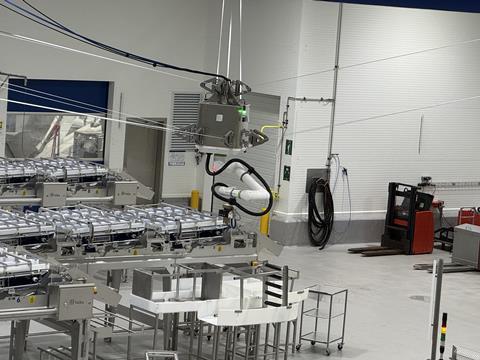
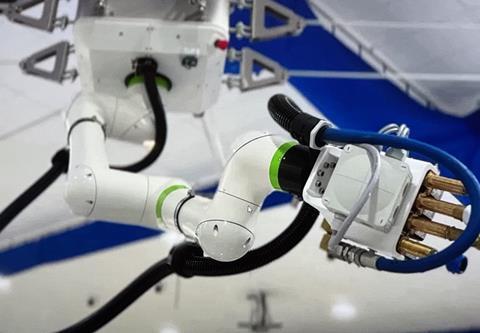
To witness the importance of continued innovation within Iceland’s whitefish sector, our delegation also visited Samherji hf’s plant in Dalvik. This facility was opened in August 2020 after four years construction and development and is regarded as one of the most advanced groundfish production facilities in the world – thanks in part to its adoption of some of the latest robotic technologies.
“The first day here, we processed around 15 tonnes of fish, but just a few days later, we were up to 80 tonnes per day. Getting up to full production capacity happened very fast” Samherji’s Dalvik Production Manager Jon Saemundsson said.
Sited close to key fishing grounds, the state-of-the-art factory predominantly focuses on processing cod and haddock, with 2024 providing its best year to-date for haddock – a near 50-50 split due to the lower Icelandic cod quota, Saemundsson confirmed.
“We are doing really good things with haddock. We are producing loins and tails – mostly fresh loins, but we are also packing fresh portions and tails. Then there is IQF tails, portions and loins.”
Ice Fresh Seafood is Samherji’s sales and marketing division, based in Iceland. It handles the global marketing, sales and export of all the company’s seafood products, including fresh and frozen groundfish, farmed fish and pelagics. These products are sold to wholesale, retail and processing customers worldwide. Its main buying market is France, while for the UK, a lot of its whitefish goes through retail, value-adding channels, with its main customer being retailer Marks and Spencer.
The demand for Icelandic cod in France is very strong, Samherji Sales and Marketing Manager Jonas Baldursson said. “I think the most important thing for the market is to have balance. Prices are extremely high, but they are still buying. However, they’re not buying the same volume that they used to when they did a promotion of cod loins, for example, in some of the retailers. Then it was maybe 100 tonnes a week, and they could get it because there was so much fish. Now the Norwegians have more or less stopped sending fresh fish into this market, so the Icelanders are the main suppliers.”
Icelandic cod is also “very big” in the US market, he added.
“For me, it’s the perfect marriage when there’s balance between supply and demand and everyone’s happy.”
With regards to the fish and chip trade, Baldursson agreed that frozen is usually a much better option than fresh which could have been caught 12 days before purchase, compared to FAS’s 24 hours or less.
Unfortunately, many fish and chip consumers are yet to recognise this fact, confirmed Burrell.
“We’re always trying to convince our customers that the frozen at sea is every bit as good – if not better – than fresh, because it’s maybe just caught four hours before processing. But the challenge is customers see the word ‘frozen’ and have already decided it’s a lesser product,” he said.
Provenance does help in these situations, clarified Josette Foster from the National Fish & Chip Awards’ team. She said: “It does help you if you’re selling a premium fish, like cod from Iceland. People do appreciate that.”
Before our party’s Sjómannadagurinn sojourn came to a close, our host – Íslandsstofa’s Head of Fisheries & Food Björgvin Þór Björgvinsson remarked: “For centuries, fishing and fish have been crucial to life in Iceland…Today, it’s still one of our biggest industries and most important exports. But we take nothing for granted here, we’re always looking ahead, working with others like UK fish and chips, and innovating, so people can continue to enjoy our fish.”