


Chile’s aquaculture outpacing wild-capture for first time since 2020
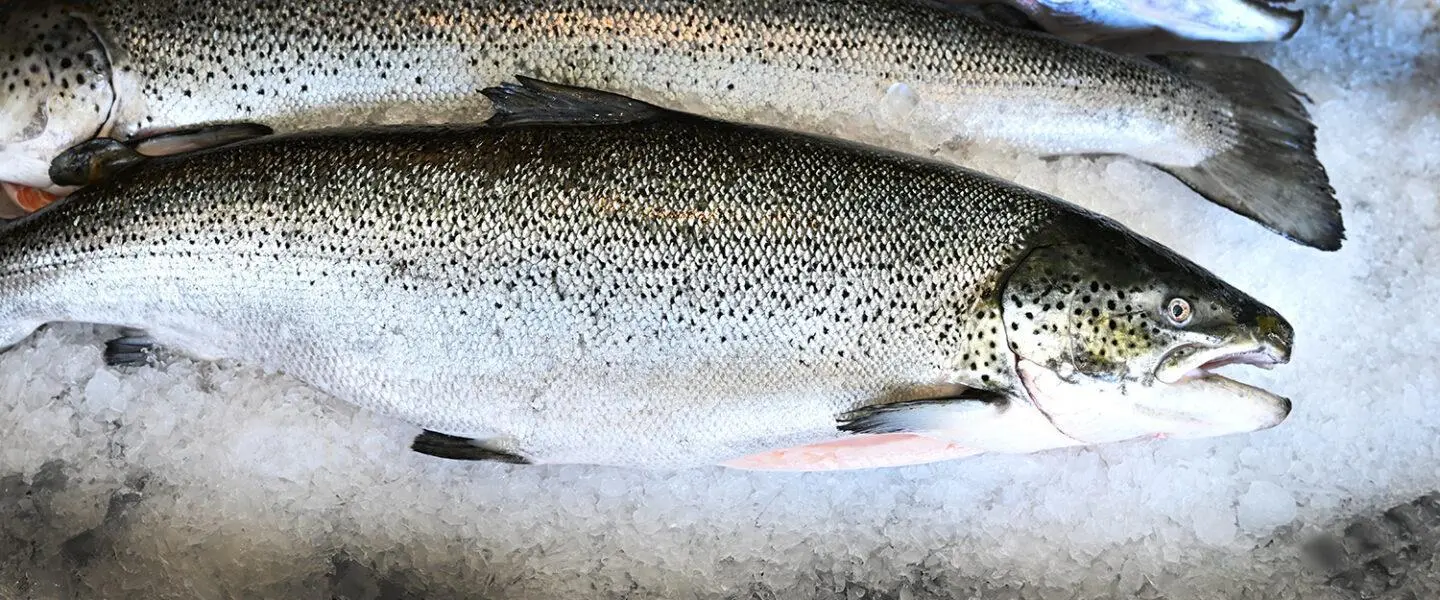
Chile’s aquaculture sector produced greater yields than either the country’s artisanal and industrial fleets reported in 2024, marking the first time since 2020 that farming volumes have achieved the feat. According to new data from SERNAPESCA, fish farming yielded 1.46 million tonnes last year – driven largely by salmon (970,000 tonnes) and molluscs (412,000 tonnes) – compared to 1.37 million tonnes landed by the artisanal fleet and the 1.07 million tonnes by the industrial fleet. Experts say the milestone reflects not just Chile’s growing role in global aquaculture, but also the mounting challenges facing capture fisheries worldwide.
According to Felipe Sandoval Precht, who heads the National Fishing Society (SONAPESCA), an association that gathers the industrial fleet’s business leaders, Chile’s current fishing legislation attributes a number of exclusive species to artisanal fishermen.
“That’s why they have been presenting higher volumes than us,” Sandoval, who was a State Minister in the 1990s, told WF.
Moreover, last year had some particularities, including surprisingly large numbers of anchovies in the northern part of the country, with schools of fish moving near the shore. Given that the anchovy was inside the five-mile strip, only the artisanal fishermen could catch it, Sandoval said.
Osciel Velásquez, owner of a crustacean company in the region of Coquimbo, pointed out the ban on the industrial fleet within the first five miles in the northern coast was established by the current Chilean administration – and the industrial fleet received it as a form of punishment.
“The industrial fleet had always operated there. But the government had ideological reasons for banning it and prioritising the artisanal fishermen,” he said.
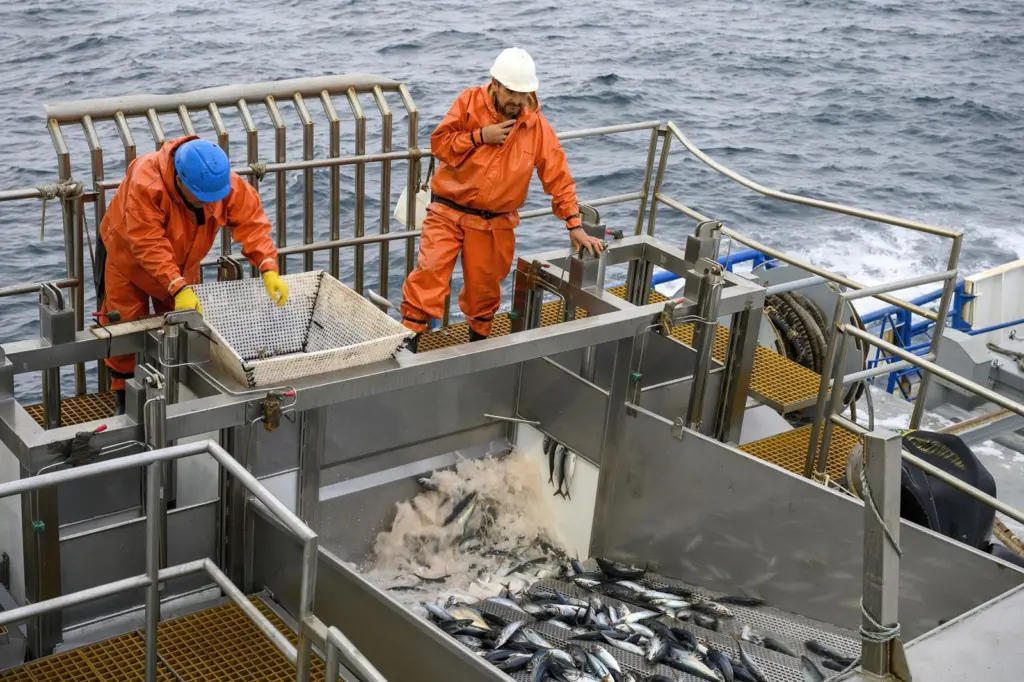
A silver lining is that, while its volume was inferior to that of the artisanal fleet, the industrial fleet is able to sell its catch for direct human consumption (with higher gains). With freezing equipment, the industrial fleet adequately preserves the quality of the Chilean jack mackerel onboard, something that the artisanal fleet is unable to do.
Chilean jack mackerel represented more than 920,000 tonnes of the industrial catch in 2024.
“The artisanal fleet’s catch has to be processed by the fishmeal and fish oil industry,” Sandoval added.
Climate impacting catches
2024 was not a good year for Chile’s artisanal fleet either. Adverse climate conditions made it impossible for the boats to catch all the sardines assigned by the government.
“The government established fishing bans for a few species, like sardine and anchovy, in some moments of the year, because the individuals were too young,” explained Zoila Bustamante, who heads Chile’s National Artisanal Fishermen Confederation (CONAPACH).
Meanwhile, southern hake, another important commercial species, wasn’t exploited to the full due to adverse climate and the presence of fur seals in fishing grounds.
“Part of the anchovy schools of fish in the north was scared away by the presence of Chilean jack mackerel, something that harmed our operations,” Bustamante said.
Both the Chilean common hake and the Humboldt squid, she said, are almost collapsed fisheries in Chile, so their volumes last year were negligible. “Now, they have been appearing again, after much time.”
Filling the fish protein void
With regards to Chilean aquaculture, salmon and mollusc farming has gained more prominence. Alicia Gallardo, a fishing consultant for Latin America and the Caribbean at the Food and Agriculture Organization of the United Nations (FAO) told WF, adding that it’s a common global trend.
“FAO’s report demonstrated that in 2022 fish farming surpassed fishing in the world as a whole. That’s happening due to climate change, overfishing and illegal fishing in many regions, with a consequent reduction of the stocks,” she said.
As a result of such imbalances, the remaining schools of fish have been moving away and migrating. It’s a problem that also affected the southern rays bream (Brama australis), which used to be caught by the artisan fleet but has disappeared from the Biobío region – as confirmed by a recent SERNAPESCA alert.
Aquaculture, though, has been a steady source of proteins, Gallardo said.
“In Chile, it hasn’t had a concrete growth, but it outgrew fishing due to [that] industry’s problems,” she said.
Also, despite much criticism from civic organisations, Chilean salmon farming is internationally recognised as a sustainable business, Gallardo affirmed.
“The country has positively dealt with the biological threats that impacted aquaculture years ago and has a biosecurity law that allows for a healthy production.”.
Deploying new farming tech
Many companies have been investing in modern technology in order to improve the fish quality and their production, helping Chile maintain its position as one of the industry’s world leaders. That’s certainly the case with the salmon farming in the region of Magallanes, where the islands, canals and fjords create an excellent environment for marine aquaculture.
“In order to achieve maximum efficiency, salmon producers in the region have been continually investing in technology – from biotechnological tools that improve the species’ genetic lineages to sensors that monitor the fish’s behaviour,” said Carlos Odebret, who heads the association of salmon producers in Magallanes.
Odebret said that the pursuit of high-level performance in that industry avoids all kinds of losses in the production process, something that leads not only to higher volumes and quality, but also to lower environmental impact.
“When it comes to farmed salmon, a single [meal] plate generates 10 times less carbon emissions than a plate of beef. It also demands a much smaller fraction of the planet’s surface and a minimal amount of fresh water,” advised Ricardo García Holtz, CEO of Chilean salmon farming company Salmones Camanchaca.
The company has implemented monitoring systems in order to verify the oxygen levels of the water in its production centres, which have enables it to detect sudden threats. Other sensors have been deployed to identify harmful algae blooms (HABs).
“We also adopted technology that optimises the feeding process, avoiding losses. That’s fundamental for environmental and financial sustainability,” García said, adding that the feed cost makes up 50% of the total production expenditures.
Adding value to fisheries
Meanwhile, the fishing industry will have to undergo adaptations of its own in order to keep being profitable in a scenario of smaller stocks, Gallardo affirmed.
Earlier this year, a law determining new fishing quotas for the industrial and for the artisanal fleets was approved, with more resources being destined to artisanal fishing.
“It’s something [that’s] important for its development, but the post-fishing chain will have to add more value to the product if the volumes keep declining,” she added.
Sandoval said the new law changed the agreements that the Chilean state had established with the companies back in 2012 and that should be valid for 20 years. In some cases, the industrial fleet lost up to 30% of its potential to the artisanal fleet.
“A few business leaders have been saying they will legally question the new law, given that the game’s rules were suddenly changed.”
Velásquez is among those who think that the change must be legally forbidden. “We’re losing historical rights. The current administration has taken that measure without taking into account technical reasons. It was a purely ideological decision,” he argued.
Bustamante added that the new law has merely made legal something that had already been happening. “Most of the fishing effort has been done by the artisanal fleet. The industries have been ceding their fishing rights [to] us in many cases. But it’s undeniable, the new law has benefited us,” she said.
The Chilean state has been incentivising artisanal fishermen to work with small-scale fish farming as a manner of diversifying their gains, confirmed SERNAPESCA National Director Soledad Tapia.
“That’s something that presents an important challenge for us as a monitoring institution, given that we must look for a sustainable development for aquaculture, in harmony with human health, animal health and environmental health,” Tapia said.