



Nigerian aquaculture boost
It is hoped the transfer of genetically improved farmed tilapia (GIFT) fry will kickstart a new domestic industry, leading to improved livelihoods and food and nutrition security
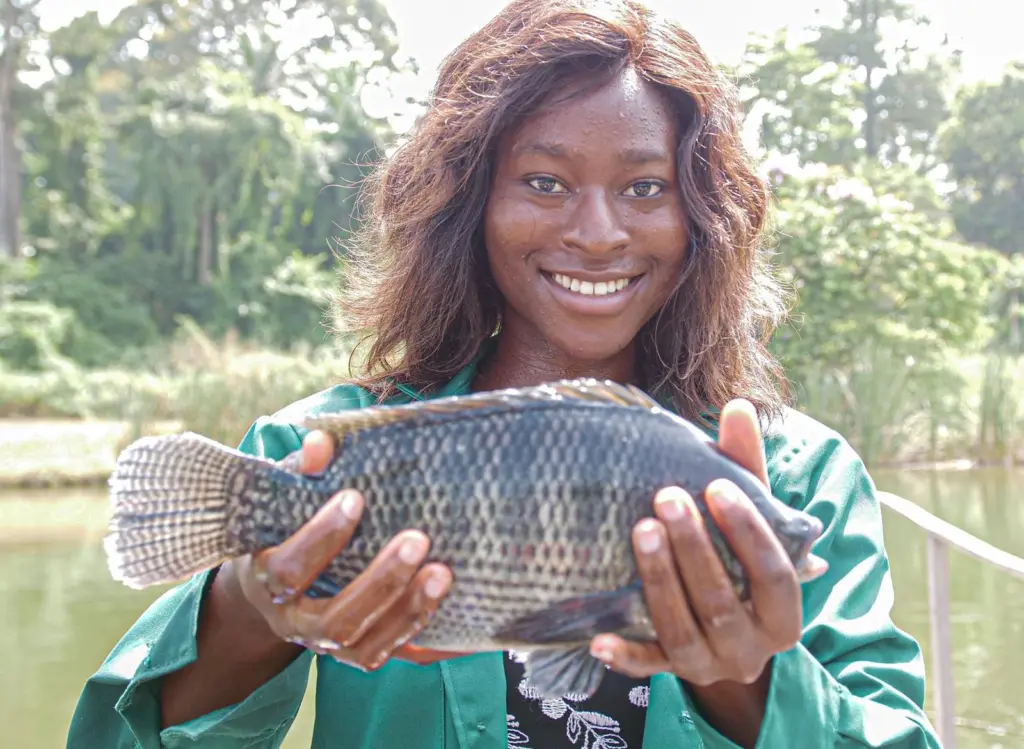
A new agreement between WorldFish and leading Nigerian tilapia producer Premium Aquaculture Limited (PAL) is to see genetically improved farmed tilapia (GIFT) transferred to Nigeria with the aim of supporting the growth of the country’s fish farming industry.
As well as enabling a new domestic sector through WorldFish’s fastest growing Nile tilapia (Oreochromis niloticus) to-date, this first private sector partnership between the international, non-profit research and innovation institution and a hatchery operator is expected to increase smallholder income and employment, deliver significant quantities of a new low-carbon footprint food to narrow the fish supply-demand gap and lead to better nutrition and health among the Nigerian population.
With GIFT fry being transferred this month from WorldFish’s headquarters in Malaysia to PAL’s secured quarantine facility in Nigeria’s Ogun State under a robust environmental risk management programme and strategy, the project which has the support of both the Bill and Melinda Gates Foundation (BMGF) and the United States Agency for International Development (USAID), aims to have WorldFish/PAL GIFT tilapia available in Nigerian markets by late 2023.
The agreement also involves the establishment of a parental broodstock as well as to breed, propagate and disseminate fry and fingerlings across Nigeria.
According to WorldFish Project Leader for the BMGF, Dr Colin Shelley, the agreement reflects WorldFish’s ambitions for future growth and investment in the African continent and its confidence to impact at scale to support small-scale aquaculture producers as they “charter their pathway out of poverty”.
Shelley told World Fishing & Aquaculture that as well as Ogun, the project will also be conducted in the state of Delta. It will work with two or three SME hatcheries and 100 grow-out farmers in both states.
“Once we transfer the fry (F0), they will be under quarantine for six months until they reach maturity. Then they will breed to give F1 fry. Then it will take another 5-6 months for F1 fry to reach maturity to breed and produce F2 fry. These will be available for pilot testing among SME hatcheries and grow-out farmers, so the first fingerlings won’t be available in Nigeria for at least 12 months once they have been delivered,” he said.
Overcoming hindrances
The project highlights that while tilapia is one of the most important groups of aquaculture species in the world, accounting for 5.5 million tonnes of the 82.1 million tonnes of aquaculture food-fish produced in 2018, the main bottleneck to expanding tilapia aquaculture and production is the lack of a systematically managed and maintained breeding population to produce high-quality seed in required quantities that are accessible to farmers year-round.
At the same time, WorldFish Project Advisor, Dr Rohana Subasinghe, explained, “Fish is critically important to Nigeria for food and nutritional security, foreign exchange, employment and livelihoods. Yet, a steep change in supplies and distribution is necessary over the next 20 years to realise its full potential.”
In partnership with BMGF and USAID, WorldFish is investing in a research and development programme that is designed to prepare and bio-securely transfer GIFT from Malaysia to Nigeria, establish a GIFT breeding population for disease-free broodstock/seed dissemination, and establish a healthy GIFT seed industry/business and GIFT-seed-based smallholder out-grower business/industry in Nigeria, said WorldFish Country Manager Dr Sunil Siriwardena.
PAL Senior Manager, Govinda Raju, commented, “This technical collaboration is poised to propagate and disseminate WorldFish’s 17th generation fast-growing strain of GIFT tilapia in Nigeria. We are highly confident that it will boost tilapia production in the country as well as farmers’ income.”
Global importance
WorldFish’s GIFT has been distributed to many developing nations, and several studies have identified the socio-economic benefits arising from farming this tilapia, including improved rural income and employment. According to the Asian Development Bank (ADB), for example, the economic internal rate of return on investments in GIFT development and dissemination was more than 70% over a period from 1988 to 2010, with a present estimated net value of US$368 million in constant 2001 prices.
It has also been estimated that nearly 50% of global Nile tilapia aquaculture production is now GIFT or GIFT-derived and that about 75% of tilapia consumed in developing countries is GIFT.
The GIFT project was launched in 1988 by WorldFish (formerly ICLARM) and partners in Norway and the Philippines using the same selective breeding method used in the 1970s in Norway for salmon and trout. The result was the world’s first genetically-improved tropical aquaculture fish species.
After the GIFT project ended, fish were transferred to WorldFish for a further pedigree-based selective breeding programme that continues to this day.
The base population selected for the GIFT Nile tilapia strain comprised four wild African strains (Egypt, Ghana, Kenya and Senegal) and four farmed Asian strains