


The Federation of European Aquaculture Producers (FEAP) has called for a fundamental rethink of how the European Union supports aquaculture, warning that decades of stagnation will continue without decisive action.
Speaking at the inaugural meeting of the European Ocean Board in Brussels last month, FEAP welcomed the creation of the high-level platform but cautioned that it must deliver tangible results rather than more discussion. Representing Europe’s finfish farming sector, FEAP highlighted governance, the sustainable blue economy and ocean health as key pillars of the forthcoming Ocean Pact.
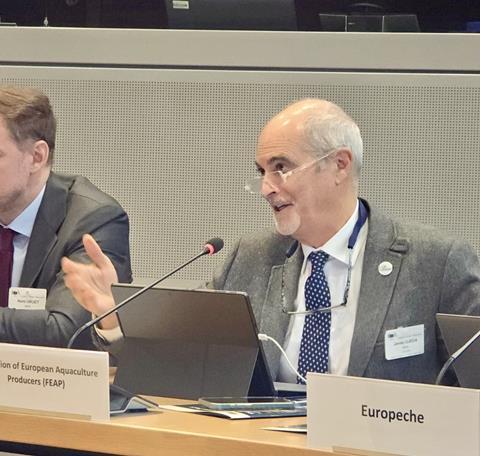
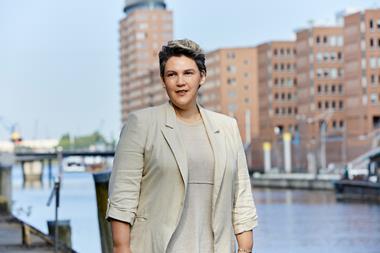
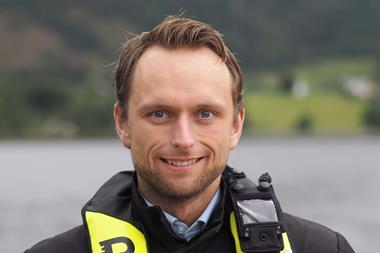
However, Javier Ojeda who represented FEAP delivered a blunt assessment of current conditions. “Our fish farmers are tired of layers and layers of European regulations,” he said. “They are exhausted by legislative inflation and cumulative regulatory pressure. Even national competent authorities cannot cope with it.” He added that simplification efforts are undermined by a constant stream of new rules.
Ojeda argued that the sector needs a supportive business environment, particularly for small and micro-enterprises, rather than what he described as a ‘regulatory nightmare’. He pointed to Norway as evidence that strong environmental standards can coexist with industry growth.
FEAP also outlined specific challenges requiring urgent solutions, including regulatory uncertainty around fish transport packaging, the growing impact of cormorant populations and organic aquaculture rules deemed unworkable.
“This Board will provide added value to aquaculture only if it serves to change this situation,” Ojeda said. “This sector needs solutions, not more problems.”
Looking ahead, FEAP called for binding or at least influential recommendations from the Board, cross-sector coordination and ‘reality checks’ across EU member states. Ojeda proposed conducting 100 field assessments to better understand barriers to growth, insisting that overregulation rather than licensing is the core issue.
FEAP concluded that without structural reform, the Ocean Pact risks falling short, urging the EU to establish a dedicated aquaculture policy framework and ensure economic impacts are fully assessed.