
Maine’s aqua roadmap
With four major goals in place, Maine’s new 10-year plan for aquaculture shows how the industry will continue to support livelihoods and bolster the state’s blue economy.
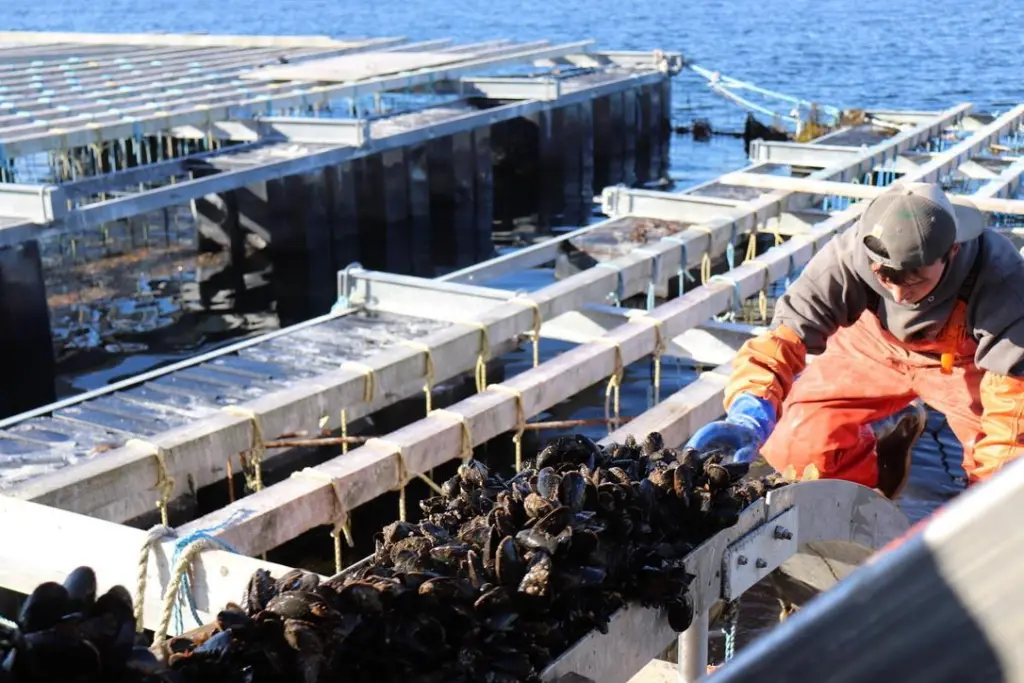
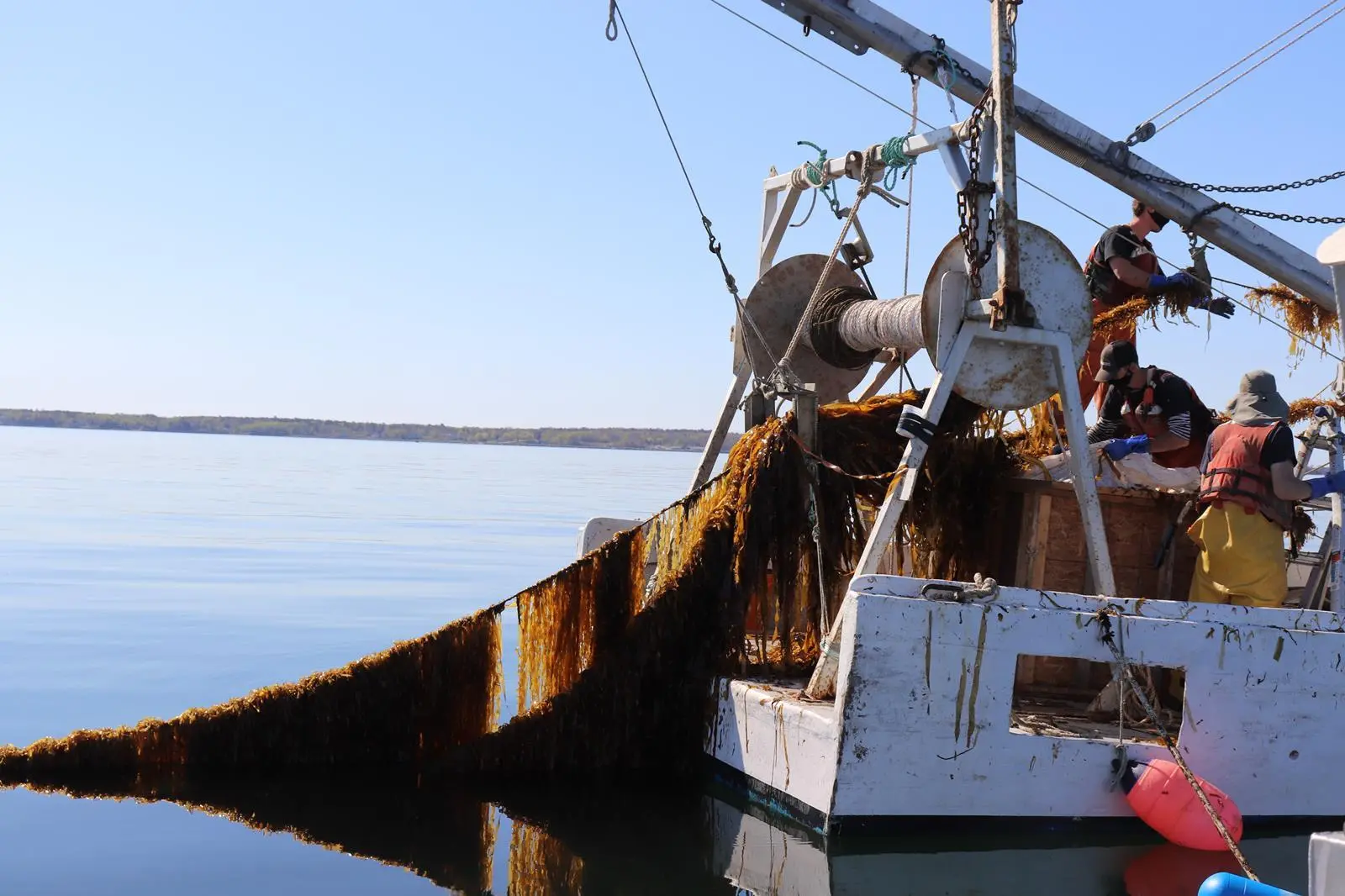
Aquaculture in Maine has grown steadily over the years. With a number of farmed species including oysters, mussels, scallops and seaweed, a land-based eel farm and salmon farming operations, it has also become a significant contributor to the state’s economy. Its importance continues to increase today – providing jobs and local food security to many areas. And, with a strong, working waterfront heritage, 3,500 miles of coastline with cold water resources and solid research infrastructure, it makes sense for Maine to embrace this growing industry.
“Maine is a maritime state and we have very strong ties to the ocean, so aquaculture is an industry that can help us to continue that heritage,” said Heather Sadusky, Maine Aquaculture Hub Coordinator at Maine Sea Grant at the University of Maine.
“It has been very exciting to see the impact of aquaculture in maintaining working waterfronts that had been shrinking and keeping people working on the water. Most people tend to associate aquaculture with sustainable seafood but we are also starting to recognise it as a nature-based solution or environmental tool. Shellfish and seaweed farming, in particular, can really capture nutrients and be used in that blue-green infrastructure. As opportunity expands in the larger blue economy, aquaculture has a role to play there and in Maine we are just starting to scratch that surface.”
Although there is increased consumption of seafood harvested from Maine’s waters, the state’s fisheries and aquaculture have faced some hurdles. In the US, fish from overseas origins are consumed regularly, while many wild-caught populations are declining and in danger of collapse. Amidst this, much attention has been focused on ways to strengthen aquaculture and support its growth.
Overcoming obstacles
In January 2022, Maine Sea Grant and the Maine Aquaculture Association, on behalf of the Maine Aquaculture Hub, released the Maine Aquaculture Roadmap 2022-2032. This is a 10-year plan that proposes four major goals and identifies the estimated necessary resources to implement each goal. Its aim is to help tackle the challenges aquaculture faces and identify resources to support it.
“In 2010, the Maine Aquaculture Association released a development plan and the roadmap was intended to be an update to that,” said Sadusky. “We began by looking at the goals of that plan and identifying how far we had come in reaching them, what progress was still required, whether the goals were still relevant and whether new ones were needed. As aquaculture has developed considerably since 2010, we decided to work together to plan for a sustainable future for the next decade. We have a lot of small- and medium-scale farms as well as a couple of larger ones, so aquaculture is really happening here.”
“We were able to look at different situations from various viewpoints and consider how we could go about doing things and making sure they would work from different perspectives,” said Dr Gayle Zydlewski of the University of Maine. “We have a very strong aquaculture research infrastructure, which has enabled us to hold meaningful discussions and really explore the diversity that we see in the industry here.”
Collaborative progress
The roadmap outlines four goals: to develop a streamlined licensing and permitting process that balances the rights of the applicant and the public, to increase integration and understanding of aquaculture in Maine’s coastal communities, to expand and promote the Maine seafood brand, and make Maine a leader in triple bottom line sustainable aquaculture: social, economic and environmental.
Under each goal are specific action items and the estimated funds required to accomplish them.
Together, the action items require over US$15 million and support from 24 full-time employees over the next 10 years. The idea is that all individuals and organisations involved take on something related to their area of expertise as part of a collaborative implementation process.
With various stakeholders involved, approaches will look different depending on the expertise of each individual and organisation, and where those approaches will be implemented. Approximately 191 stakeholders representing nearly 100 different organisations and companies operating in Maine’s marine economy gave feedback for the roadmap’s development. A diverse set of people coming together to think about the industry’s future, looking at how it is changing over time and working to develop new opportunities is an efficient way to produce guidelines and gather feedback, said Zydlewski.
“The roadmap involved reaching out to individuals and stakeholders, asking them to invite their networks and following a format that was structured in order to gather feedback in the most efficient way,” said Sadusky. “We followed up with people afterwards to get their opinions on the process, format and whether there was anyone else that we could have reached out to. The process was key to producing a useful document.”
Community engagement
Maine’s aquaculture may be taking off, but misinformation, knowledge gaps and some opposition towards the industry still remain, said Sadusky.
With changing demographics and more people relocating to Maine, further efforts will be required to educate and work with local communities so that people can better understand aquaculture and take pride in quality, local seafood. But hopes are high that with the relaunch of the Maine Oyster Trail – visits to oyster farms, product sampling, kayak tours and boat cruises – people will become increasingly engaged.
At the same time, research is underway into land-based operations, fish genetics, feed, and aquaculture as an ecosystem service and restoration tool, all of which are likely to draw attention in the coming years.
“I see aquaculture becoming a really integral part of our coastal communities,” said Sadusky. “Maine is a maritime state. We have very strong ties to the sea and aquaculture is a way to continue Maine’s history, heritage and character.
“It’s already contributing to jobs, engineering, construction and food, and is very much a part of Maine’s identity. We are in a great spot here to start working on new projects related to feed or land-based operations. We would also like to share information with local communities in a fun and engaging way, for example, by letting farmers give talks or providing opportunities for people to ask questions on aquaculture.”
The key, she said, will be to make things personal and establish connections so that people know exactly what is being grown in their local waters, the names of farmers and what the farmers do every day.
“There is a lot of initiative around engaging different people and aquaculture here, in other words diversifying opportunities for those in indigenous and under-represented communities,” said Zydlewski.
She added, “There is some work underway involving initiatives with tribal communities, which is very exciting to see. In general, many people are simply interested and engaged in all aspects of aquaculture and our role is to work together in that space with industry leaders, farmers, the business community and other non-profits to identify and pursue opportunities that will secure a healthy future for aquaculture.”