


If you can’t stand the heat…
When it comes to the climate change crisis, there’s a lot more to come from seafood
Seafood may offer some of the most carbon-efficient proteins for human consumption but it’s critical that the production growth and the industry’s increased importance with regards to global food security also brings much stronger endeavours to reduce and manage its carbon emissions. That’s the message that rang loud and clear at a recent climate change seminar, hosted by the Global Seafood Alliance (formerly Global Aquaculture Alliance).
With the stark warning that the climate issue is more than “real and looming” but “the defining issue of our time”, GSA President, George Chamberlain, referred to recent “sobering news” from the International Panel on Climate Change (IPCC) that the global temperatures of our planet are already 1.1°C above pre-industrial times (1850-1900), and at the current pace will be 3°C above it by 2050.
This would far exceed the Paris Climate Agreement, adopted by almost 200 countries in December 2015, which determined that to avoid dangerous climate change, temperatures should remain below 2°C above the pre-industrial level, and every effort should be made to limit them to 1.5°C until the century’s midpoint, he said.
Faced with the irrefutable evidence of climate change, governments are beginning to respond, the summit heard. Chamberlain highlighted that the European community recently promised to cut its carbon emissions by at least 55% by 2030 and to also tax imports of products that are not cutting their emissions, while China has agreed to set up the world’s largest carbon trading system to cover the emissions of its power plants, and in the US, the Biden administration has re-joined the Paris Agreement.
With regards to the “dilemma of food systems”, and feeding a global population that’s now at almost 8 billion and projected to reach 10 billion by 2050, food demand is expected to nearly double within the same timeframe, with protein requirement increasing by 50%, he offered.
“Food systems are already estimated to contribute 25% of the anthropogenic greenhouse gas emissions, so in order to reach net-zero by 2050, these systems have to play their part. Because they cannot be scaled the way they currently are to meet this future food demand, we have to find a way to transform them.”
Future fishing
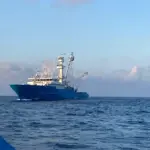
Selfa Arctic AS, a Norwegian family-owned company that has built 800 fishing vessels since 1979, is up for the challenge. With diesel being the fishing industry’s main source of greenhouse gas emissions as well as its single largest cost, it is targeting the removal of 80 million litres of diesel from Norway’s maritime industry, largely through the electrification of catching and aquaculture vessels.
To this end, in 2015, alongside Siemens, it constructed the world’s first hybrid craft, Karoline, for fisherman Bent Gabrielsen, operating off north Norway’s coast.
Karoline was fitted out with two battery packs and a 500-litre engine that combine to power the boat for a full day’s fishing. After running on diesel to and from the fishing grounds, all of the fishing and related activities are fully electrically powered.
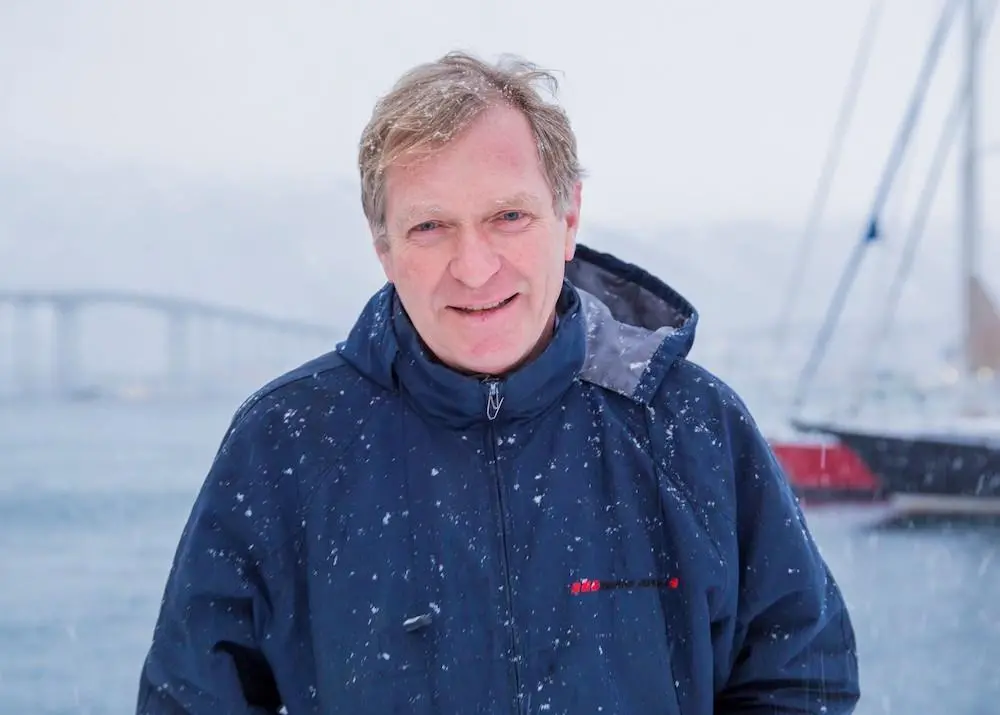
“Fishing for six years now, this fantastic technology has been a success for Siemens and Selfa, and a fantastic economic success for the shipowner,” Selfa General Manager, Erik Ianssen, said.
Nevertheless, Selfa and Ianssen remain hugely concerned by Norway’s rising petroleum consumption. In 2020, the country got through a total 8 billion litres, with the maritime sector accounting for 2 billion of those litres. Specifically, the fisheries and fish farming industries consumed 350 million litres each.
Maritime was in fact the only sector in Norway to increase its consumption of petroleum last year – by 7.3%, Ianssen said.
“We have signed the Paris Agreement, but the current consumption trend is going in exactly the opposite direction.”
To help turn the tide, the company has proposed two solutions. The first is a Parallel Hybrid System with electric motors and batteries that are added to fishing vessels’ existing propulsion systems. These are capable of immediately cutting a boat’s emissions by 50%. The second, more longer-term concept, is the development of zero-emissions fishing vessels, powered by fuel cells or batteries.
While the latter technology is not yet available in Norway, the development of the parallel hybrid system has been ongoing since 2018, and the first fishing vessel was equipped with it in March 2020, “with the fishermen really satisfied with the solution,” Ianssen said.
Since then, a handful of other fishing boats have been similarly fitted, he said, with the orderbook for new vessels continuing to swell.
“This has been a fantastic development in Norway; it will become the normal technology. There are still a lot of things to develop, but we are moving ahead.”
Meanwhile, Selfa and a number of other stakeholders from Norway’s maritime industry have been collaborating on ZeroCoast, a new project aimed at upholding the country’s seafood activities but also fulfilling the requirement to half emissions by 2030 and to reach zero emissions by 2050.
ZeroCoast comprises a number of work packages, starting with the development a line of fuel cell- and battery-powered propulsion systems, and will follow this with the construction of a zero-emissions fishing vessel, as well as establishing regional infrastructure for a zero-emissions seafood industry.
“Within 24 months, we will have a technology shift towards low emission solutions. We will also achieve a 350 million litre reduction in the seafood industry’s petroleum consumption by 2030, and the rest by 2050,” Ianssen said.
Farming better
Although aquaculture tends to have a very low overall footprint compared to other animal protein production and marine fisheries, there’s still scope to dramatically reduce its carbon emissions, particularly as production is further scaled-up to meet future world demands, insisted Dr David Robb, SeaFurther Sustainability Programme Lead at Cargill Animal Nutrition & Health.
It’s estimated that globally, aquaculture produces about 250 million tonnes of carbon dioxide emissions per year, with salmon farming alone creating 10 million tonnes.
“There’s also this predicted growth of aquaculture of at least 32% by 2030 and even more to 2050, so if we can do aquaculture better, we can help tackle climate change; we can help achieve the UN Sustainable Development Goals’ targets on climate change; and we can also help remove between 20 to 40 million tonnes of carbon dioxide equivalents from global emissions per year,” Robb said.
With the goal to help its customers reduce the footprint of the fish that they’re farming using its feeds, Cargill launched its SeaFurther programme in March this year. Initially, this is looking to help salmon farmers reduce their carbon footprint by 30% by 2030, compared to a 2017 baseline, but it also sees opportunities with shrimp production further down the line.
By doing this at scale – with salmon alone – Cargill believes that it can save 2 billion kg of CO2 between the start of the programme and 2030. “That’s equivalent to removing more than 400,000 cars from the road in one year,” Robb said.
Also, to ensure its own house is in order, Cargill has set itself a midpoint goal of a 15% reduction in greenhouse gas emissions by 2026.
“Through SeaFurther, we believe that together and throughout the value chain – from raw material suppliers, to feed company, farmers and all the way through to the retailers – we can reinvent what responsible aquaculture looks like and help reduce the footprint of the seafood that is being consumed around the world,” Robb said.