

Will PAPs be the new aquafeed?
To meet the global population’s appetite for affordable seafood, aquaculture around the world has expanded widely, reaching a record 122.6 million tonnes in 2020. But to support the sector’s growth and safeguard fish stocks in the wild, there is a need for resilient, sustainable aquafeed ingredients as alternatives to wild-sourced fishmeal and fish oil. Although the nutritional profile of fishmeal and fish oil is perfectly suitable for aquaculture species, the sector’s increasing growth and development will outstrip the number of forage fish that can be sustainably harvested.
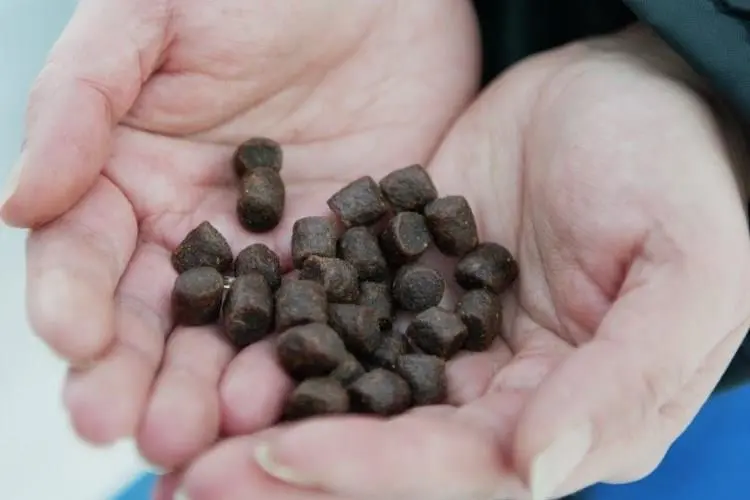
Thanks to their relatively low market price and being readily available, plant ingredients have been used extensively as fishmeal and fish oil alternatives. Some possess a valuable nutrient profile that matches marine-derived ingredients. However, others do not, while the use of plant ingredients also poses problems. These include the presence of anti-nutritional factors and potential amino acid imbalances that may impair fish growth, nutrient intake and palatability. With this, the international aquaculture community has been developing an array of options to find other affordable alternatives.
“Despite the concerns, modern aquafeeds have reduced substantially in fishmeal and fish oil usage. This is to a point where feeds fed to some farmed fish species don’t use these marine by-products, and for carnivorous species such as Atlantic salmon, the inclusion levels are extremely low,” Dr Alex Wan, Research Fellow at the Aquaculture and Nutrition Research Unit (ANRU) at the University of Galway in Ireland told WF.
“This is thanks to plant by-products such as soy, maize, peas and wheat, or others like insects, but the big challenge facing aquafeed today is reducing ingredients that have a very high environmental impact. Soy, for example, face concerns over their carbon footprint that is being imported from abroad, and their demand for animal feeds and food has accelerated deforestation in some parts of the world. Aquaculture needs ingredients with a much lower environmental impact and better sustainability credentials to grow the industry.”
One potential ingredient is processed animal proteins, or PAPs, derived from land-farmed animals. These include poultry meal, blood meal and feather meal, which all have a high protein content, a lack of anti-nutritional factors observed in plant meals, are highly palatable and can supply a balanced dietary amino acid profile for aquaculture species.
Revived interest
There is, however, a stigma behind the use of PAPs in aquafeeds due to the Bovine Spongiform Encephalopath (BSE) outbreak caused by inadequate regulations and animal protein processing in the early 1990s. This has led to meat and bone meal being banned within the EU and UK for their use in aquaculture and terrestrial livestock feed. But, following changes in rendering practices, BSE was subsequently eliminated, and the industry is now highly regulated to prevent reoccurrence.
It was not until 2013 that Europe allowed its re-introduction into aquafeeds, which has helped fill some of the protein gaps in aquaculture, though its use is limited in farmed fish.
Today, PAPs are receiving increased interest as an alternative to fishmeal and plant protein concentrates because of the growing demand from aquaculture. They are cost-effective, have a generally lower carbon footprint and are particularly high in arginine and other water-soluble amino acids such as proline, glycine and glutamic acid. The latter could act as an attractant and enhance feed palatability.
“Compared to plant materials, PAPs do not possess anti-nutritional factors so their digestibility is usually quite high,” said Wan. “This applies to something like poultry meal but not to feather meal, which is made from keratin protein and is quite resistant to the animal digestion process. Generally, feather meal is partially hydrolysed to break down the keratin and increase nutrient digestibility. PAPs also contain many nutritionally important minerals, are more bioavailable, and have a better amino acid profile to deliver the requirements of animal growth.”
To date, the potential of PAPs to replace dietary fishmeal and fish oil has been studied in a range of commercially important farmed fish species. For example, porcine meals can be successfully included in diets in several species including Nile tilapia (Oreochromis niloticus), while including up to 25-30% of feather meal in test aquafeeds appears to enhance the species’ growth performance. Poultry meal has also been successfully fed to totoaba (Totoaba macdonaldi), resulting in high growth performance such as weight gain and specific growth rate (SGR).
Mammalian blood meal provides additional nutritional benefits and can be an effective source of iron and reduce the occurrence of cataracts in Atlantic salmon (Salmo salar). Blood meal also enhances feed pellet colouration and stability due to its binding properties. In general, however, Wan says, lower trophic species such as omnivorous species with a more adaptable digestive system (i.e. tolerate better plant and animal proteins), can tolerate more varied diets compared to carnivorous species that require highly digestible proteins.
Up to now, PAPs are used most widely in areas such as Latin America, Africa, the Middle East and the Far East, including China, where large quantities of fish products such as carp, trout, catfish and shrimp products are being produced and where consumer numbers are at their highest.
Technology upscaling
With PAPs being used more widely in aquafeeds, modern technological processes are helping to guarantee stability and high quality. Certain advancements are also in place to ensure feed safety. For example, new heat-treating technologies in the raw materials that make PAPs will ensure the elimination of potential prions and microbes, thereby ensuring higher safety, quality and more nutritional bioavailability.
“One example of enhancing the potential of PAPs in aquafeed lies in feather meal,” said Wan. “Its inclusion level is typically low, usually no more than 10-20%. Any higher and this material will impact the growth performance. This is where we need to incorporate novel technologies to make it easier for the fish to digest. This could include exogenous enzymes being added to the feed to increase nutrient digestibility, which could be derived from residue enzyme activity from solid-state fermentation products (fermented rice and wheat) or pure sources from biorefineries. Then we can push up its inclusion level and displace more of the plant proteins or produce more finished diets using the same amount of plant and marine feed ingredients.”
“Innovation will also be key,” Wan continued. “It’s great that the UK has re-joined the EU’s Horizon Europe research and development programme as an associated member. The collaboration between European and UK industries and research partners could ultimately lead to big projects that could produce empirical evidence of how to drive PAPs forward as a reliable, safe and sustainable animal feed source. Part of this could encompass greater governance over managing by-products, nutrient recovery, and developing new aquafeed ingredients with lower environmental impact.”
Wan believes that by far the biggest issue to using PAPs in aquafeeds is consumer perception, which is preventing these ingredients from entering certain markets. With an increasing number of individuals and organisations vigilant against animal protein and aquaculture, concerns are high in aquaculture circles that the industry is misrepresented or endangered by misinformation. Being able to show more of the environmental credentials in PAPs and better safety transparency to the public could lead to greater acceptance for these invaluable proteins, he said.
Although, with more focus on fishmeal and fish oil alternatives as well as the concerns associated with ingredients such as plant proteins, Wan believes that PAPs could take off further in aquaculture and become an integral part of a feed formulator or manufacturer ingredient portfolio based on its economic or environmental attributes, or nutritional balance.
It is hoped that with recent developments paving the way for the safe re-introduction of PAPs into aquafeed, the nutritional, environmental and economic characteristics of PAPs will continue to be a valuable ingredient in the expanding aquafeed industry. Wan is now looking at developing more digestible proteins using enzymes and investigating less energy-intensive processes such as heat pump technology to lower environmental impact. He also hopes there is a commercial demand for PAPs to be trialled in species such as salmon, where consumer perception is typically the most sensitive.
“We need to understand the biological effects of PAPs on farmed salmon because they have some of the highest protein demand and determine the optimal inclusion levels but also without prejudice,” he concluded.