



Poland in uncharted waters
In recent years, Polish fish farmers have developed and scaled-up their businesses – largely anticipating a steady rise in domestic fish consumption, but this past year, skyrocketing food inflation has led many to be uncertain about their future.
In 2021, according to government estimates, Poland’s fish consumption stood at 15kg per capita – a low-even level for Eastern Europe. On average, Poles spend only 100 zlotys (about US$22) on fish per month, which is just a quarter of the European average.
Instead, Poles are meat lovers. The average citizen consumes 30kg of poultry and 40kg of pork annually, with regional cuisines having many recipes for wild boar, venison, rabbit or hare, and only a few for fish.
Meanwhile, the past few years have been tough for Poland’s key aquaculture segments, with ventures finding themselves between the hammer of skyrocketing costs and the anvil of low sales.
Worse than Covid
The year 2022 was quite a challenging period for the Polish salmon (Salmo salar) and trout (Oncorhynchus mykiss) sectors, both of which hadn’t fully recovered from the coronavirus pandemic when the latest crisis struck, according to the Polish Trout Breeders Association (PTBA).
“The turmoil around the pandemic has been felt by all of us on many different levels. The trout market was quite strongly affected by the first pandemic shock, which in the spring [of 2020] translated into a significant surplus of trout in the EU countries affected by the pandemic, in the first place – Italy,” PTBA’s press office told WF.
The situation improved somewhat in the second-half of the year, thanks to a strong recovery of demand in the domestic market. “After the first period of the pandemic, our compatriots crowded to the sea and mountains – where they eagerly consumed trout,” PTBA recalled, adding that things were similar in 2022 as they were in 2021, though this time, the pressure from the drop in sales through the hotel and catering industry (HoReCa) segment is stronger.
This factor has translated into lower sales and a slight increase in prices.
It is difficult to clearly figure out all the reasons behind lower sales this year, PTBA said. To some extent, food inflation is to blame. On the other hand, while the salmon market is seeing unprecedented price hikes, nothing similar is happening in the trout market.
“These [price dynamics] were the result of a combination of factors: the economic situation in Turkey, but mainly the general sales turmoil in the EU,” PTBA said, explaining that farmers breeding salmon proved to be more resilient to the crisis thanks to better sales diversification. They benefited from higher prices in the Asian market, which compensated for the drop in sales in Poland and other EU countries.
“Trout, unfortunately, is a local fish – sold mainly in the EU and Russian markets – to which we do not have access [any longer],” PTBA said.
The association added that in these circumstances, trout farmers have had to focus almost exclusively on the local market.
The present crisis, unfortunately, promises to be even more difficult than the Covid-19 era, owing to galloping inflation, which has driven up production costs throughout the supply chain, PTBA said.
“Currently, our farmers are preparing applications for so-called ‘war aid’ to compensate for additional costs incurred by fishery and aquaculture operators due to market disruptions caused by Russia’s aggression against Ukraine and its impact on the supply chain.”
No carp, no Christmas
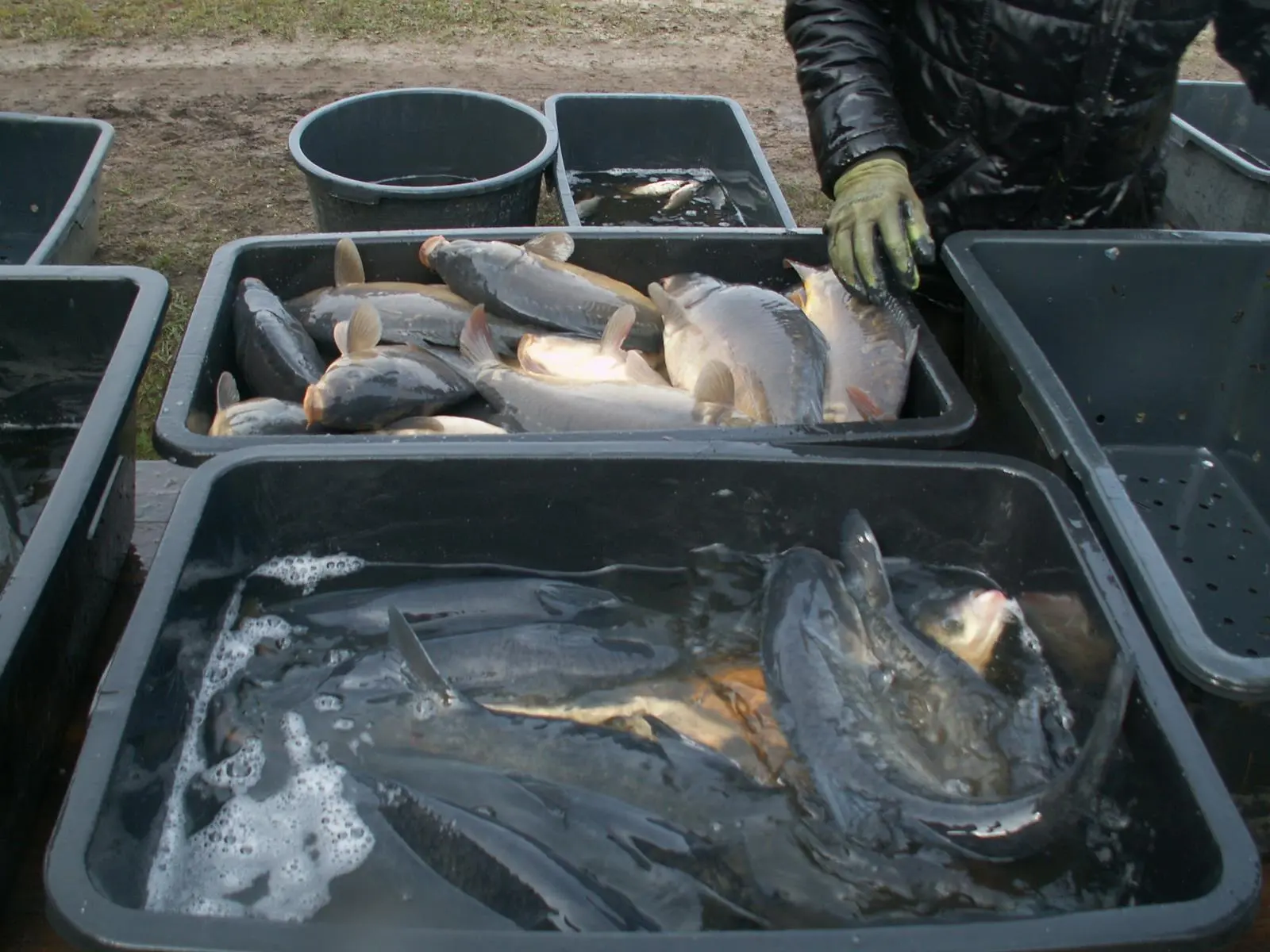
Poland is the largest European carp (Cyprinus carpio) producer, and according to Polish producer organisation Polski Karp’s estimates the country accounts for 28% of the EU’s output in this segment.
The Polish population has a long-standing tradition of consuming carp in the weeks before Christmas. But Polish farmers have put a lot of effort into turning this custom into year-round consumption.
“Carp is absolutely not a fish assigned only to Christmas. It is now available year-round and is grown on numerous farms. Since these farms are located all over Poland, the guarantee of freshness is a huge advantage [of carp compared to other fish],” Polski Karp Vice-president Tomasz Siwiec said.
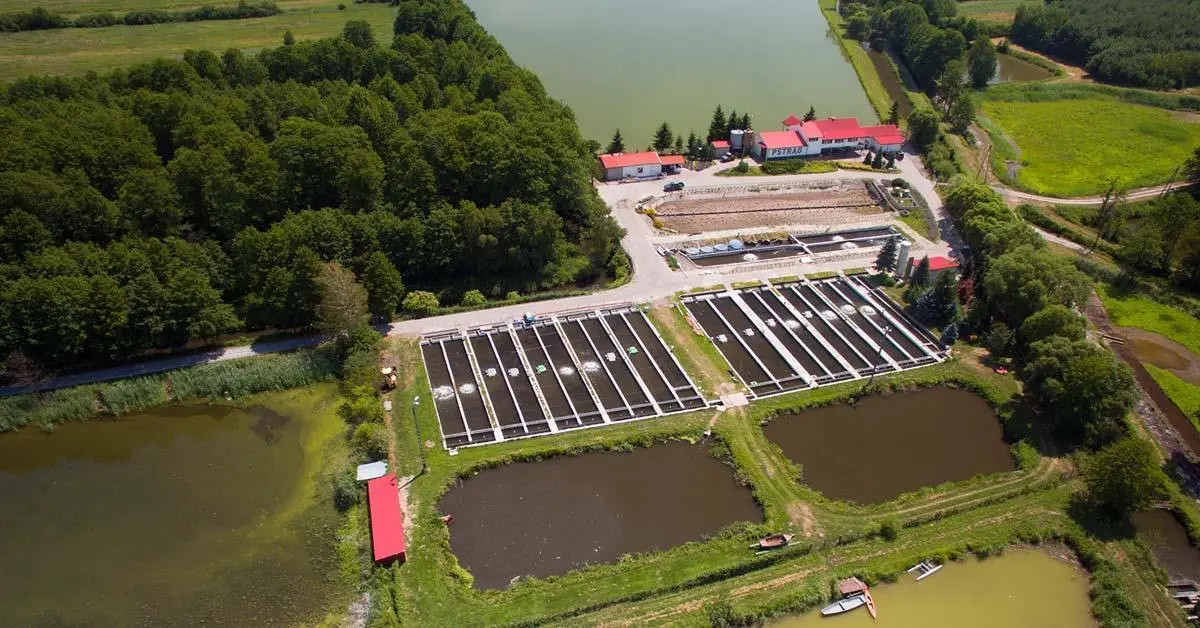
Carp production typically follows a three-year cycle, where ponds are stocked in spring and harvested in autumn in the third-year when the fish are 1.5 to 2kg in size. Currently, 850 carp farms operate across Poland, breeding fish in 70,000 hectares of ponds – using traditional technology that has barely changed in centuries.
While farmers could easily boost production, a lack of demand prevents this from happening.
“We should definitely eat fish more often. I believe that carp is a fish that, above all, guarantees us high-quality and freshness, so we should move away from the stereotype that it is a festive fish and reach for it all year round,” said Kamil Klekowski, an organiser of the Polish Festival of Regional and Traditional Cuisine.
On Christmas Eve 2021, Poles had to stand in long queues to buy carp, as the large demand was met with rather weak production. Indeed, the local press reported occasional shortages of supply. In 2022, the demand was also expected to be huge during the festive season, despite the sharp price rise.
Wacław Szczoczarz, President of local fishing group Świętokrzyski Karp estimated that for 2022, the average price of carp reached around 25 ($5.70) and even 30 zlotych ($6.80) per kg, compared to only 20 zlotych ($4.50) in the previous year.
Also in 2022, food inflation in Poland was estimated at 17%, but in the carp industry, this figure was close to 60% due to a threefold surge in energy prices and a sharp rise in feed costs.
“The crisis has hit everyone. So, we have to take into account the purchasing power of customers, as well as our interests. Many fish farmers repay their loans. We all need money to maintain ponds in the next season and grow more fish. We’re not even talking about profit now,” Szczoczarz said.
The price hike was not expected to discourage Poles from having carp on their tables during the most recent Christmas holidays. However, it’s likely to undermine the efforts undertaken to convince citizens to eat the fish more regularly.
Meanwhile, most local retailers have abandoned selling live carp over the past several years.
Challenging environment
In addition to low demand, Polish fish farmers also suffer from ecological issues. In 2022, like the rest of Europe, Poland was hit by drought. Over 170 municipalities around the country introduced restrictions on the use of water, with many Polish rivers and other water supplies running dangerously low during the summer months.
This was particularly worrying for the aquaculture industry, with Polski Karp warning in recent years that water shortages could seriously threaten farmers growing fish in ponds.
Last year’s lack of water was said to prevent pond farmers from topping up their systems after losing water to evaporation. When drought hits, this directly impacts the fish, which have less water and less oxygen to grow.
The government estimated that Poland had one of the worst rates of water scarcity in Europe. To address this issue, it has embarked on a six-year strategy – running from 2021 to 2027 – aimed at improving water availability through public campaigns and investments, including the building of 30 new water reservoirs.
Still, some environmentalists are confident that these efforts may not be sufficient in the wake of back-to-back droughts.
Environmental issues have in fact long been preventing the development of marine aquaculture in Poland. The country’s coastline is 1,032 km long, but in recent decades, ecological concerns have discouraged some investors from pumping their money into launching coastal farms.
Also, several research projects conducted in recent years showed that some parts of the Baltic Sea are not the best place to grow fish or seafood since the water is polluted with substances derived from old chemical weapons dumped after World War II.
The list of dangerous substance detected in the Baltic Sea include dioxins, mercury, polychlorinated biphenyls, carcinogenic, mutagenic, and neurotoxic substances.
Professor Jacek Beldowski, who extensively studies Baltic Sea pollution, estimates that consumers should refrain from eating fish grown in the coastal areas more than once a week, while a study conducted by a group of Swedish researchers suggested that it might not be safe for pregnant women to eat fish from the Baltic Sea more than two-to-three times a year.