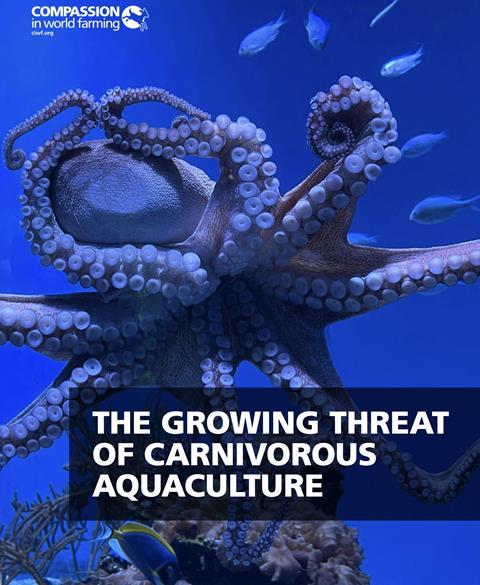




As octopus farming gains traction in Europe, Compassion in World Farming has released a report revealing the environmental, welfare and food security risks posed by carnivorous aquaculture. The international animal welfare NGO’s study, “The Growing Threat of Carnivorous Aquaculture”, raises urgent questions about the sustainability of farming species that rely on wild-caught fish for feed.
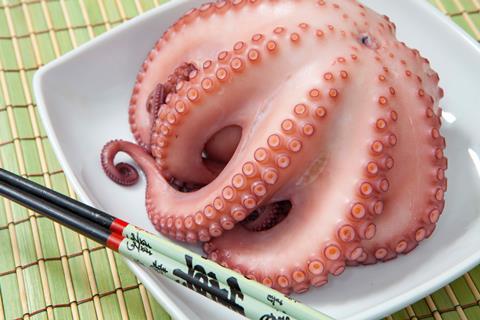
The report situates octopus farming within a broader trend: the rapid growth of carnivorous aquaculture and its cascading effects on global fish stocks. For companies, governments and NGOs focused on sustainable seafood, it warns that the unchecked expansion of feed-dependent species may undermine the very goals of aquaculture, harming ecosystems, communities and the species themselves.
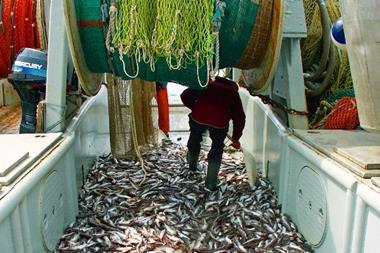
According to the analysis, the first proposed octopus farm by Spanish company Nueva Pescanova could require up to 28,000 tonnes of wild fish in its first year to produce just 3,000 tonnes of octopus meat – a ratio that equates to 2 billion fish used for feed, projected to rise to 7 billion by 2040. It argues that such figures underline the massive pressure that carnivorous aquaculture places on already overexploited fisheries.
“Carnivorous aquaculture is often sold as a quick fix for food security; yet in reality, it weakens food security,” Dr Elena Lara, Senior Research and Policy Adviser at Compassion in World Farming said. “Its expansion into octopus farming would raid the plates of coastal communities in the Global South, feeding private profits and premium markets, instead of the people who need it the most.”
Ecological concerns
The report highlights that carnivorous aquaculture in the EU is projected to grow 30% by 2040, driving a 70% increase in demand for wild-caught fish. With over 78 new farmed species introduced in Europe since 1985, 70% require animal-based feeds, further straining marine ecosystems.
“Expanding the industry with species such as octopus will weaken the resilience of marine ecosystems and threaten global food security,” it warns. Feed for farmed octopus would largely come from vital forage fisheries in West Africa, South America, and Southeast Asia, putting local diets and livelihoods at risk.
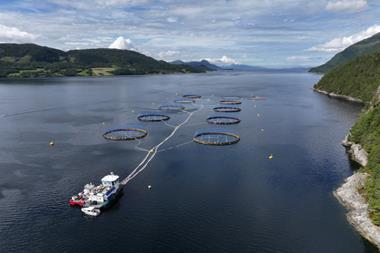
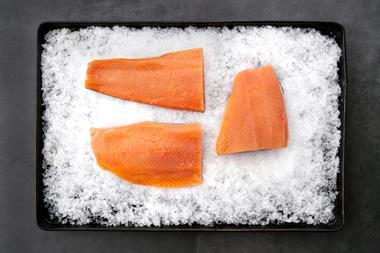
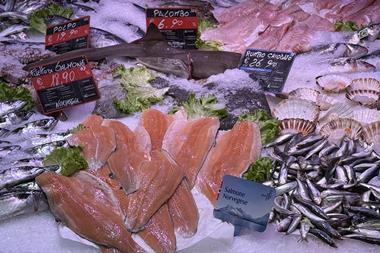
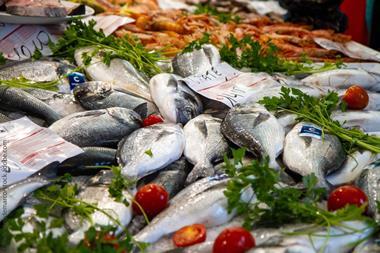
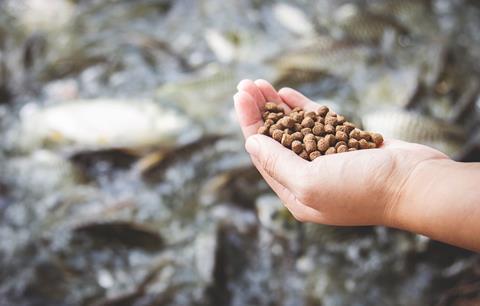
Compassion told WF that using these fish to produce aquafeeds reduces the affordable protein available to vulnerable communities. “The result is that fish once eaten locally are being turned into feed for European farmed carnivorous fish, such as seabass and salmon, soon octopus – luxury products mainly consumed in high-income markets. Therefore, this current system undermines food security rather than improves it.”
Underlining the point, it highlighted stock assessments that have found the fisheries of Mauritania and Morocco are severely overexploited, with the round sardinella (Sardinella aurita) biomass reduced to approximately 5% of unexploited levels and flat sardinella (S. maderensis) to around 18%. At the same time, it noted Peru’s anchoveta fishery, the largest global source of fishmeal and fish oil (FMFO), also supplies substantial volumes to farmed production – despite its potential importance for food and nutrition security in the country. This raises food security concerns, iot said.
“Using forage fish to produce FMFO for carnivorous aquaculture, rather than for direct human consumption, creates direct competition for these resources and threatens the food security and livelihoods of the coastal communities that depend on them. It is estimated that up to 90% of the wild fish used in aquafeeds could instead be consumed directly by humans,” the organisation said. “Moreover, carnivorous aquaculture primarily produces high-trophic, high-value species destined for premium markets, contributing little to global food and nutrition security.”
Alongside environmental concerns, Compassion released undercover footage showing cruel slaughter practices planned for the proposed octopus farm in Gran Canaria. The footage depicts wild-caught octopuses being forcibly submerged in icy water, taking at least 10 minutes to die.
“Our footage clearly shows what we have always said – it is simply not possible to slaughter farmed octopuses humanely,” Lara said. “We must act now to keep octopuses wild, protect our oceans and food security.”
Feed limitations
While it conceded that feed innovation is moving quickly — such as with insect meal and algae-based oils – and that these options can help reduce the use of wild-caught fish in aquaculture feeds and be an important part of making the sector more sustainable, Compassion asserts that they do not solve the “fundamental challenge of farming high-trophic carnivorous species”, which will always require large amounts of high-quality protein.
This is mainly because many of these alternatives also face hurdles, insects raise welfare issues, soy can drive deforestation, and algae is still costly at scale, it said. “This is why we believe the future of sustainable aquaculture must involve a decisive shift away from intensive, high-trophic, feed-based systems towards low-trophic, extensive models focused on filter-feeding or herbivorous species.”
Lara explained the report’s projections are based on current literature on feed conversion ratios and FMFO inclusion rates. “While we recognise that feed innovation may lower FMFO dependence over time, there is currently no consistent evidence of significant reductions across carnivorous species at a large scale. Until such changes are empirically demonstrated and industry-wide, projections must reflect the current reality,” she said. “Also, given the potential introduction of new carnivorous species such as octopus, the demand for FMFO is predicted to increase.”
Policy and consumer action
Compassion is urging policymakers to support a global pledge to ‘Keep Them Wild’ – a commitment to ban octopus farming and halt the unsustainable expansion of carnivorous aquaculture. Members of the public are encouraged to press MPs, MEPs and other representatives to back the initiative.
“Consumers, policymakers, and the seafood industry all have a role to play,” Lara said. “From advocating for global agreements to making informed purchasing choices, every action counts in preventing a potentially disastrous expansion of octopus farming.”
So far, 14 policymakers across six countries have signed the pledge. Over 100 organisations have endorsed it too – in countries ranging from Mauritania to Mexico, Brazil to Indonesia, and Zimbabwe to New Zealand. It’s also been supported by over 30 academics internationally.
Acknowledging that octopus is in high demand in markets like Spain and Asia, Lara insisted that farmed production isn’t a solution to its overfishing. “Octopus is already a delicacy, not a basic food necessity,” she said. “The real issue is demand, not supply.”
Instead of replacing wild octopus with farmed octopus, she said the focus should be on reducing demand and encouraging more responsible consumption aligned with healthy wild populations, as well as improving wild fisheries management to protect wild octopus stocks.
“Octopus farming is not a conservation measure, it would require feeding millions of carnivorous animals with wild fish, further harming marine ecosystems. The sustainable path is managing wild stocks carefully and reducing overall consumption, not industrialising a species that cannot be farmed humanely or sustainably,” she said.