
On-land aquaculture game changer from Finland
HFS technology is emerging as a viable solution to help fish farmers meet fast rising market demand. Despite being a relative newcomer to sectors such as salmon production, HFS is showing huge potential to significantly reduce exposure to pathogens and environmental impacts and hit high proportions of superior-grade fish.
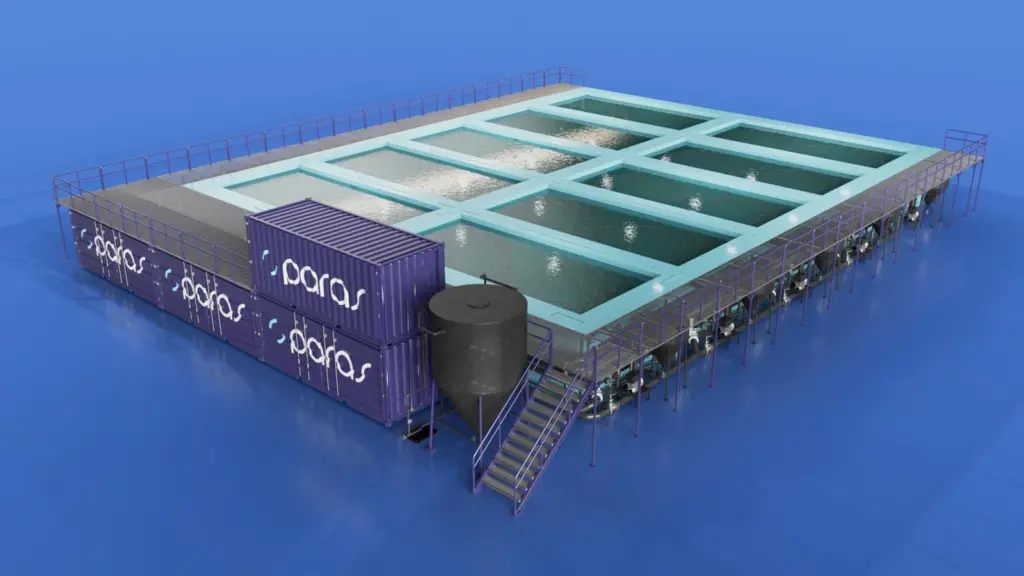
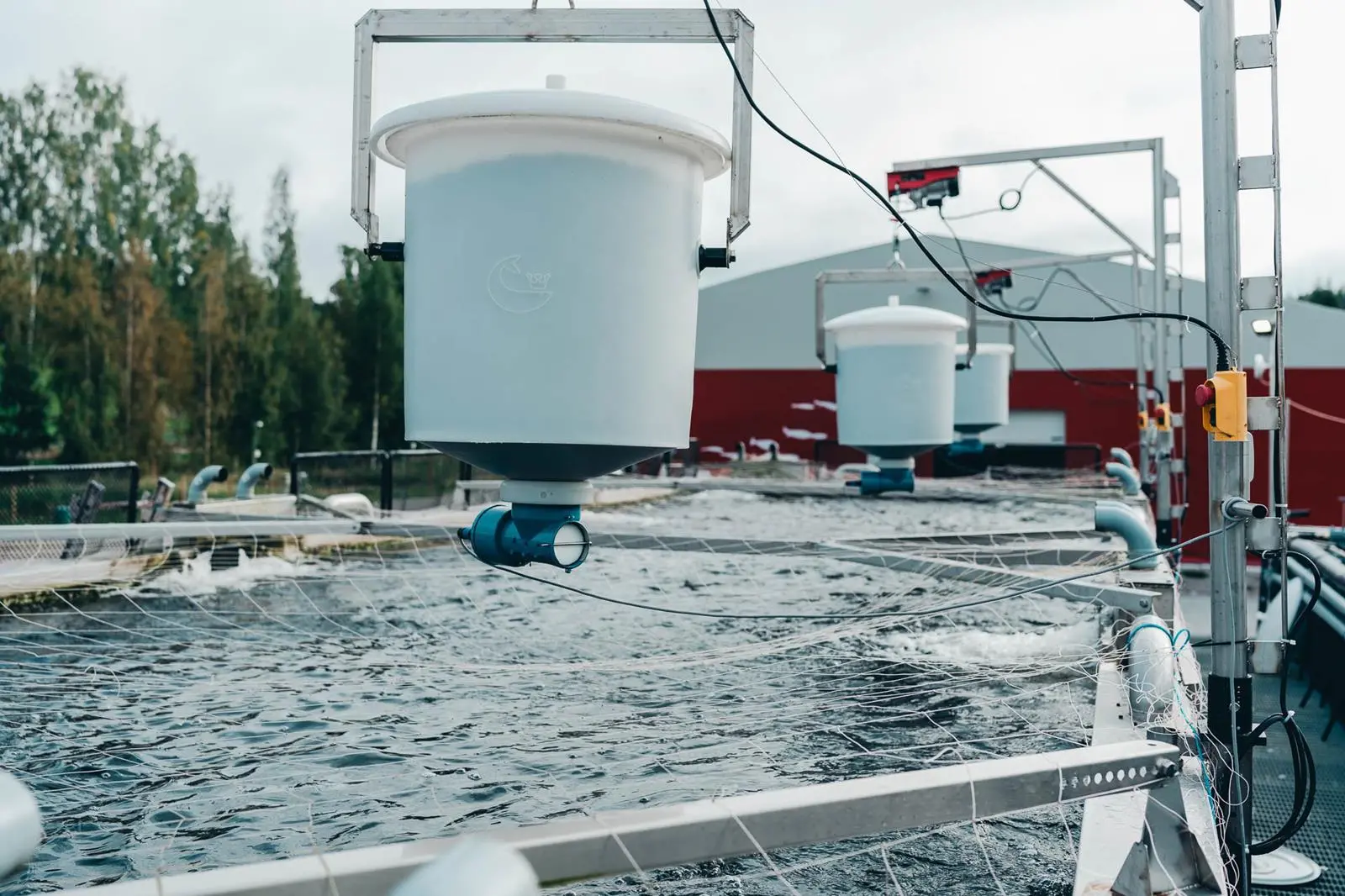
The advantages of HFS on land-based fish farms has not gone unnoticed by Finnish startup Paras Aqua Oy, an aquaculture technology developer and farm supplier in Jyväskylä, central Finland. In April 2025, the company launched its new automated HFS, known as Precision HFS. This technology enables precise control of water conditions in individual tanks for better production efficiency and fish welfare.
According to Paras Aqua Oy Founder Tapio Kiuru, HFS could help to address a particular challenge associated with recirculating aquaculture systems (RAS) – managing water quality and waste, which contains organic materials, nutrients, and suspended solids. Integrating advanced water systems such as bioreactors is key to RAS, as nitrogen waste can become toxic to fish if not adequately treated. However, bioreactors happen to be the most expensive component of water treatment, requiring significant investment and running costs.
“Having analysed the investment costs, operating costs and challenges associated with RAS, many indicators point to bioreactors,” Kiuru told WF. “Not only are they expensive, but they also take up a lot of space, consume high levels of oxygen, produce carbon dioxide, and are the main source of off-flavour compounds that can affect fish taste and marketability. This made us decide to produce a system without biofilters, because we felt that this offers the most opportunities when it comes to reducing production costs, investment costs and running costs.
“Furthermore, Finland is home to extreme weather conditions and water temperatures, as well as strict environmental regulations. We wanted to develop a very water-intensive system that would allow for cost-effective temperature control and effluent treatment,” he said
Energy efficient
Precision HFS doesn’t require any biological water treatment. It is based on tank-specific, ultra-low head water treatment, which is one of the main reasons behind the system’s low energy use. It offers a substantial reduction in a farm’s oxygen consumption and carbon dioxide production, and is equipped with a control system to provide precise farming conditions with fully adjustable lighting and feeding rhythms, and enriched fish welfare thanks to varying water flow directions and speeds.
The system is also decentralised in terms of technology and control. Each tank unit operates independently, reducing any technical and biological risks and offering a so-called “all-in, all-out” production strategy. Tank-specific water quality monitoring and control keep the water values of each tank constant, reducing operating costs and making it possible to adhere to the needs of each tank.
“Precision HFS makes it possible for water quality to be controlled at the tank level according to actual demand and more accurately than before,” said Kiuru. “The consistency of water quality improves fish welfare and allows for more intensive water use. Because there is no centralised biological water treatment, there is no water connection between the tanks. Decentralised technology thus enables the effective management of technical, biological and fish welfare risks and offers high biosecurity. The technology can also be installed quickly with prefabricated elements.”
Kiuru and his team have been testing Precision HFS on rainbow trout and European whitefish, with approximately 40 tonnes of fish produced so far through the system. In principle, the technology is suitable for all fish species and even shrimp, said Kiuru, but high-quality feed and solid forms of faeces are especially important in systems such as Precision HFS that use clarifiers for the rapid removal of solids.
Salmonids, in particular rainbow trout and Atlantic salmon, have the most potential because high-quality feeds are readily available for both species. The team’s trials have also shown that fish can grow very well, with low mortality and excellent feed conversion ratios, with the final mean weight of the largest batch of rainbow trout produced reaching around 3.4kg. The system’s chemical-free wastewater treatment also ensures efficient nutrient recovery, while production costs are further reduced as there is no need for depuration before the fish are sold.
“Rainbow trout and Atlantic salmon are particularly suitable because their faecal material is solid, and solids are easier to remove from the system,” said Kiuru. “We use radial flow settlers that can remove settling particles from the water very rapidly, before they break down into smaller particles and a soluble form. In this sense, feed quality really matters. Other species, such as tilapia, could also be suitable, but their faeces are not as solid, due to the plant ingredients that they consume and the way in which their intestines work. This makes solid removal more challenging.”
Growing demand
In Finland, where the traditional fish farming sector consists of small family businesses, the investment intensity of land-based facilities such as RAS has long been a key challenge. This has only worsened as pioneer RAS farms have not been profitable, while finding expertise and trained personnel is a significant hurdle. Add to this Finland’s extreme climate – 70°C temperature differences between summer and winter – and any technology has to be developed for and adapted to demanding conditions.
With positive feedback towards Precision HFS from multiple stakeholders and inquiries from around the world, Kiuru said there is clearly a demand among farmers, legislators and investors in the aquaculture space for new, simpler and more affordable environmentally-friendly systems. He also believes HFS technology will become more widespread.
“Pioneer companies like Salmon Evolution are doing extremely well, and this opens doors to other players,” he said. “Meanwhile, our water intensive and fully temperature-controlled solution also brings HFS technology to freshwater and brackish water areas, as well as areas where water availability might be limited, environmental regulations might be strict, or temperatures might not be optimal. Fish can be grown on RAS farms in a range of locations as long as there is a supply of water and energy, but the energy and capital costs can be prohibitively high.
“Meanwhile, in grow-out RAS, off flavour and high costs related to purging are challenges, while others may have issues related to high CAPEX and OPEX, and to some extent biosecurity. Another benefit of HFS technology is that they are much simpler and straightforward to operate, with a step to HFS from traditional flow-through or net pen technology much easier than jumping to full RAS technology. Flow-through technology is already well established, and with a strong understanding of the financial and environmental performance of HFS, I believe that it could take off further in aquaculture.”
After many years of development, Precision HFS is now ready for production. The first farm, a commercial-scale farm in Finland, will produce 250 tonnes of 500-gram rainbow trout (post-smolts) each year for grow out in the Baltic Sea. While Paras Aqua Oy is currently only offering its technology within Finland, Kiuru and his team will be launching it at the Aqua Nor trade fair in August 2025. They will also be participating in the NordicRAS seminar and trade fair in October 2025, with new products due to be launched on the market in the near future.
“We are very R&D-focused and will continue to put to use our understanding of the challenges of production and the cost structure of land-based fish farms to make key contributions,” said Kiuru. “We plan to install a comprehensive data collection plan and other devices on our commercial-scale farm so that we can monitor the energy efficiency of the entire system and more. If we can keep up our track record so far, we will have something really unique for the aquaculture sector.”