
Regenerative RAS to the rescue
The red drum – more commonly known as redfish – is a coastal and estuarine species that occurs along the Atlantic and Gulf coasts of North America. Native to these areas, the fish was popularised in the 1980s by celebrity chefs, but high demand resulted in severe overfishing, which eventually took its toll.
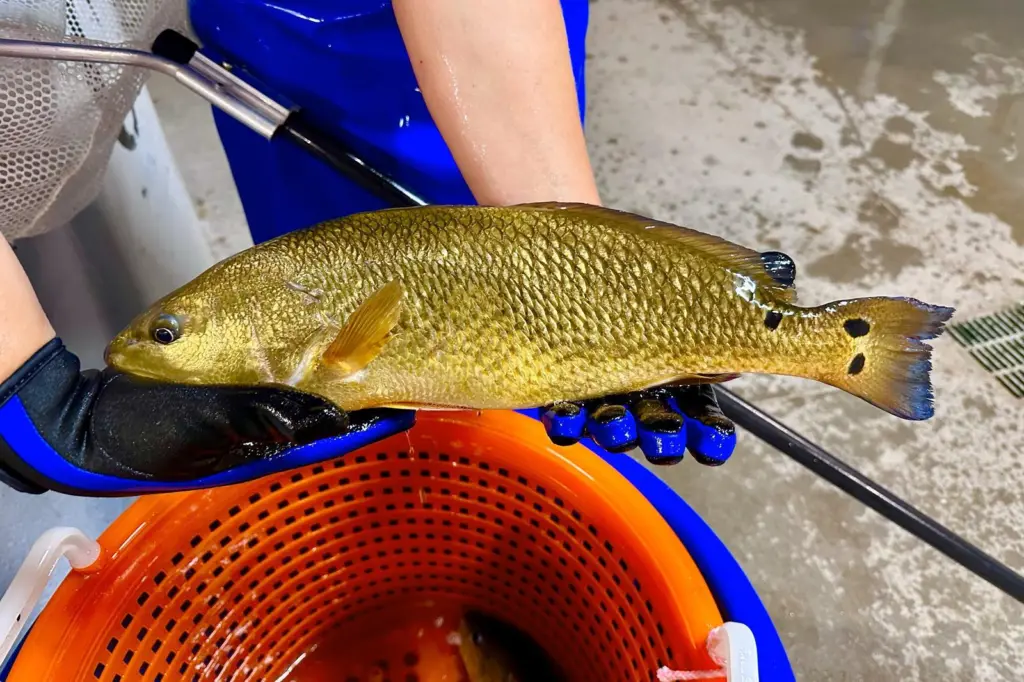
Now, redfish are making a comeback, thanks to a new recirculating aquaculture system (RAS) on Pine Island in southwest Florida near the city of Fort Myers. Founded in late 2023 by Megan Sorby and her husband Tom, Pine Island Redfish is working to re-establish redfish in the US commercial market.
“When the redfish fishery closed, a lot of investment went into aquaculture to see if the species could be farmed for restocking purposes,” Megan Sorby told WF. “Thanks to this, the fishery has rebounded, and the efforts made to understand the redfish farming process gave us the foundational work to commercialise the species through RAS technology. It’s a beautiful white meat fish and a popular sport fish, so the demand for it is there, while farming it on land is an ideal opportunity to offer a uniquely domestic species to the import-dependent US market and highlight the importance of RAS and the positive contributions that it can make.”
Pine Island Redfish currently holds two populations of broodstock. These will spawn multiple times, and their eggs are transferred to incubators and on to larval tanks. The eggs hatch after approximately three days, at which point they grow in the hatchery on live feed for around a month before they’re weaned onto a dry diet and moved into larger systems for grow-out.
Work is also underway to build up the third and fourth populations of broodstock to allow year-round spawning capabilities for the company.
“Historically, redfish have been farmed outdoors in ponds, and grow very well in brackish water pond systems, but we felt that we could tackle some of the issues that pond aquaculture faces in being an outdoor, uncontrolled water environment,” Sorby said. “This is where RAS comes in. RAS is the right application for fish farming on Pine Island because its natural geology allows access to seawater via saltwater wells, and we can avoid certain risk factors at sea such as severe weather, parasites or algal blooms. We currently harvest anywhere from eight to 10 tonnes of redfish a year and hope to reach production capacities of between 800 and 1,000 tonnes.”
Stimulating mangrove growth
RAS farming gives promise of more sustainable food production with low freshwater consumption, improved biosecurity, better control over disease and shorter transport distances as fish can be grown in locations closer to markets. However, it presents waste mitigation challenges due to its intensive nature and the need to control water quality. Waste disposal in land-based aquaculture is costly and complex, with considerable issues involved in condensing salty waste into something that can be disposed of efficiently and cost effectively.
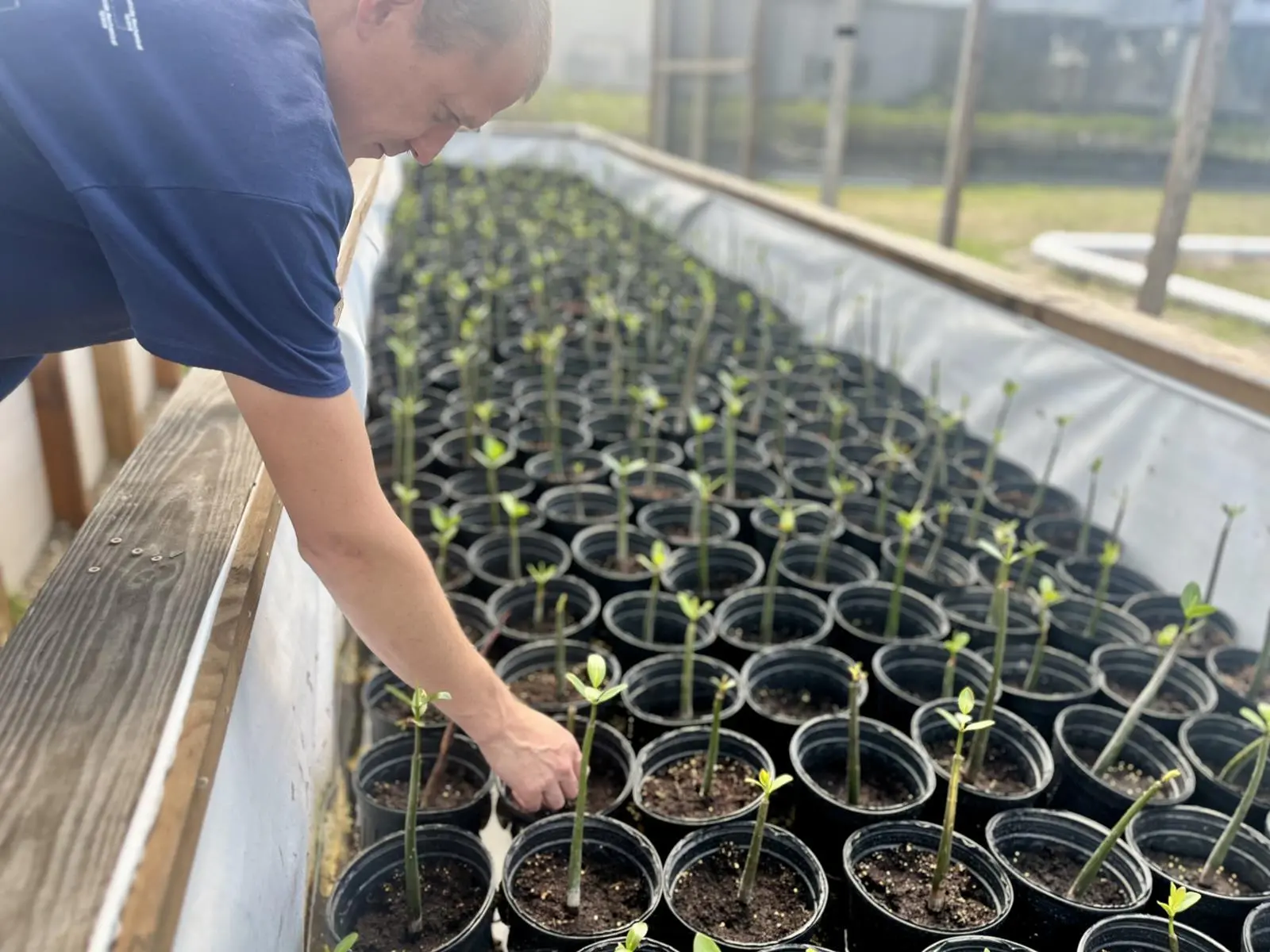
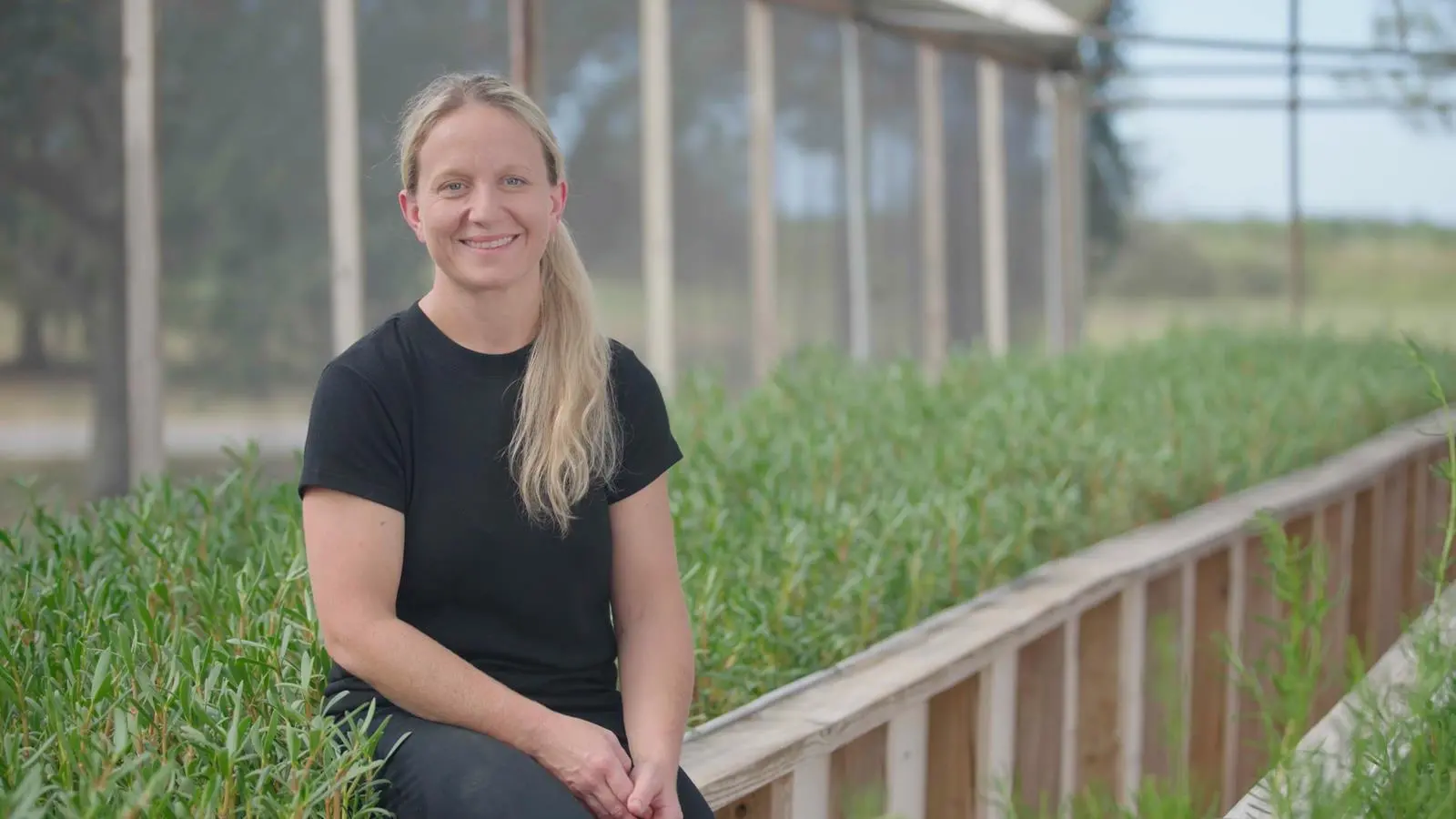
To solve this issue, Sorby and her team began to investigate opportunities to use the waste from their farm and came up with a unique, regenerative solution – fertilising and growing nutrient-dense halophytes, such as sea purslane and barilla, and mangrove trees, a key shoreline species in Florida that sequesters carbon at a rate ten times greater than mature tropical forests.
Together with MANG, a US environmental apparel company that is working to restore coastal ecosystems, Pine Island Redfish collects mangrove seeds that are nurtured in its nursery spaces and transplants them along the west coast of Florida. This year’s redfish harvest has fuelled the growth of over 5,000 mangroves that will be planted as part of restoration projects across the Florida coast to support the state’s biodiverse ecosystem.
“It just so happens that the nutrient profile of the waste from our farm is optimal for growing and restoring mangroves,” Sorby said. “There has already been some foundational work on mangroves acting as natural filters and nutrient sinks to help decrease waste from aquaculture, but it wasn’t clear how that could be done most efficiently. With RAS, it’s possible to bring everything together into concentrated waste streams and fine-tune it really well. We can monitor and manage the waste nutrients that go into the mangroves very effectively. In other words, we can take the waste that we produce and fine-tune it to ensure that the mangroves grow in the most efficient way.”
“It’s very powerful to be able to say that we are using waste from farming redfish to grow plants that act as a nursery for juvenile redfish in the wild,” Sorby continued. “We’re giving back to a fishery that we’re trying not to impact, as we grow the species for consumption.”
Onboarding end markets
By utilising the nutrients from fish waste in this way, Sorby and her team have found an ideal opportunity to showcase how RAS farming can develop in regenerative ways. Their work is key to tackling seafood supply issues while enhancing climate resilience. It has also helped the team communicate with the public and share information about aquaculture’s positive impacts on the environment and food security.
This type of community engagement is critical to the success of environmental initiatives, Sorby said. Volunteers can not only participate in the restoration work, but also learn about aquaculture, redfish and land-based farming. Getting people to connect with the importance of coastal environments is vital, said Sorby, who is delighted to be part of a positive movement by simply repurposing a by-product of redfish farming.
Over the next two months, she and her team will be harvesting the next round of redfish for restaurants and retail outlets before harvesting again this autumn.
The Sorbys currently operate a demonstration-scale facility at Mote Marine Laboratory and Aquarium in Sarasota, as work continues on a permanent site on Pine Island. With positive market responses to their farmed redfish and more mangrove production capacity than initially anticipated, hopes are high that Pine Island Redfish will continue contributing to the growth of RAS and environmental restoration, and above all, keep proving that RAS farming can be sustainable with increased ecosystem growth.
“We are hopeful that the more mangroves we plant and the more partners we have, the more significant impacts we’ll see,” Sorby said. “We are extremely grateful for the participation of a welcoming community and a group of volunteers that finds it a priority within their lives to carry out restoration work. We also do our utmost to highlight how our redfish have fuelled the growth of mangroves that are starting to be planted out this year and hopefully next year.
“The Floridian market has been very receptive to this and is keen to share it through QR codes, menus or display cases. In this way, consumers, even if they don’t buy, can engage with our story and have some understanding of what happens before our fish reach them. With more plant production space and more fish production, we hope to reach our target of producing over 45,000 mangroves next year and look forward to opportunities for larger collaborations and further support.”