



By global standards, aquaculture across Central Asia is growing at a very slow pace, with the progress far more drawn-out than forecasted. There is, according to local players, a plethora of factors constraining the industry’s development – everything from a lack of qualified personnel to low seafood consumption.
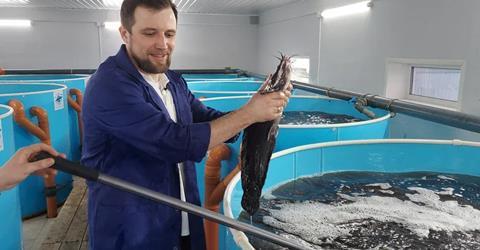
For several years, fish farmers in Kazakhstan have wandered in the dark, having to find practical solutions to common issues through trial and error, Nurbol Kuanyshbaev, a fish farmer from Taraz, a town in the south of Kazakhstan told WF. Much more recently, though, there’s been a significant change in the operational conditions, not least the government finally hammering out of a long-awaited industry development programme. Consequently, in the last two years the value of state support measures an average Kazakh fish farm is subjected to has near quadrupled.
But according to Kuanyshbaev, the real game-changer for the region’s farmers is the scientific support. He particularly praised the launch of the Aquaculture Research Centre under the Taraz State University – also two years ago – which is part of a broader network of similar organisations established across the country to enhance the effectiveness of aquaculture businesses.
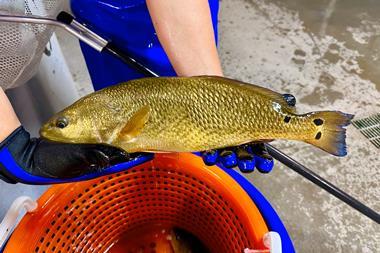
“For example, when the fish get sick, specialists take tests, make examinations, find out the reasons for this and give recommendations. This is a very good help,” said Kuanyshbaev, who breeds eight fish species, including carp, trout and snakehead.
Despite the upturn, official figures still paint a discouraging picture for the industry. In 2024, Kazakhstan’s output was only 18,200 tonnes, less than half the 42,300-tonne target envisaged by the government plan adopted in 2021. Moreover, production is significantly lagging behind the original schedule, under which the output was forecast to rise to 270,000 tonnes in 2030.
Similarly, in 2023, the production was just 17,100 tonnes, against a forecast of 32,200 tonnes.
Nevertheless, the Kazakh government is putting a lot of effort into bolstering aquaculture production on various fronts.
“There is a lot of propaganda of aquaculture in the media. This attracts the attention of businesses. This is a positive thing,” said Serik Timirkhanov, owner of the Almaty-based fish feed manufacturer Aqua Alliance.
But Timirkhanov also admitted that in its extensive efforts to promote aquaculture among local farmers, the authorities make an “oversimplified presentation” of this business to the audience.
“As a result, many new projects fail,” he said, explaining that most new farmers have no idea what they are up to.
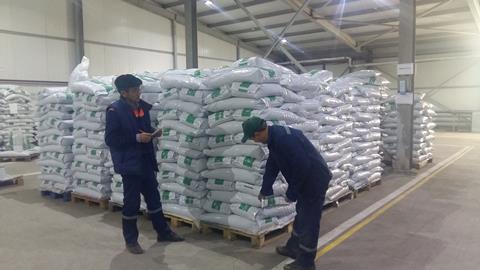
Over the past five years, Aqua Alliance increased its fish feed production by nearly 50%, although this growth was primarily driven by exports to Russia, where the market has been in short supply after the exodus of Western suppliers, Timirkhanov said, estimating that for the past several years, exports generated around 85% to 95% of revenue for Aqua Alliance.
Roads untravelled
Aquaculture in Central Asia is largely being pushed forward by enthusiasts who try to breed different types of fish, often for the first time in their countries.
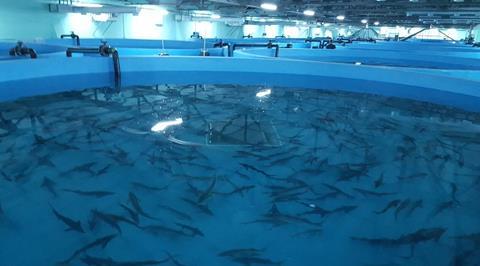
According to Anton Pelcher, CEO of Aquafarmer, a Moscow-based engineering firm which has helped build RAS farms across the region during the last decade, growing fish in the countries of Central Asia often drastically varying profitability. For example, the average profitability of growing carp using RAS technologies in the country is close to 50%. On the other hand, growing African clay fish and sturgeon using high-quality extruded feed in Uzbekistan is loss-making, owing to a low market demand and consequently low price, Pelcher admitted.
“Sturgeons in Uzbekistan are being bred in pounds and fed with the low-quality feed or not being fed at all,” Pelcher said.
There are also some climate-related challenges, he added. “For example, when you decide to grow trout in Uzbekistan, you need to make sure you have enough cold water. Uzbekistan is a hot country, and if you are short of cold water, your entire RAS system will warm up, so you will have to use coolants,” Pelcher warned, explaining that this would eventually become a heavy burden on the farm’s performance.
Infrastructure needed
All of the countries in the region recognise the need to establish relevant infrastructure for the development of aquaculture in the long run. For instance, Kyrgyzstan is building the National Centre for Aquaculture and Fisheries Development on the southern shore of the Issyk-Kul Lake, which is expected to become the backbone of the fish farmers in the coming years.
The project, implemented in partnership with Korea Maritime Institute, will house a hatchery, specialised laboratories and a training centre.
“The centre’s main objective will be to help farmers, students, teachers and researchers learn about modern fish farming technologies,” the Agricultural Ministry said.
The construction of the centre, which is scheduled to be completed in 2026, will become an important milestone for aquaculture development in Kyrgyzstan, believes the Ministry. By the end of the decade, it should contribute to the threefold growth of aquacultural production in the country from 35,000 tonnes in 2024 to 105,000 tonnes in 2030.
As a result, exports are expected to jump nearly tenfold to 50,000 tonnes per year, the Ministry estimated. Kyrgyzstan primarily exports trout to Russia, Kazakhstan, Uzbekistan and Lithuania.
Such projects are highly needed since the lack of skilled personnel is one of the key problems that hamper aquaculture growth in Central Asia.
“There are no good fish farmers,” Timirkhanov said. “Only one of the four universities that prepare personnel for aquaculture have a more or less decent technical base, such as a test RAS. The rest teach either theory or use adapted equipment they store in the basement. Not a single teacher at these universities has experience in fish farming, they all immediately came to teaching from the university bench.”
Meanwhile, the situation in Kazakhstan’s labour market presents a major obstacle. A lack of personnel is constraining the industry’s development, and the absence of effective large farms means there is no place for well-educated specialists to apply their skills, Timirkhanov said.
Common challenges
Furthermore, the region’s aquaculture suffers from common economic problems, including corruption and low living standards, advised an Uzbek fish farmer who wished not to be named.
“You need to go through fire and water to get a truly good place to grow fish,” the source said, assuming that this might also relate to climate change, as in the context of looming water scarcity, competition for freshwater resources in the country has intensified in recent years.
Climate change is indeed a growing problem for the region. Kazakhstan’s grain production could drop by as much as 37% by 2030 due to the impact of climate change, according to a World Bank forecast. Also, freshwater resources are running dry across the region, with the problems appearing to be the most pressing in Kyrgyzstan and Uzbekistan.
Local environmentalists have warned the problem could trigger a full-fledged social crisis in some countries of the region already the next decade.
Establishing RAS farms in Uzbekistan is also a risky venture, given the regular blackouts in the country. “You can invest millions in high-tech equipment, broodstock and personnel only to one day discover that your fish died because the lights turned off,” the source explained.
Such problems largely discourage foreign companies from investing money in aquaculture in Uzbekistan.
In February 2021, Tianjin Kaiteng Investment Group Co rolled out plans to build a complex for breeding Peking ducks and shrimp in the Kegeyli region of Karakalpakstan for US$90 million with the production including 500 tonnes of shrimp per year. However, the project has not gone further than the declaration of intentions.
In Kazakhstan, some market players also believe that the state money allotted for aquaculture development is going in vain.
“It is quite obvious that the measures for the development of aquaculture, undertaken by the government, do not contribute to the achievement of the set indicators, which are below the level of the neighbouring countries where they don’t spend so much resources on this purpose,” Timirkhanov said.
In general, the outlook for the industry remains mixed. Aquaculture is expected to slowly grow in Kazakhstan, Uzbekistan and Kyrgyzstan, but the systemic challenges are expected to remain for a while, largely constraining the development and investments.
Topics
- Aqua Alliance
- Aquaculture
- Aquafeed
- Business & Finance
- Carp
- Feed & Nutrition
- Kazakhstan
- Kazakhstan Aquaculture Research Centre
- Kyrgyzstan
- Kyrgyzstan National Centre for Aquaculture and Fisheries Development
- Land-based aquaculture technology
- Land-based Farming
- Lithuania
- RAS
- Russia
- Seafood
- snakehead
- Sturgeon farming
- Sustainability
- Taraz State University
- trout farming
- Uzbekistan