


Interview: Full fish utilisation – a compelling vision for a sustainable future
Ahead of the 5th Fish Waste for Profit conference in September, Iceland Ocean Cluster Founder Dr Thor Sigfusson tells WF that the 100% Fish movement is expanding its reach at great speed thanks to increased industry support and engagement, not least from the start-up community.
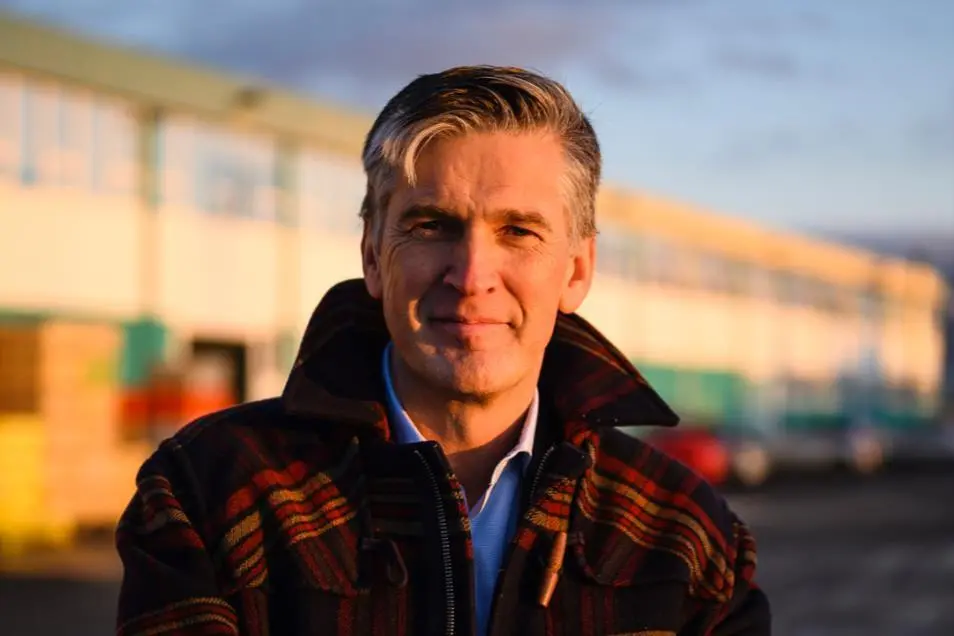
WF: If you could sum up the 100% Fish initiative in a few sentences, what is it and why is it important?
Sigfusson: As I embarked on my journey with Icelandic fisheries, I encountered fishermen reminiscent of the trailblazers highlighted in “Good to Great” business literature – constantly striving to improve, particularly in maximising value from their side streams. Despite their 100% utilisation achievements, they remained humble. Their ethos inspired me to emulate their mindset and practices, especially given the stark contrast with the majority of fisheries globally, which waste between 30% to 60% of their harvest. This inefficiency not only squanders valuable resources but also contributes significantly to environmental degradation.
Motivated by the desire to instigate change, I envisioned a movement that would challenge the status quo: 100% Fish. This initiative encapsulates the ethical and environmental imperative of utilising every aspect of seafood production, whether from farmed or wild sources. By adopting a holistic approach to utilisation, we can unlock a wealth of benefits, including increased nutrition, job creation, product innovation, and value generation. Moreover, embracing the 100% Fish ethos aligns with Sustainable Development Goal 12, aiming to halve food waste by 2030. In essence, 100% Fish represents a compelling vision for a more sustainable and efficient seafood industry, one that resonates with both moral and practical considerations.
WF: What are the main short- and longer-term ambitions for 100% Fish?
Sigfusson: The ambition – or arguably the need – is to have all blue food producers accounting for 100% of everything they produce; wild-capture, farmed, shellfish, crustaceans, molluscs, everything. Shifting to 100% accountability is a useful step in the process toward the viability of 100% utilisation. Understanding operational changes, finding markets, supporting investment and entrepreneurs, creating new products, all takes time and vision so, in the shorter term all systems moving to 100% accountability is an ambition, longer term: 100% utilisation. Producers will benefit from market support in this shift.
Our sense is that it will become a part of best-practice in time; for example, in MSC or in quota allocation, or in aquaculture licencing, BAP and ASC, which would accelerate progress. Our short-term plan also includes winning an Earthshot Prize for all those currently committed to 100% Fish around the world. The movement has been nominated, which is terrific.
WF: You have written a new book, also called ‘100% Fish’ – an extensive undertaking, with fantastic insights from the world of fish by-product utilisation. Is the hope that it inspires and accelerates further change in this space?
Sigfusson: My hope is that we can inspire and support countries and companies around the world in implementing their own 100% fish activities and fuelling the global entrepreneurial environment to see the establishment of exciting and creative seafood innovations that mean zero-waste for the world’s seafood. Tied in with improved global management and accountability of catch and oceans that have the health and resilience to sustain our future.
WF: Researching and putting the book together, what initiatives and visions inspired you?
Sigfusson: When meeting pioneers in seafood from different continents, you realise there are so many people in this industry who have the ambition to create value and jobs. They are tackling different challenges, but their aim is to constantly to do better for their company, community and the environment.
WF: Iceland has been leading the way on this, particularly with innovation and entrepreneurship related to the utilisation of its whitefish. Can you outline some of the latest initiatives taking place in the country?
Sigfusson: In recent years, the fishing industry has seen unprecedented investment in innovative ventures, marking a significant shift. I see this surge in investment as unparalleled globally. I started the Ocean Cluster House with a support from the Port Authorities in Reykjavik and backing of seafood companies like Brim. Now, new spaces are being created in other parts of the country; Breið in west Iceland backed by Brim Seafood and Drift in north Iceland backed by Samherji. These activities exemplify the direct engagement of fishing corporations in the innovation sector. Such active involvement by influential companies is poised to become a pivotal force in reshaping innovation and the fishing industry in the foreseeable future. We need to inspire other large seafood companies to do the same in other parts of the world!
WF: The innovation hasn’t stopped there. We’re also seeing several initiatives utilising fish by-products popping up around the world, which ones in particular have caught your eye?
Sigfusson: Multiple start-ups have been established with various products in the field of beauty and health, nutraceuticals (supplements), medicine, leather, omega-3, and enzymes to name few. Here we can name Kerecis, Nordlaks, Zymetech, Nordic Fish Leather, Marine Collagen and Ballstad to name just few. I am also a dedicated follower of some start-ups utilising crustacean shells, for instance Genis in Iceland and Marin skincare in the US.
Our collaborations in 100% fish with the Great Lakes in the US, Namibia, the Pacific Islands and Korea to name few, have been very promising. For me, it is crucial to build the community of collaboration first and that has been very fruitful so far.
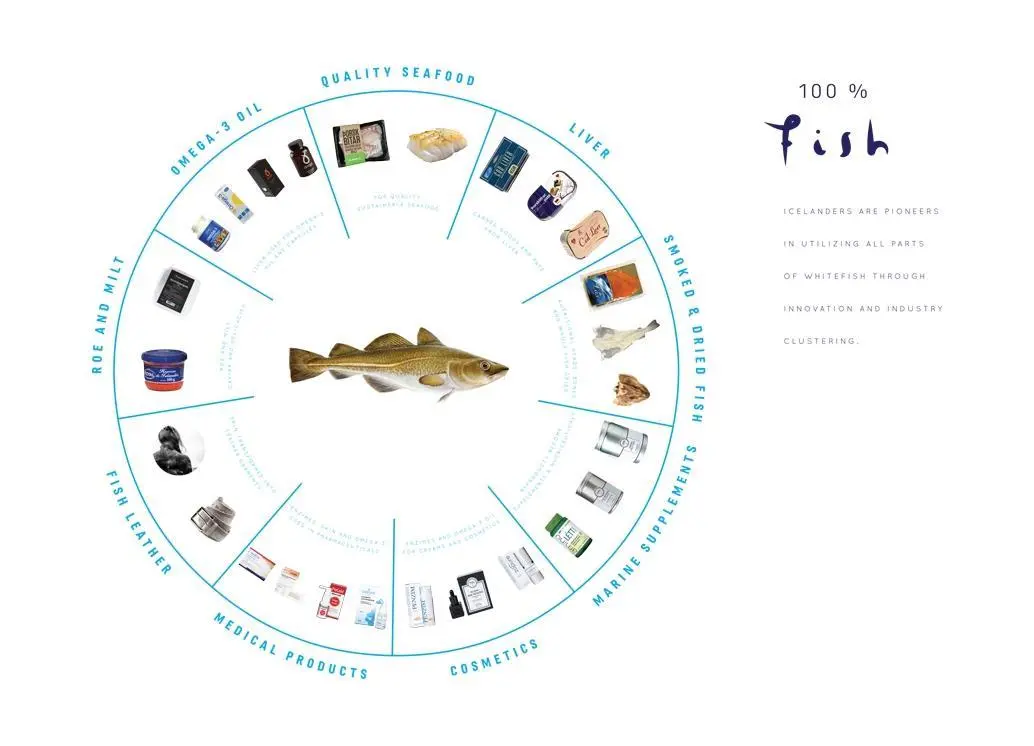
WF: Have you identified any new opportunities for utilising by-product materials that are ripe for progress?
Sigfusson: Icelandic R&D is observing both the eye liquid from the cod and perch, blood from whitefish and salmon. The Icelandic HPP Protein plant Ltd is also working on making fishmeal into pure protein. Every day is an innovation day here at the Iceland Ocean Cluster! Our latest start-up tenant in the Ocean Cluster House is Sea Growth. Their aim is to produce raw fish products from fish cells, so-called “ecological fish”.
WF: We’re seeing more and more interest in this space, but it’s likely there are many people and organisations that are not sure where to start. What advice would you give them?
Sigfusson: I believe we need to bring the start-up world into the picture; something that’s totally lacking in many countries. The bottom-up approach has been very lucrative in Iceland. The fishermen are contacted by start-ups and innovators and assist them by providing them with by-products and other support. Sometimes I feel that fishermen are sceptical that we all believe they can become pharmacists – developing high end pharmaceutical products from their products. We need rather to take it step by step; walk slowly up the value line, beginning with ideas regarding simple fishmeal production from side streams, then maybe up to some nutraceuticals etc.
WF: What can be done at industry, policy/regulatory, investor and research levels to ensure the 100% Fish message spreads fast and far enough?
Sigfusson: We have had difficulties in getting European regulators to accept some of our by-products for human consumption. We need to move some of the hurdles that are in the way of full utilisation. Sometimes, people are suggesting government should step in, full force and ban wasting of by-products. I believe we should allow the industry to develop further a 100% mindset rather than relying on government. Governments should support R&D and start-up accelerators.
WF: Where do consumers fit into this picture?
Sigfusson: Peter Handy, owner of Bristol Seafood in Maine, US, says in my book: “One of the things I hear the seafood industry loves to say, and it’s always rubbed me the wrong way, is that we must educate the consumer. To me, that’s always just sounded arrogant. And I think what we should try to do is to be educated by the consumer. Rather than to tell them why they should eat what we make, why don’t we figure out why they’re not eating it.” I think this sums well up how we need to connect with consumers differently than we have so far.
WF: Last but not least, the 5th Fish Waste for Profit conference is taking place in Iceland this September as part of the IceFish 2024 programme. What are you most looking forward to about this year’s conference?
Sigfusson: Fish Waste for Profit has been one of the cornerstones of 100% Fish and opened a great opportunity for 100% fish enthusiasts to meet and share ideas. We are already receiving very interesting ideas and suggestions for topics that I believe will make the next conference a very dynamic event.
Related Articles
 INTERVIEWS
 INTERVIEWS
 PROCESSING & REFRIGERATION