


Shining a new light on shrimp trawling
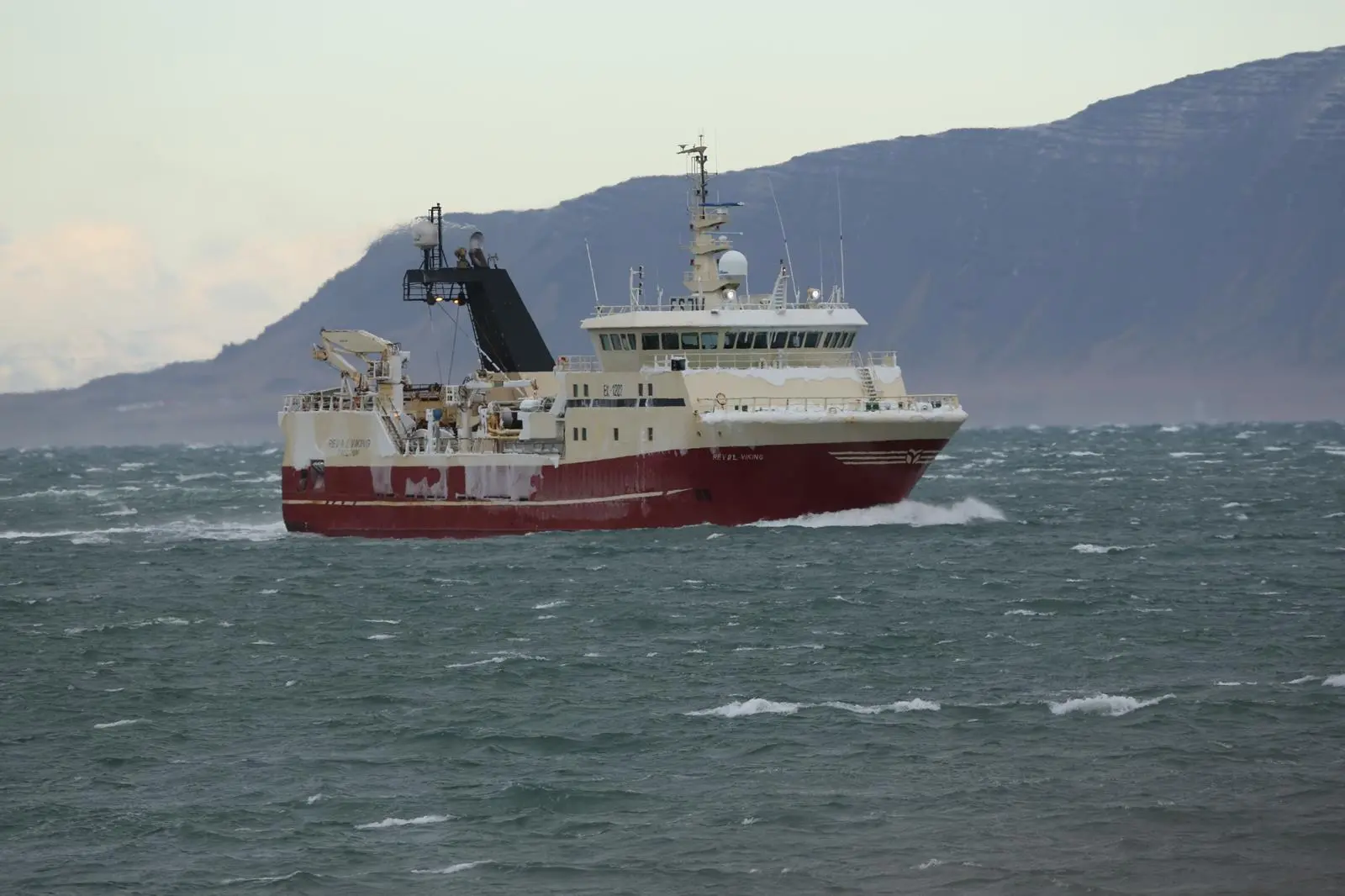
He’s only just stepped ashore – temporarily – from freezer trawler Reval Viking, one of the fleet of trawlers operated by Icelandic-owned Estonian company Reyktal. Now he’s facing a new challenge to develop gear and techniques that he hopes will change the way shrimp are caught, turning this from one of the most fuel-hungry fisheries to a gentler, more economical way of catching.
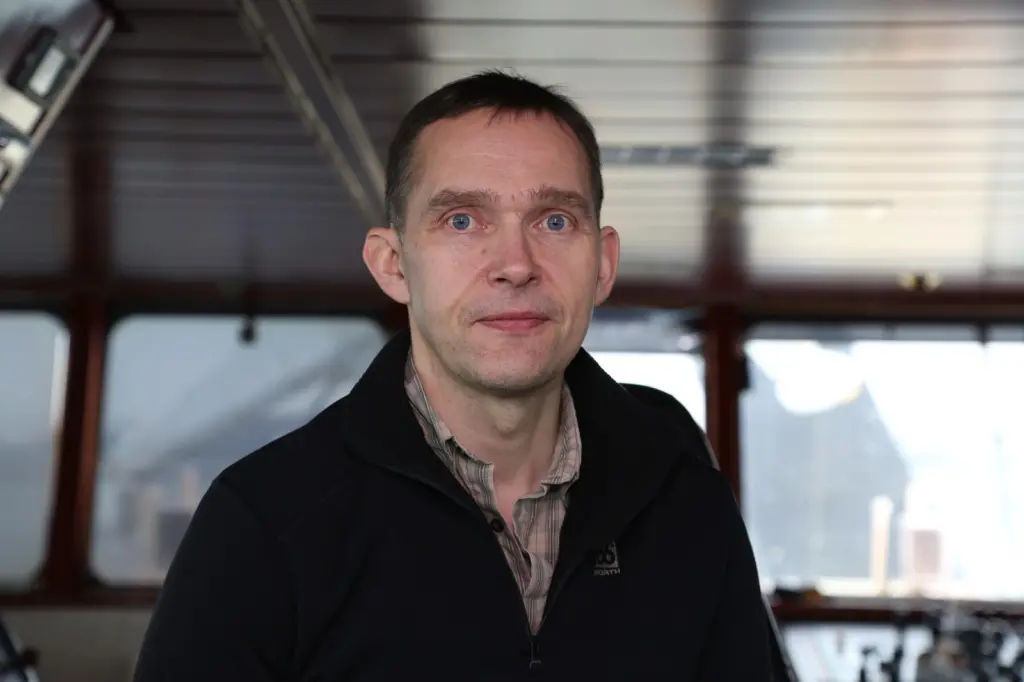
Eiríkur Sigurðsson’s fishing career goes back a long way, starting at 10-years-old on jigging boats fishing from Húsavík in the north of Iceland, and working his way up to crew on larger and larger vessels.
“I went to take my certificates as soon as I possibly could, and was sailing as skipper at 20. I’ve been in the wheelhouse ever since,” he recalled.
Sigurðsson has been fishing for shrimp since 1984, when shrimping boomed in Iceland, working first in home waters and then as this expanded, to Flemish Cap. This took him to the wheelhouses of some of the most modern shrimp trawlers in the fleet, including Pétur Jónsson, as co-skipper opposite its owner Pétur Stefánsson, and later Ontika, owned by Reyktal. Fishing grounds have also included both west and east Greenland.
“West Greenland was the most exciting fishing, with some very heavy fishing there,” he said.
Today Reval Viking operates on fishing grounds off east Greenland, and in the Barents Sea – all the way up to areas around Svalbard.
“We’ve been a long way north. All the way up to 82°30’N. There’s shrimp to be found all the way up to where the continental shelf ends and drops away into very deep water.”
Lighting the way
Reval Viking is fishing with three 3400 mesh shrimp trawls, towed on four warps. Sigurðsson told WF that although these are some of the most modern shrimp trawls available on the market, there has been little significant development for a long time.
“This is fishing gear that saw a lot of change over the years, especially as newer and lighter materials were introduced. Since then, not much has changed. It’s amazing how little has changed in the last 20 years,” he said. “There was a lot of development – and then nothing.”
But that’s about to change. And it’s the reason he’s stepping ashore for a while. Reyktal has been trialling the innovative system of lights that Reykjavík company Optitog has been working with, adapting fishing gears to use lights as a way of herding both groundfish and shrimp into trawl gear.
The rationale behind this is to reduce the shrimp fishery’s high fuel consumption, as well as to lighten fishing gear, which would consequently reduce the demands on the whole setup.
“Less drag and tension on the warps means that the whole equipment array can be scaled down. That extends to engine power and winches. We can’t go on using this much fuel. The environmental lobby and the certification bodies are sooner or later going to stop. So there has to be another way to do this.”
It’s Sigurðsson’s own far-sightedness on this issue that has driven the co-operation so far in developing the lights, and Reyktal has enough faith in its skipper to take the issue and run with it. The result is a co-operative programme between Optitog and Reyktal to carry out further trials, with Sigurðsson overseeing this as project manager and working with a team of technicians.
Reyktal’s trawler Taurus is fishing with twin trawls rigged with lights, and this allows the catches from each trawl to be kept separate – as the trawler has two reception pounds – and to be precisely evaluated against each other. Taurus was selected for this specifically because it’s the only twin-rigger in the company’s fleet and because it has separate pounds that allow catches to be kept separate for evaluation.
He’s convinced the swept area of the trawl gear can be quadrupled by using lights to herd catches.
“It works. But we’re a long way from being finished yet,” he said.
Onboarding young ideas
Taurus is working its standard gear, but with lights on the doors and wing ends, angled to shine forwards to create a wall of light that herds target species into the gear. Results so far show a 10% increase in catch rates, but there’s a great deal more to be done and Sigurðsson is certain that a 40% figure is realistic.
“This is coming,” he said.
The problem is that Taurus is working alone on this, and testing variations is a slow process. There are a great many potential combinations of light intensity, colour and placing waiting to be tried out, and the nature of shrimp trawling also makes this a process that isn’t fast.
“Two or three tows isn’t enough. We need at least 30 hauls to get reliable results – and 30 hauls is a week, or even 10 days. We’re working along on this, as the other Reyktal trawlers don’t have the split reception pounds that allow catches to be kept separate. This testing process would certainly be faster if there were a few more of us working on this,” he said.
He explained that other companies and skippers have been reluctant to participate, and said it’s not easy to work out why, considering the potential of this approach.
While it isn’t exactly a new idea, in the last few years, some real progress being made.
“This has been around for a long time and the use of light in fishing is well known, although not in this application,” he said, adding that Optitog has carried out trials on board Klakkur in the past, and Brim’s fresher trawler Viðey has also done some trials.
“I had faith in this, and Reyktal also has enough faith in this to be prepared to take it further. Right now, I have two young engineers at sea working on this, and it’s great to work with these imaginative young people. They have so many ideas. They come up with things that would never occur to me, and I hope the combination of their inventiveness and my experience is going to make this work,” Sigurðsson said, adding that he hopes to one day see the whole fleet using this method.
“I’m optimistic that we can improve catch rates by as much as 40%. That means we would be able to catch the same volume of shrimp, but using much lighter gear and with fuel consumption cut by a half, or even more. This is coming, but we still have a long way to go,” he said.

Related Articles
 INTERVIEWS
 INTERVIEWS
 PROCESSING & REFRIGERATION