



Long before “side-stream valorisation” became common industry language, the core business model of Shiino Foods has been to focus on extracting commercial value from parts of marine animals that are typically discarded or underutilised. Throughout its 131-year history as a leading seafood processor in Japan, Shiino Foods has specialised in the creation of premium items using aquatic by-products deemed non-essential.

Globally, seafood by-product valorisation has gained momentum as economic, regulatory, sustainability and technological forces converge. It has evolved from a waste management programme into a value-creation strategy. Shifts in market demand for aquatic side-stream materials are being driven by emerging applications derived from an increased appreciation of their commercial potential.
Neglected marine raw materials are being upcycled rather than disposed of or utilised uneconomically. They are being recognised as resources that can provide greater value when redirected to applications other than routine pathways such as fishmeal and fish oil.
Aquatic by-products remain indispensable for aquacultural and agricultural feeds. When operationally feasible, however, higher value alternatives are progressively being sought.
Converting materials such as heads, bones, skins, viscera, scales and shells left over from seafood processing continues to advance across multiple value chains. Key applications include nutraceuticals and pharmaceuticals, cosmetics and personal care, industrial and biomaterials, energy and biofuels, and environmental and technical uses.

Turning the overlooked into the exceptional
Shiino Foods provides an excellent case study of value creation through its selection of marine by-products as ingredients for human foods, a less common application. The primary raw materials for the renowned products of Shiino Foods are rare parts of aquatic animals that are regarded as waste or of little value. In the processed seafood products made by Shiino Foods, such ingredients are visible components rather than functional inputs. Consumers are well aware of what they’re eating.
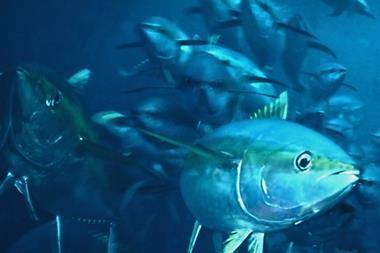
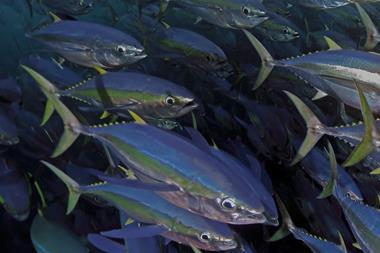
The best example of this is a traditional Japanese product called “Shuto”. The principal ingredient is tuna stomachs from yellowfin and skipjack. The tuna stomachs are cleaned, cut into small pieces, salted, and then matured for around one year. Before bottling, the Shuto is seasoned. The result is a delicacy rich in umami flavour. It is often referred to as “Japanese anchovies “due to its comparable seafood saltiness.
Shuto was first conceptualised over three centuries ago. Nowadays, Shiino Foods has over 94% of the market share of Shuto, its signature product. Last year, it was selected as a finalist in the Seafood Excellence Asia Awards. Such recognition demonstrates that aquatic by-products can be optimised to not only to create goods that are commercially profitable, they can be exceptional in quality.
In addition to Shuto, Shiino Foods produces a range of Shiokara products. Aside from the flesh of squid or skipjack tuna, viscera such as livers and other innards are essential core ingredients for Shiokara. Marine by-products used by Shiino Foods also include parts of octopus, jellyfish, sea urchin, scallops, and so on. Following the same philosophy, subsidiary companies in the Shiino Foods group SFD and PFP also use seafood side-streams such as fish skins and rare parts of aquatic animals in their fishing bait and pet treat lines.

What by-products can really deliver
While Shiino Foods strongly advocates sustainable fisheries, marine resource conservation and waste reduction, it is also a commercially driven business. Its central strategy is, quite simply, turning by-products into revenue-generating, value-added goods.
The global seafood industry has historically high discard rates. Rather than ocean or landfill dumping, unwanted cuts and trimmings can be transformed into financially rewarding outputs. Valorisation supports the principles of circularity by limiting food loss and waste (FLW). It also aligns with the 4R approach: reduce, reuse, recycle, recover!
Improving the utilisation of by-products is essential for food security, sustainability of fisheries, and profitability throughout the supply chain. It satisfies the three pillars of the UN global Sustainable Development Goals (SDGs): economic prosperity, social advances, and environmental responsibility. There is indeed a growing imperative to transform aquatic side-streams into higher-value uses.
Scott Maltby is an Australian professional at Shiino Foods (Japan), overseeing international business development, raw material procurement, and global partnerships.
Shiino Foods is a Japanese company based in Odawara, founded in 1894, renowned as the dominant producer of “Shuto” (fermented fish viscera), holding over 90% of the market share. It specialises in traditional, long-term matured seafood products, specifically tuna and bonito, that offer intense umami flavours for condiments, toppings, and cooking ingredients.