



Interview: Young skipper hopes to inspire future generations of fishers
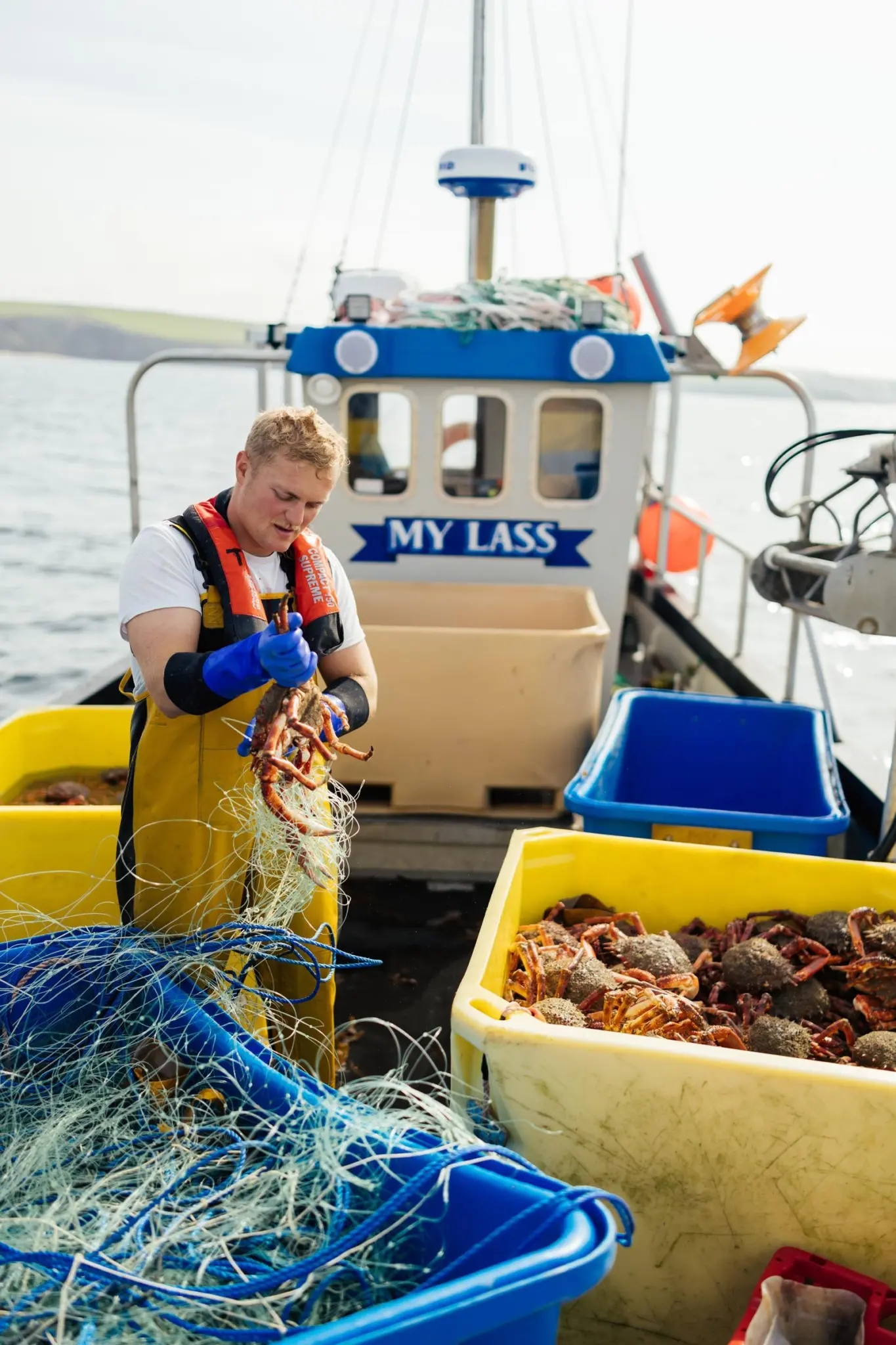
Tom Lambourn is the skipper-owner of My Lass PZ 291, based out of Newlyn, Cornwall, and is also a brand ambassador for Xtratuf. Despite studying chemistry at university, he was always destined to follow his heart and become a commercial fisherman. He’s also keen to help bring more youth to an aging industry.
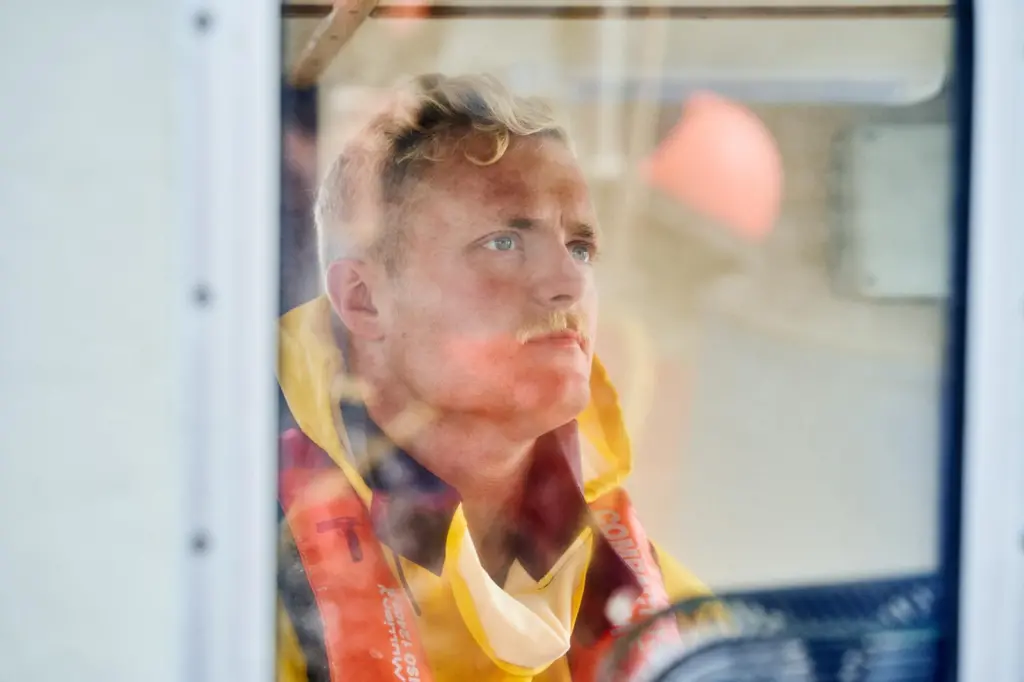
With his family heavily involved in the commercial fishing sector: his father a fisherman and his mother and her family owning the privately-owned W Stevenson & Sons fishing fleet, it was a natural progression for Lambourn. In the spring and summer months, onboard My Lass, he mainly fishes for Cornish lobster and spider crab. For the rest of the year, he crews on the 12-metre catamaran Lyonesse PZ 81 – fishing for Cornish sardines. He tells WF he’s also keen to promote the fishing industry as a livelihood for future generations and is a member of the Youth Board of the Cornish Fish Producers’ Organisation – a group of young, local fishers that has helped create a new fishing apprenticeship scheme.
WF: First, a bit of background to you and your life as a fisherman – what brought you to the industry in the first place?
TL: I come from Newlyn, the largest fishing port in Cornwall. Other than those periods when I was away studying, it’s a place that’s always been the focal point of my life, particularly the harbour – with my dad being a fisherman for longer than I’ve been alive, and my mum’s involvement in her family’s business, owning fishing boats and also running the Newlyn Fish Market. I guess that since the age of five or six, I’ve been obsessed by fishing; first helping my dad land his catch and then later going out on fishing boats at weekends and school holidays. I suppose it was a hobby to begin with, but then midway through my university studies at Cardiff, I realised I wanted to pursue fishing as a full-time career.
Today, I’m involved in a couple of great local fisheries. I have my own boat – My Lass which is a small single-handed, nine-metre that I bought about four years ago, which I use to target lobsters and spider crabs. During peak summer there’s an abundance of the crabs in this area, and despite being deliciously sweet, they’re quite low in commercial value. Nevertheless, they’re there to be caught and hopefully prices will eventually move in the right direction. I’ve also been part of the crew on the Lyonesse since I left university in 2017 – fishing for Cornish sardines from around the middle of July until mid-February.
WF: What especially excites you about what you do?
TL: There’s a lot to love. For me, fishing as a career has a lot of strong points. First and foremost, it’s a very exciting job: you’re out on the water, and there’s a natural excitement of being out in nature with lots to see and plenty of wildlife to encounter – dolphins, whales, tuna – there’s so much to enjoy. And it’s particularly good when the weather’s nice.
From a fishing perspective, from one day to the next, you never know what or how much you are going to catch; what gear is going to give the best rewards – which pots or nets will be the good ones that day – or where you’ll find the shoals sardines. While the process and the catching methods stay the same, there are a lot of unknowns, with the added issue of trying to catch enough to earn a wage and to make the process viable. Personally, I like the fact that you rarely get two days that are the same, that you don’t know what challenges you’re going to face when you set out in the morning and that you’re constantly learning and adapting to new, unforeseen circumstances. It’s an exciting way to work – you’re always striving to get a good catch, and to make it a successful fishing trip for everyone onboard.
Of course, fishing isn’t for everyone. It’s true that it is very hard work at times, and I expect that’s why a lot of fishing communities struggle to recruit young people and why the average age of fishers is what it is. Historically, there’s also been the perception that being a fisher is a last resort career; a job when there are no alternatives. However, I think that stereotype is outdated and has little relevance today. I mean I went to university, and then made the choice to be a fisherman and I’m happy to say it’s the best decision I’ve ever made. I’m lucky in that I love what I do as a job – the opportunities it gives you, and the freedom too. On those days I work single-handed on my boat, I’m my own boss. And when I put in that extra effort and get rewarded for it, that can be extremely satisfying. Fishing allows me to live in a beautiful part of the world, to have a good job and to make a good living from it.
WF: What are the standout challenges facing commercial fishing?
TL: I believe that as an industry, we have come a long way, and that progress has been achieved while facing a lot of headwinds. In recent years, for instance, there is ever increasing pressures from NGOs to be more sustainable, and as an industry we recognise these and continue to provide evidence of our good practices and also our sustainable fishing efforts; we are innovating and evolving as an industry to always improve sustainability. There’s a lot less margin for error these days, particularly with technological advances, including cameras, but there’s also a lot more mindfulness too. Certainly, in the case of the fishing operations I’m involved in, we’re fishing sustainably, and we have the mindset that we want to look after the environment so that we can fish it and make a living from it for the rest of our lives. We’re definitely not alone in that philosophy.
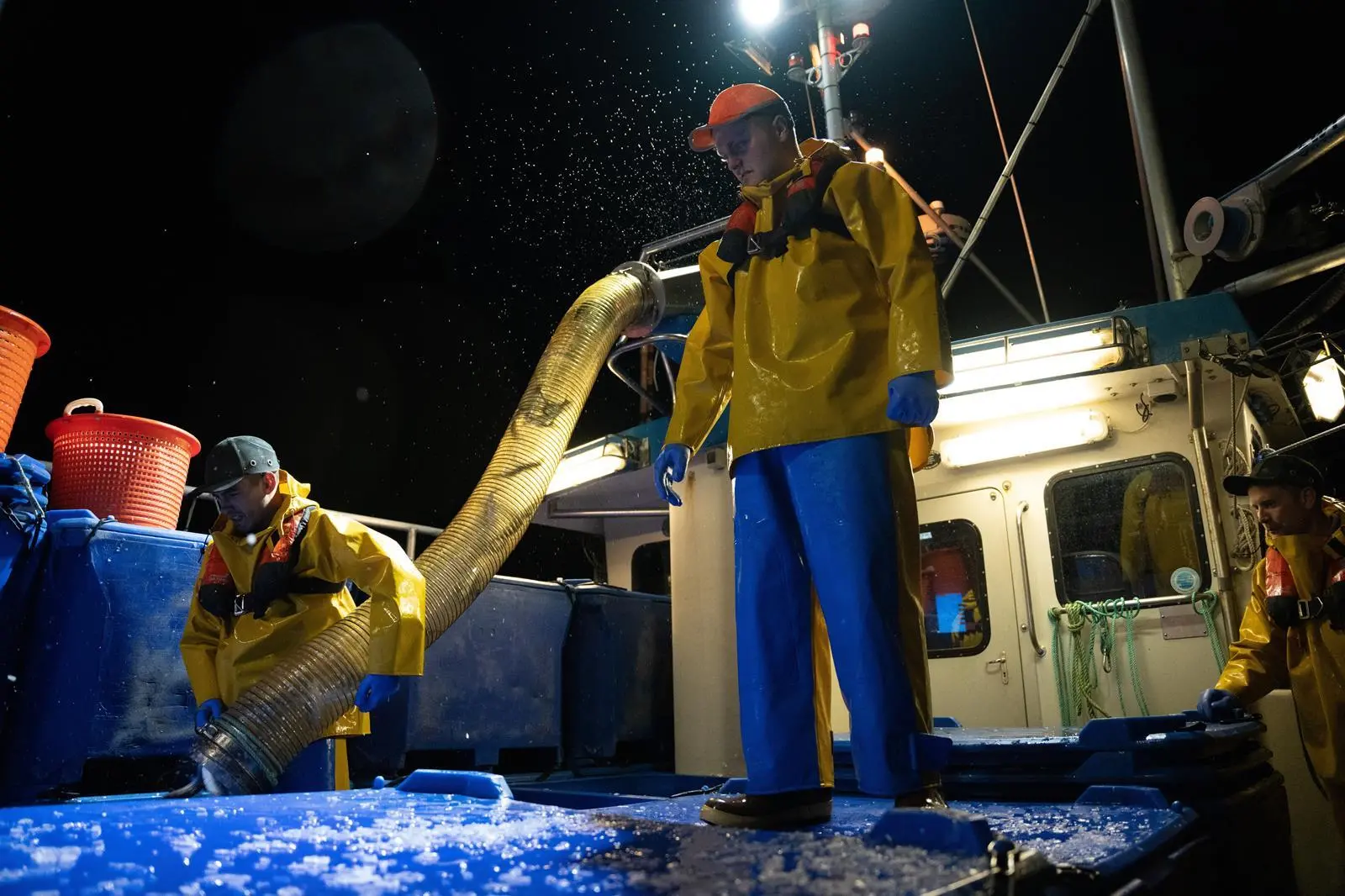
There are lots of fish in the sea and this industry is doing a lot of good things. The sardine fishery, for example, is largely self-managed but every year we’re working very closely with scientists to keep an eye on stock levels. They are coming out with us, together with observers, to look at the fishery on-the-ground. It’s a form of co-management that’s working very well. They work out the biomass and the amount we actually take is minimal in comparison. While it’s not all been plain sailing, with a lot of what we catch going to Europe and then Brexit had its part to play in making exporting difficult, it’s undoubtedly a brilliant success story and it’s a great fishery to be involved in.
Along with Brexit, we’ve had the various challenges brought by the Covid pandemic, and then we’ve had to contend with the fuel and energy crises and the subsequent increases in goods and services costs, while fish price rises have been a lot more modest. I think it’s fair to say there’s a never-ending line of potential problems that could have some effect on our operations, but we have proved to be a very resilient industry.
WF: Tell us about the Youth Board of the Cornish Fish Producers’ Organisation and what it’s hoping to achieve?
TL: The Cornish Fish Producers Organisation is probably one of the largest and most respected POs in the country. It established a Youth Board in 2019 in recognition of the fact that many young people don’t see fishing as a viable career, and that there’s been little educational or financial support to help address this issue. The board is made up of young fishers and people with an interest in the industry, and the aim is to help develop programmes that attract newcomers to the industry and improve staff retention within Cornish fishing. The big thing for us is recruitment. To date, we’ve had quite a few meetings and have been working alongside various people and organisations with the aim of creating pathways for more young people to become part of the industry. We’ve helped create an apprenticeship, with the first apprentices taking the course in South Devon College this year, which is great. The hope is that we can replicate the process down here in Cornwall, perhaps in Falmouth or Cornwall College Camborne. A Youth Network of fishermen has been created with plans to hold events that bring the region’s younger fishers together socially so they can share knowledge and experiences.
I’m also very keen to see fishing included at school careers and recruitment days. I want youngsters to see what I saw from a young age – that it’s a pretty cool job and it’s not all the horrible work that they might have been told it is. I want to encourage them, and an important part of this is making them aware that fishing is more of an umbrella term for a wide variety of occupations and fishing methods. There’s a vast array of different tasks and activities that fishers do, and my advice to anyone that interested in fishing, particularly younger people, is if you think that fishing could be for you and you want to get into the industry, if you don’t enjoy crewing on the first boat or the first catching method you try, don’t give up – try crewing on another first, and another after that because there are so many different facets to this industry.
It’s important to also bear in mind that everyone is different; some people like to go to sea for long periods and become immersed in fishing, while others don’t like to be away from home, preferring to be in their own beds every night. There’s a big difference between inshore and offshore fishing, and with so many jobs out there, I’d be surprised that if you really wanted to go fishing you didn’t find something you like.
In this country, we’re very lucky to have a rich variety of fish and shellfish in abundance off our coast. This means there’s a wide range of fishing boats targeting these species and using different catching methods. There’s also a number of great fishing ports, so if one doesn’t work, there’s plenty more to try. I haven’t tried all the types of fishing that the UK has to offer, but I did find some that I really liked. My advice is, once you’ve got your certificates, give it a good go and don’t be put off too soon. Take your time – you might be lucky and land on the right boat straight away, or it might take a lot longer. The important thing is to keep trying.
WF: What are your plans moving forward?
TL: Will Treneer – skipper of Lyonesse – is building a new ring-netter with my parents which is nearing completion. The plan is that he’ll move to his new boat, and I will revert from being a crewman on Lyonesse to being its new skipper. That’s all going to take place pretty soon, and I’ll need to find my own crew and make the process work. I’m really looking forward to being in the hot seat and the responsibility that comes with it. With that change happening mid-season, it’ll be up to me to try and finish off the season well, and then hopefully hit the ground running next year. I will also continue to fish with My Lass.
From a broader perspective, in the longer term, it would be great to see more young people coming into the industry and for them to be choosing a career in fishing. It’s a good job, and I hope that it continues to be an industry that’s always changing, and being adaptive to the situations that it goes through.
WF: How did the relationship with Xtratuf come about and what are you trying to achieve together?
TL: Social media is ever-growing in its importance and influence everywhere, people run their businesses through it. I use it –Instagram – mainly for fun but also trying to promote where seafood comes from, and showing how I catch the different species using the different methods, through reels and videos. Xtratuf saw this and got in touch. They’re good fun to work with; they send me boots to try out and I give them honest feedback on how they perform. Honestly, I don’t wear anything else now they are great. The relationship works really well; it’s all very light-hearted and it helps promote fishing too as they have a great following. It’s crazy how with just a few hashtags, you end up interacting and sharing experiences with people involved in commercial fishing from many different countries all over the world – that’s something that wasn’t so easy to do years ago.
Related Articles
 PROCESSING & REFRIGERATION
 PROCESSING & REFRIGERATION
 PROCESSING & REFRIGERATION