



Russia puts on a brave face
As Russian leaders switch the national economy to a “besieged fortress” regime, relying more on internal resources, aquaculture has an increasingly important role to play in bolstering the country’s food security.
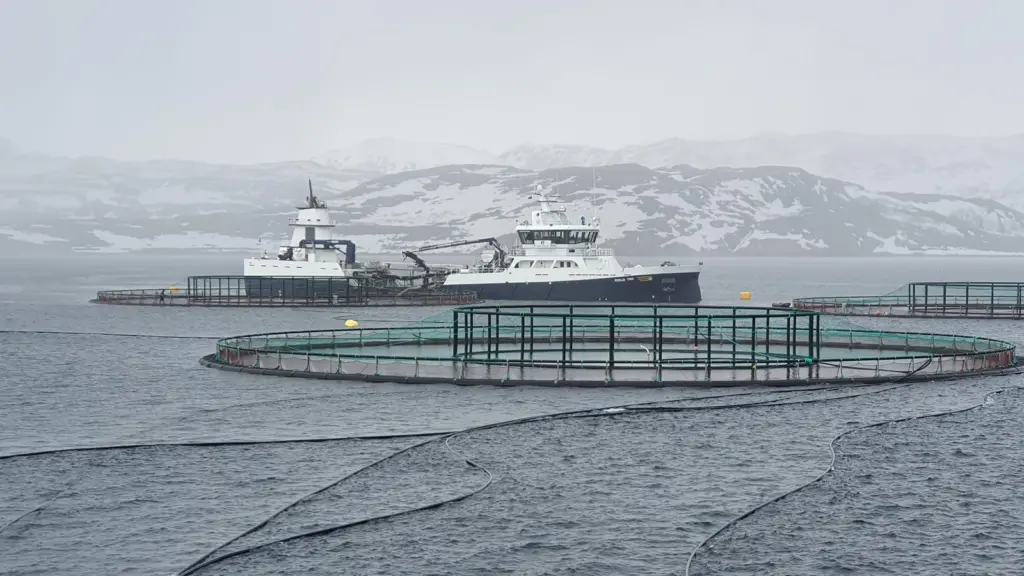
There are big doubts that the industry, which tends to suffer from systemic problems, is ready to cope with this task, however. Over the years, Russian government officials have voiced their satisfaction with aquaculture’s development and continue to give optimistic forecasts when speaking about future prospects. During a recent industry conference, Ilya Shestakov, head of the Russian federal agency for fisheries Rosrybolovstvo, for example, said that “aquaculture currently drives the demand in the Russian fish market”.
Shestakov also outlined the progress being made in developing domestic fish farming science, and cited several new prototype technologies, some of which are advanced enough “to allow Russian citizens to grow seafood in their apartments”.
Russia has nearly doubled its aquaculture production over the past decade, estimates Rosrybolovstvo. And it seems that ongoing crises haven’t derailed this growth trend, as in the first-half of 2022, Russian farms produced 215,600 tonnes of fish, 2.2% more than in the same period of 2021. Overall, seafood production climbed 8.5% in the first-half of this year, with Russian government officials also maintaining that neither the Covid-19 pandemic nor the Russian invasion of Ukraine have hindered the growth of the country’s fish farming industry.
Historical pretence
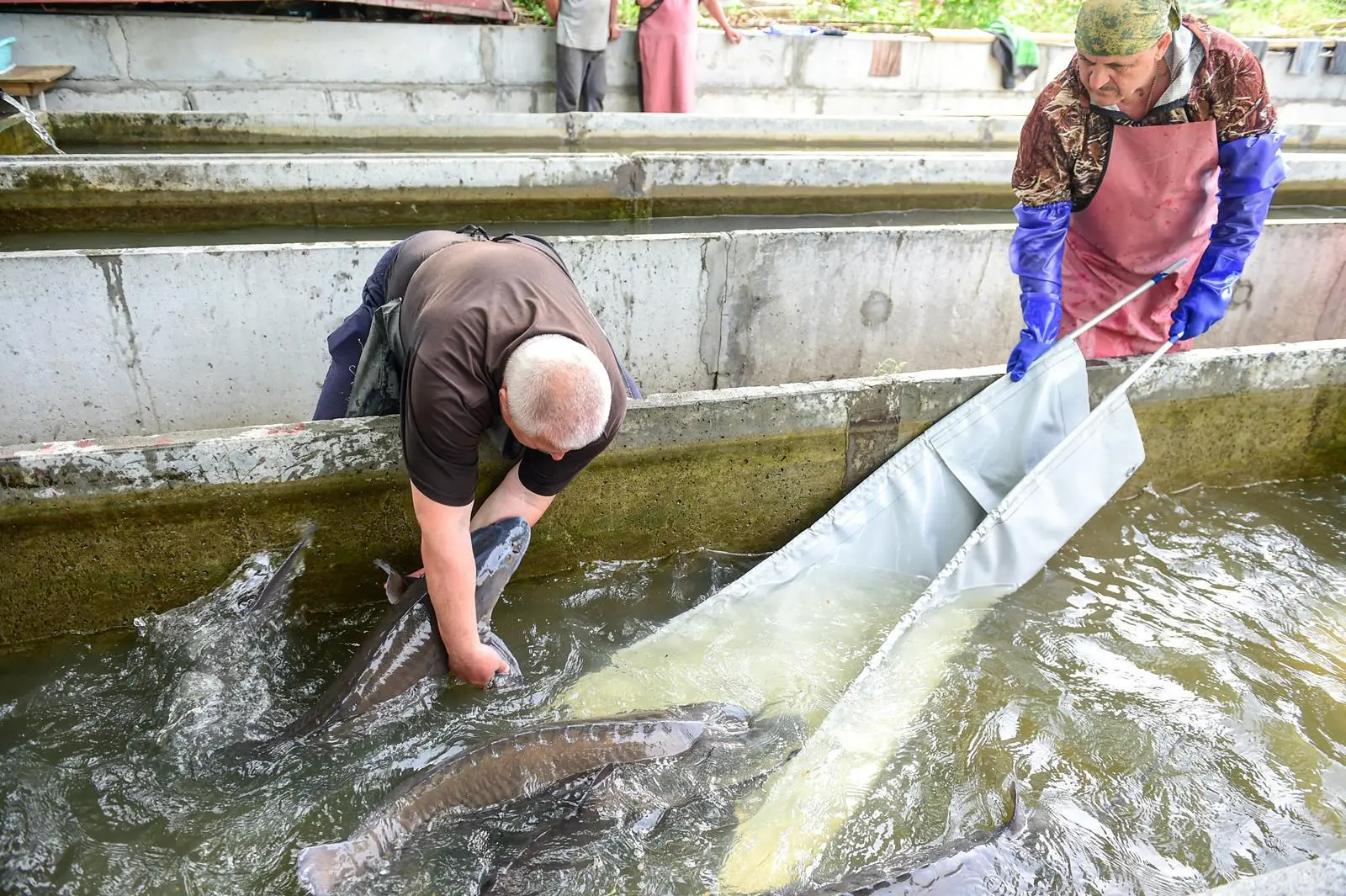
However, closer scrutiny of Russian fish farming indicates that this probably isn’t the actual state of play. There are suspicions that some of the declared production growth of the past few years has been faked by fish farmers who have taken advantage of an imperfect counting system. Indeed, the Russian newspaper Kommersant recently pointed out that the production and sales dynamics in the Russian fish market simply don’t add up.
Last year, Russian fish farmers reported the production of 130,000 tonnes of salmon, while actual sales ranged between 50,000 to 60,000 tonnes, said Herman Zverev, president of the Russian union of fishermen Varpe. To some extent, this could be attributed to “conscious exaggerations”, which are thought to be a fairly common phenomenon in Russia in all fields that are subject to government regulations but which also lack control.
This problem of exaggerations – known as “pripiski” in Russia – traces its roots back to Soviet times when state managers had to beat targets set by their superiors under the command economy system. Quite often, the targets were unrealistic, and managers used pripiski to avoid the consequences of letting the nation down by not fulfilling the state plan.
In the later stages of the Soviet Union’s existence, pripiski created a paradoxical situation in several sectors of the economy. In the 1980s, the union was hit by a shortage of consumer goods, resulting in empty shelves of groceries and trade from under the floor, while statistical data indicated there were sufficient supplies in most areas.
State expectations
Modern Russia is a market economy, but the rationale for exaggerations is similar to before. Rosrybolovstvo allocates a water plot to a farmer under a contract, usually for 25 years, putting forward several conditions. One of the key objectives the farmer must achieve is to gradually ramp up production. In this scenario, all farmers have to report a rise in output in order to keep the water plot under their management.
Some Russian fish farmers have warned that the real production dynamics might be largely unknown – both to government agencies and industry organisations.
As the practice of exaggerations lasts for years, the difference between declared and actual production could be vast. For instance, Roman Vityazev, Chairman of the Far Eastern Union of Mariculture Organisations, said seafood production by local farms officially expanded from 6,900 tonnes in 2016 to 57,000 tonnes in 2021. Meanwhile, sales increased from 1,300 to 2,100 tonnes during this period, with Vityazev conceding that counting is a big problem for the industry.
The Russian market needs order, among other things, because fish caught by poachers could end up on the shelves under the guise of farmed fish, Zverev said.
Rosrybolovtsvo is aware of the problem of exaggerations and is working on a new digital traceability system that will make fish farming more transparent. For the Russian government, this issue has another dimension, as every year, the regional budgets distribute state subsidies between fish farmers, depending on their production performance. The existence of the exaggerations means that farmers may get more subsidies than they deserve.
“Now additional state support for aquaculture investment projects, including subsidies and compensation for part of the costs of building fish farms, has become even more relevant,” said aquaculture expert Inna Golfand.
Golfand explained that Russian fish farmers could replace some products supplies of which to the Russian market are narrowed or halted due to the sanctions.
However, there is no clarity as to when the traceability system is likely to be introduced.
Facing the storm
In the meantime, as Russian businesses are ostracised in the west, fish farmers are learning to live in a new reality, relying only on the domestic market and battling unusual challenges.
In 2022, the lack of imported fish feeds forced Russian fish farmers who have historically relied on imports to scale back their operations, said Elena Moiseeva, head of the Russian consulting firm Fishlab. She estimates that a group of European companies, including BioMar, Skretting and Raisio, all of which pulled out from the country, jointly accounted for nearly 80% of the Russian feed market for valuable fish species.
Russian farmers also reportedly experience problems with sourcing broodstock. The lack of fish feed further worsens this challenge.
“We face a big problem: fish feed. All imported fish feed is banned; there are no supplies at all. We used Danish and Finnish feeds and now have to search for alternative options.” said Leonid Mikhalchik, director of the Baikal branch of Gravrybvod, a state-owned company managing most hatcheries in the country.
Mikhalchik disclosed that Gravrybvod managed to collect fish feed from all available sources in Russia. However, the current stocks would only be enough to maintain production until the end of the year. After that, Russian hatcheries could see their operations disrupted.
Lost revenues
Although things remain challenging for fish farmers across the board, some find themselves in somewhat worse predicaments. Among these, fish businesses in the Azov-Black Sea basin, the key Russian mariculture production area, has felt the most severe impact of the Ukraine war.
In the first-half of 2022, wild fish catches in the region dropped by 36.8% as the Russian authorities closed the key fishing areas to civil vessels. The cost of the lack of catches for Crimea fishing companies has run into the millions, said Valery Sivochub, president of the fish business association of Crimea and Sevastopol, who warned that some operations might now be bracing for bankruptcy.
Both fishermen and fish farmers scrambled to source the necessary equipment and raw materials they used to import from Western countries.
“Some items are no longer available, so we are forced to look for replacements. The delivery time of imported spare parts and raw materials has increased [dramatically],” Sivochub said.
Over the past few years, the southern basin experienced a steady growth in mariculture production, primarily oysters and mussels. The current crisis, however, could ruin this.
“The first problem Russian aquaculture producers faced after the beginning of the special military operation was the inability to service their farms due to a ban on going out to the sea,” said Sergey Grishchenko, head of the Crimean Aquaculture Association, who also complained that the rising military activity in the region impacted some farms.
Russian warships entered the territory of two Crimean farms growing shellfish and damaged the lines of hydro-biotechnical structures, causing losses close to 80 million rubles (US$1.3 million), Grishchenko disclosed.
On the brink
Still, the physical damage to some production assets is seen only as a slight inconvenience when compared to the financial difficulties Crimean fish farmers have had to face. Currently, 90% of oyster farms in the peninsula are in a dire financial shape.
Many of them are underdeveloped and financially exhausted, Grishchenko said, who added that urgent state aid is required so that the Crimean oysters don’t disappear completely.
Since the beginning of the Ukraine war, Russian authorities have shut down all Crimean airports, depriving local oyster farmers of their main sales channel. For the past few years, restaurants in wealthy Moscow and St Petersburg have remained the primary buyers of Crimean shellfish, but as supplies of fresh seafood by air have become impossible, supplies were put on a halt.
As the end of the conflict in Ukraine is nowhere in sight, the future of the Russian fish farming industry remains extremely vague. Additionally, the long-term outlook for the Russian economy remains grim; the population’s purchasing power is nosediving, and some of the most painful Western sanctions have not come into effect. Collectively, these factors present nothing positive for Russian aquaculture.