


Arctic char – niche species ready to go mainstream
There are ambitious plans to bring what is currently a niche farmed species to greater prominence as Arctic char production is about to be stepped up by Norwegian Fish Farms working with seafood producer Babord Group.
Only a few hundred tonnes of Arctic char are produced in Norway every year by a handful of producers, plus there is also modest production in Sweden, Austria and Canada, while easily the largest producer of this species is Iceland.
“Worldwide production is around 10,000 tonnes, and more than half of that comes from Iceland,” explained Laetitia Pipaluk Rosing of Babord Group, which teamed up almost three years ago with Norwegian Fish Farms to bring this overlooked species to new markets.
The Norwegian Fish Farms facility is located high in the mountains where there is a supply of pure groundwater at the right temperature, and a highly resilient broodstock has been sourced from a lake more than a thousand metres above sea level. The company aims to produce 1,500 to 2,000 tonnes of Arctic char annually to begin with, gradually ramping up production to its 34,000 tonne long-term target.
“This is a fish that represents something different to species such as salmon or trout. It’s a smaller fish, still a salmonoid. We decided to go into this venture with Norwegian Fish Farms because they presented a really high-quality product – definitely premium quality. Plus they have very interesting plans for expansion,” Laetitia Rosing said.
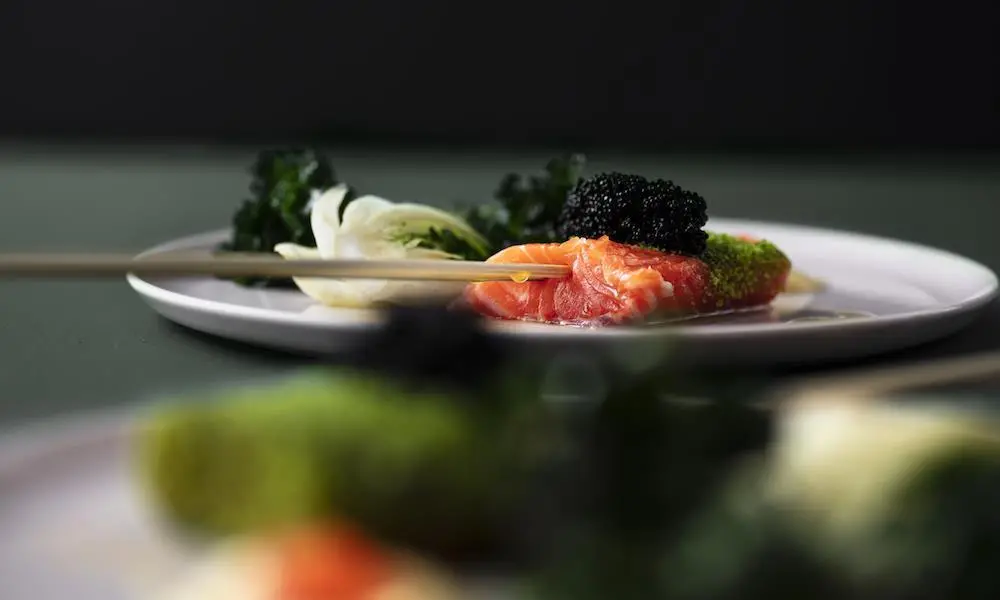
“The texture is much more like a wild fish than a farmed fish, so there is very firm yet juicy texture, and the taste is quite different from salmon. It’s milder and it’s subtle, and doesn’t have the oily or bitter aftertaste that you can often have from salmon. It’s a fantastic fish in all respects, and with a great potential to develop, both for products for retail and also for the restaurant market because this is not a salmon and in my opinion it should not be sold as a salmon,” she said.
Different and new
“Given the scarcity of it, this should definitely be sold as a high-end product, but something that can also be developed for more mainstream markets with better volumes coming into production. The market is ready for a new alternative to salmon and trout. We see interest in new farmed species, and what is also important is the sustainability of it. Norwegian Fish Farms produce according to sustainable principles, and it’s a very important point when we speak about aquaculture that it has to be sustainable. We cannot do it any other way. So this aspect also makes it very interesting.”
Babord took the decision to accept Norwegian Fish Farms’ Arctic char as one of its special products and to develop this into retail and also for some of its customers who are looking for something different and new.
“I think Arctic char has those qualities,” she said, adding that this species is easily processable, but sizes are different to what we are used to seeing with salmon.
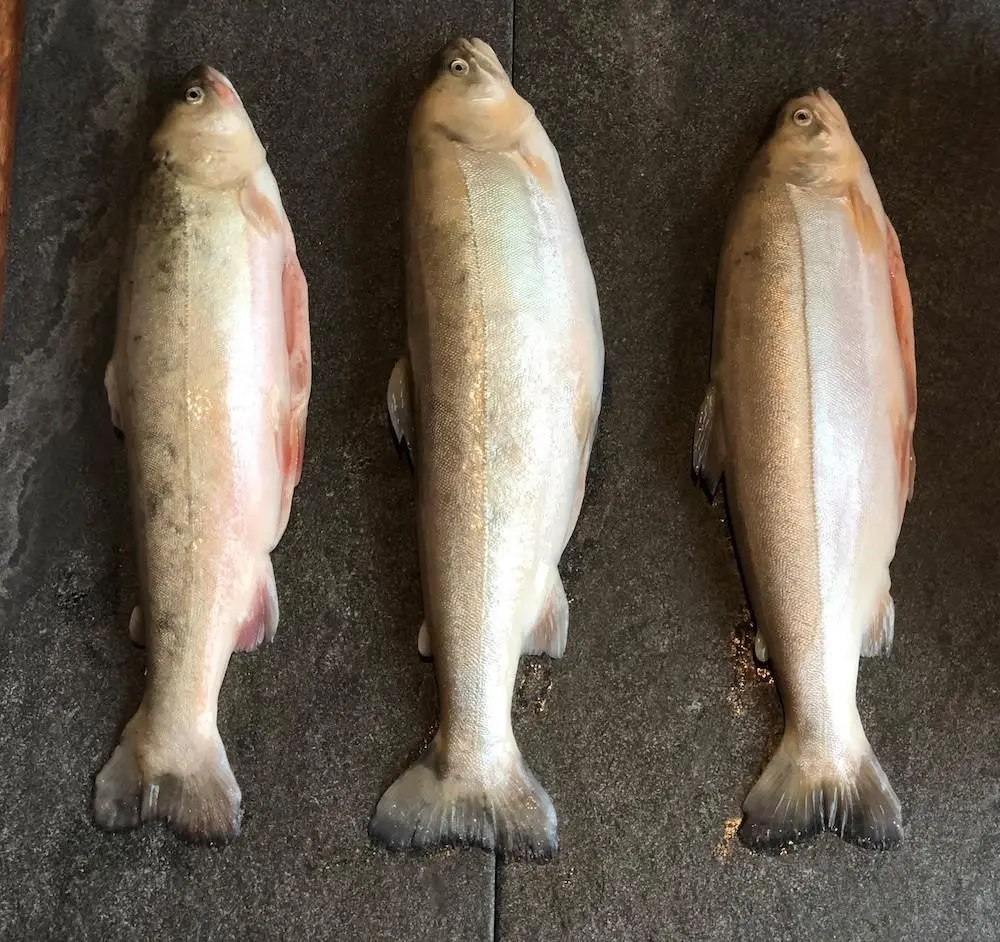
Arctic char are ready for slaughter at between one and two years and at a weight of 1000 to 1500 grammes.
“We usually take it out at around 1 to 1.20kg, but the size is the main difference between char and salmon, so it’s not possible to make retail portions in the same way, but you can definitely produce portions. You can produce good fillets of 400-500 grammes from the biggest fish, which can be used to make retail portions or restaurant portions. It’s easily processable and the pinbones are extracted quite easily two or three days after slaughter. So definitely not a problem to process.”

Arctic char is a species that is unusually well suited to being farmed, which brings with it a number of benefits.
“This is a robust fish that seems to actually like to be farmed, which is something quite special. Compared to salmon, it likes to be dense and prefers to be in close contact, so you can have more fish per cubic metre than you can with salmon,” Laetitia Pipaluk Rosing said.
Norwegian Fish Farms are preparing to produce 1500-2000 tonnes over the next few years, working with an easily upscaled modular production model, providing a flexible operating pattern that allows relatively rapid response to changing markets and demand.
“They can tailor production so there isn’t suddenly a lot of fish for which there is no market, so they can scale up gradually as the market grows. It’s important to not grow too fast as we build the right strategies and find the right customers who are prepared to pay a premium for a premium fish.”
In the meantime, Babord is working with a retailer in Norway to get Arctic char onto the shelves within the next few months, as well as working on plans to introduce it to areas of export markets that are looking for something new and different in a sustainably farmed species.
“This is realistic and consumers in Europe could be able to buy Norwegian farmed Arctic char very soon,” she said.