


European consumers are increasingly open to incorporating seafood sidestream products into their diets, according to new research conducted for Hailia.
The findings suggest that a long-standing barrier to adoption, consumer acceptance, is beginning to diminish, creating new opportunities for seafood processors and food manufacturers to transform underutilised raw materials into value-added products.

The survey, carried out by Consumer Compass in March 2026, gathered responses from 1,512 participants across the UK, Sweden, and Germany. Results indicate broadly positive sentiment, with 58% of Swedish respondents and 55% of UK respondents viewing sidestream-based food products favourably. Germany followed with 49%, while only 19% of respondents across all markets expressed negative views.
Support is strongest among younger, urban and highly educated consumers, although the study found relatively consistent attitudes across demographic groups. Many respondents identified ready meals, workplace catering and quick-service dining as natural entry points for these products. A notable 59% expressed a positive attitude towards sidestream-based options in lunch catering, highlighting strong potential in institutional food service channels.
Consumers cited several benefits, including improved access to protein, increased convenience in consuming fish, and the environmental advantages of using more of each fish. While some concerns remain around perceptions of processing, the production methods align with familiar food preparation techniques such as refining, mixing and cooking, similar to widely accepted everyday foods.
Transparency key to building trust
Hailia chief executive, Michaela Lindström told World Fishing & Aquaculture that transparency is central to building consumer trust and understanding. “In our case, we are fully transparent in labelling,” she said.
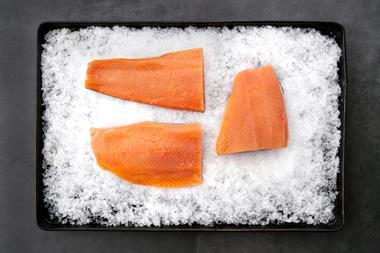
“For example, we state that a product is made from Norwegian salmon, rather than filet. To make it clear that we are using more of the fish than just the fillet. The raw material comes from parts that remain after filleting, such as frames including the tail and other off-cuts.
“These are not to be treated as low value sidestreams or waste, as it is valuable food-grade raw material that has traditionally been underutilised. In our process, these sidestreams are classified as food as long as they are handled within the food production chain and meet the same hygiene standards as fillets.”
The research also points to a shift in how adoption is likely to occur. Rather than relying on consumers to actively change purchasing habits, industry players are expected to drive uptake by incorporating sidestream ingredients into existing food formats.
Lindström said the transition will be led by processors and food service providers rather than individuals. “We believe the real driver of change is not the consumer itself. The shift will be led by the industry, seafood processors, the food industry and industrial kitchens, food service, restaurants,” she continued.
“Processors are under increasing pressure to improve yield and profitability, and at the same time, food industry players are looking for more cost-efficient raw materials that help them meet climate targets. Food service has a strong track record of adopting new ingredients first, because the decisions are made by professionals, not individual consumers.
“Once products made of sidestreams are part of a ready meal or dish, the consumer accepts the meal without needing to change their behaviour. The conclusion is that the responsibility sits with the industry.”
Commercial benefits
For seafood processors, the implications extend beyond sustainability into commercial performance. Sidestream use offers a pathway to improved margins, expanded product portfolios and increased competitiveness.
Lindström said the business case is clear. “This is a great opportunity for seafood processors who understand that there is significant value in sidestreams,” she said.
“By turning them into food, they can unlock entirely new revenue streams from the raw materials already in their factory. Instead of selling this to third parties, they can upcycle it themselves into products, broadening their portfolio and creating products with different price points.”
Across all three studied markets, respondents emphasised slightly different priorities. German consumers highlighted innovation, food quality and transparency, while Swedish respondents focused on circularity and climate impact. In the UK, practical applications and the role of fish as a protein source were most prominent.
Taken together, the findings indicate that sidestream-based products are moving closer to mainstream adoption, supported by favourable consumer attitudes and strong alignment with industry needs for sustainability, efficiency and growth.