




Sulphide levels: Better monitoring
An environmental monitoring tool that measures sulphide levels in sediment is expected to show great promise on Scottish fish farms.
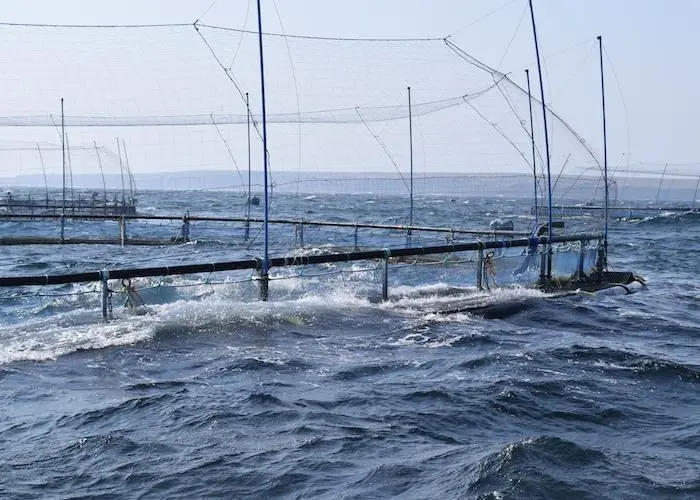
As the world’s fastest-growing source of food, the output of aquaculture is likely to double by 2050. With this in mind, increased technological development and the industry’s desire to lessen its environmental impact have resulted in vast improvements and opportunities for farms to develop sustainably. Now, a project called Novel Approach to Monitoring Aquaculture Impacts (NAMAQI) is underway to help the Scottish aquaculture industry understand its impacts on the marine environment more quickly and cheaply.
With funding from the Scottish Aquaculture Innovation Centre (SAIC), salmon producer Cooke Aquaculture and the Scottish Association for Marine Science (SAMS) are working at six fish farms in Scotland and Canada to examine how sulphide levels on the seabed could help track the benthic impacts of fish farms.
“The deposition of organic material such as waste from fish farms onto marine sediments leads to changes in the chemistry,” said Dr. Clive Fox, an ecologist at SAMS.
“We decided to develop this project because although measuring sulphide levels in sediment is already being done in several countries, including our partners in Canada, it’s not happening routinely on fish farms in Scotland.”
High sulphide levels in sediment usually indicate that the sediment is becoming anaerobic and over-enriched with organic material. The levels of sulphide are measured with the use of an ion-selective electrode (ISE), which is sensitive to the sulphide ion. This results in an electrical signal that can be compared with a calibration curve to indicate the levels of sulphide present. All data from the project will be made available as a report on the SAIC website.
Monitoring the benthic impacts of fish farms currently involves counting the organisms in sediment samples. This procedure is known as infaunal analysis and produces an index called the Infaunal Quality Index (IQI). However, because the process is slow, farm managers can only receive the results several weeks after the samples have been collected.
According to Clive Fox, measuring sulphide levels in sediment may be much quicker than infaunal analyses, but it will not replace the need to measure IQI directly. Rather, it may provide a useful additional measurement that may offer managers a quick indication of whether problems are developing on their sites.
“We hope that it will act as a quick warning indicator,” he said.
“Having additional information on sediment condition can also help explain any unexpected results that appear in the infaunal analyses.”
Sulphide measurements have been used in many studies of marine sediments and in several other countries to analyse the footprint of fish farms, but have not been adopted as a tool in Scottish aquaculture. One reason for this is that the measurements must be made on fresh samples. As samples cannot be frozen, some staff training on the farms would be required for the analyses to go ahead. SEPA will also soon require a greater number of samples to be collected at farm sites, which will increase costs and time required.
“eDNA toolkits are also being heralded as a potential alternative to infaunal analyses. But research into this is still in the early stages and actual application is probably some years off.”
In future, sulphide levels will be measured alongside other criteria at a number of Scottish farm sites. Results will then be compared with IQI data to determine whether they are able to predict and detect any problematic locations. Data from a large number of sites covering a range of conditions will also be required to establish relationships between sulphide levels and the IQI results.
SAMS is also due to host a joint Scottish-Canadian workshop next spring to consider the use of sulphide measurements in the regulation of fish farms, and a longer follow-on study across a larger range of sites will then be envisaged if Scottish regulators and the Scottish salmon industry feel that sulphide measurements have potential.
“The main way in which fish farmers and the aquaculture industry will benefit from all this depends on whether relationships between sulphide levels and IQI can be established,” Clive Fox said. “If they can, the sulphide measurements will give managers an additional tool to quickly assess conditions at their sites.”
According to SAIC, the sulphide measurement project builds on initiatives previously supported by SAIC that aim to help aquaculture become more sustainable. It is hoped that the project will also contribute to aquaculture’s goal of sustainably doubling its economic contribution by 2030.
“There is intense public pressure for fish farms to be rigorously monitored, and this is also important for the Scottish industry to maintain its reputation for producing premium-brand products,” Clive Fox concluded.
“A range of new tools, approaches and techniques will be required to help the industry deliver robust site monitoring while moving towards this growth target.”