



Russia’s crab industry continues to thrive
Russia typically produces around 100,000 tonnes of crab each year. This catch has always been one of the most profitable segments of the country’s fisheries sector, with volumes mainly oriented towards export markets. Prior to Russia’s invasion of Ukraine on 24 February 2022, most of the Russian crab supply went to Western markets, primarily the European Union and the United States. Following the closure of these markets – brought by trade sanctions in response to Russia’s actions, a lot of these exports have been re-directed to Asia Pacific states.
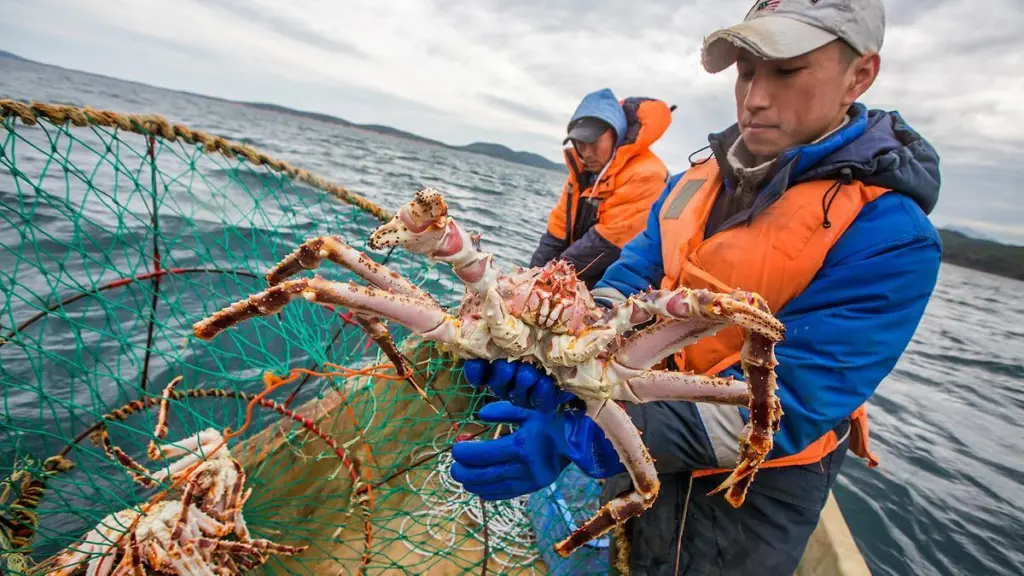
The trade switch has allowed Russian crab producers to stay afloat and to keep their revenues largely on par with previous levels. Furthermore, following this successful transition, some of the leading players have announced investment plans, amounting to about RUB 224 billion (US$ 2.4 billion), that will mainly be used for a complete renewal of crab fishing fleet and the establishment of new processing infrastructure.
Russian Minister for the Development of the Far East and Arctic Alexey Chekunkov confirmed: “We are talking about almost a complete modernisation of the crab fishing fleet and coastal infrastructure. And as a result, that will lead to an increase in availability of crab products in the domestic market and lower prices for them.”
The expectation is that in volume terms, the crab catch will remain at the current level for the time being, but this may be revised at a later date.
According to recent statements from Ilya Shestakov, head of the Russian Federal Agency of Fisheries (Rosrybolovstvo), Russia’s crab stock varies depending on the fishing zone, but the overall total allowable catch at present is estimated at about 105,000 tonnes.
However, in recent years, actual catch volumes have declined. This, observers say, is mainly due to increased poaching activities in the Russian Far East.
Shestakov said there are plans to compensate for this decline by having fishing vessels start to target crab species that have not previously been caught on an industrial scale in Russia. Additionally, there will be increased catches of deepsea crab species, mainly the angulatus snow crab and red snow crab.
Lost markets
Before the introduction of the sanctions against Russia, the US market would typically consume about 15,000 tonnes of Russian crab annually, primarily these would be products caught in the Northern basin. With the diversion of crab to Asia Pacific region (mainly frozen products), a lot of attention is being given to the prices being paid for these exports, with observers noting the price of Russian crab in the global market has been on a declining trend.
According to All-Russian Association of Fish Producers (VARPE) data, in the first-half of 2023, the price of frozen crab fell by 45%, to $12,650 per tonne, and prices for live crab in the same period were 10% lower at $34,508 per tonne.
Fish Union Director Alexander Fomin told Forbes Russia magazine that prior to 24 February 2024, Russia would sell crabs to the United States at a price of $40 per kg, but now, due to sanctions wars, producers are forced to sell them to third-countries at a lower price.
The products then go to the United States anyway, he said.
Asian opportunities
Alongside the fleet investment plans, the Russian crab market is undergoing a process of transformation and consolidation. This will see most of rights for the crab catch distributed among the leading local players.
For example, the second stage of crab auctions in Russia – conducted in October 2023 and involving the distribution of 50% of the quotas – brought almost RUB 200 billion ($2.2 billion) to the state budget. Among the large players acquiring the majority of quotas were the Russian Crab Group of Companies, as well as the Antey Group of Companies and the DV Rybak Management Company and Sberbank.
According to Fomin, while the current situation may look difficult, crab remains one of Russia’s most profitable sea resources, with catches usually requiring low fishing costs when compared to the sales revenues generated.
He also highlighted that alongside catches that are processed and frozen and which can be stored for up to a year, there’s now significant live crab supplies going to both the Chinese and South Korean markets.
Meanwhile, Alexander Sapozhnikov, General Director of Russian Crab, one of Russia’s largest crab producers, told the Russian Vedomosti business paper that after the closure of the US market, an additional 60,000 tonnes of boiled and frozen crab entered the Chinese market, which previously went to the States and this was sold at a price of at least $20 per kg. Now it is priced at $8–8.50 per kg.
Sapozhnikov also insisted the re-exporting of Russian crab to the US market is impossible as the raw materials are traceable.
“The last Russian crab was exported to the United States in June 2022. There were enthusiasts who tried to break through this barrier, but no one succeeded. The US has a very clear tracking system and initiate criminal cases in case of illegal supplies,” Sapozhnikov said.
Consequently, there’s high hopes for increased sales of live crab to China across Russia’s crab sector. The sector saw prices hold steady in 2023 after the decreases of 2022 in both the live and frozen product categories, and at the time of writing, Russian live crab was still being sold to China at around $24–25 per kg.
It’s also believed that Japan has more potential, with demand especially good for raw frozen crab.
As for domestic market, the demand for crab remains low, with the majority of customers provided by HoReCa channels in Moscow and St Petersburg. Those local market needs are usually fully met by producers from the Northern Basin.