


From next summer, a comprehensive overhaul to Seafish’s Responsible Fishing Scheme will extend beyond the quayside with the inclusion of chain of custody for both traceability and quality.
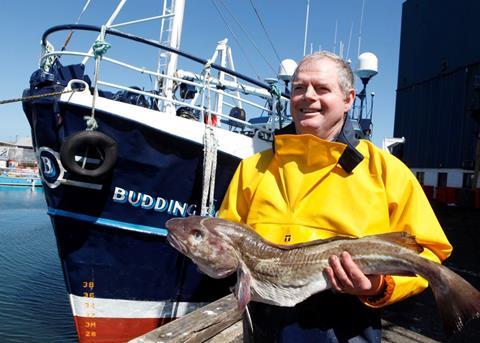
UK seafood authority Seafish expects to launch its fully updated Responsible Fishing Scheme (RFS) next summer - on completion of a lengthy remodelling process.
Originally introduced in 2006 in order that supply chains could demonstrate they were buying from vessels that were adhering to best practice, the RFS currently has around 400 UK fishing vessels certified to the B2B scheme with a further 620 engaged in the process.
Despite such a strong take-up by the fishing industry, it recently came close to being scrapped with the feeling within Seafish that the scheme had lost its way and was perhaps not fit for purpose. However, lengthy discussions with the seafood industry confirmed there was value in acknowledging individual vessels that were taking responsibility for their behaviour through such a certification programme.
A subsequent review process, that began in 2012 and ran through to October 2013, concluded that modifications to the RFS would be of benefit. But particular areas that stakeholders felt needed strengthening were marketing, vessel auditing and social and ethical impacts. A request also came from retailers to look at rolling out the scheme on an international level.
To better reflect the industry, the RFS will be upgraded to international ISO standards. At the same time, the scheme will become Seafish’s own standard and will also include chain of custody for quality as well as traceability.
Dr Tom Pickerell, technical director at Seafish, tells WF&A that the chain of custody standard was requested to provide the ability to distinguish RFS-caught fish from non-RFS-caught fish.
“As ‘treating fish as food’ is a core component of the new RFS, the means to maintain quality through the supply chain, from boat to consumer, was seen as a highly desirable addition,” says Dr Pickerell.
“Some fishermen have made comments in the past about quality fish they have landed that the buyer then spoils by letting it sit around on the dock in the sunshine or mishandling it in transit. This can tarnish the reputation of the vessel, despite the hard work put in to ensure a quality catch for the market.”
Revised objective
In July this year, Phase 1 of the RFS modification was completed with an Oversight Board agreeing on a new vision and proposing a revised standard. The overall revised objective is: “The Responsible Fishing Scheme will promote a responsible fishing industry assuring good practice from sea to quayside and contribute to its long term viability.”
Seafish says that underpinning this commitment will be five core values:
- Crew safety, health and welfare (reduce accidents, injuries and fatalities)
- Crew training/professional development (improve skills, knowledge and understanding; raise standards and open up new opportunities)
- The legality of the vessel applicant (demonstrate due diligence and compliance)
- Treating fish as food (focus on the supply of safe, high-quality, wholesome products with known provenance)
- Care for the environment (responsible behaviour)
According to Seafish, the review process highlighted the need for different requirements for multiple crew vessels and single-handed vessels, therefore two RFS standards have been proposed to ensure all vessels have the opportunity to meet the new requirements.
The vessel plus the skipper shall be the unit of certification for both standards within the RFS programme.
“RFS allows certified vessels to demonstrate their compliance with good practice, opening up the potential to access markets which are seeking such standards,” says Dr Pickerell.
“Our aim is to have 1,000 vessels signed up by 2018, both UK-registered and foreign-registered boats which supply the UK market.”
Public consultation
In order to ensure the revised standard meets the needs of the UK seafood industry, the draft standards are now available to view as part of a 60-day public consultation process that is running from 28 July to 25 September. This is an opportunity for anyone in industry to provide feedback on the standards and shape the modified RFS into a robust, internationally recognised standard, says the authority.
All feedback will be reviewed by the Oversight Board and the final standards will be agreed and available to view by early November, at which point the standards will go forward for ISO 17065 accreditation, which specifies the requirements for bodies certifying products, processes and services.
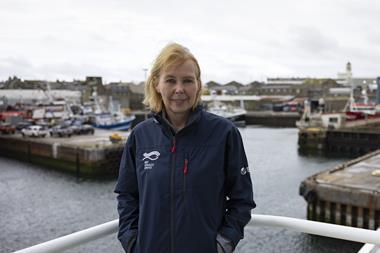
ISO 17065 recognition will facilitate the international use of the RFS, confirms Dr Pickerell. And already Seafish’s RFS champion – Head of Advocacy Libby Woodhatch – is liaising with a number of overseas organisations. She will also be promoting RFS at the Global Aquaculture Alliance’s GOAL 2014 conference in Vietnam in October and then potentially at the Seafood Summit in New Orleans in February 2015.
“We have had interest from a number of regions,” says Dr Pickerell. “The key driver is the ability of RFS to demonstrate that health and safety, and ethical considerations have been addressed.”
He says Seafish’s confidence that the RFS will be adopted internationally was further underpinned by discussions at the recent Seafood Ethics Working Group. At this meeting, existing schemes that could address ethical issues were assessed, including processing and farming standards. However, it was decided that RFS is the only scheme that could address the current gap of what happens onboard vessels.
Retailer support
UK retailer Morrisons is fully behind the RFS revamp. Along with its competitors, the supermarket chain began sourcing from the scheme where available in 2009. Three years later, upon reviewing its buying policy, it came to the conclusion that RFS was the best opportunity for fishing vessels to demonstrate good practice and for others to show improvement.
Morrisons subsequently announced a commitment to only buy UK landed fish from vessels registered to the programme that will come into effect on 31 October this year, explains Huw Thomas, fisheries and aquaculture manager for the company,
“We are now waiting for the new RFS standard to be ratified and adopted by other UK users and then the next big step for us is to see it taken internationally. We have already started engaging industry groups around the world,” says Mr Thomas.
By 2020, Morrisons wants to have every vessel in its global supply chain certified to RFS standards or equivalent, he says, adding that the level of interest in RFS from overseas partners has taken a noticeable upturn in the wake of the recent stories about slavery in the Thai shrimp feed industry.
Seafish expects to appoint a certification body that will manage the scheme and undertake audits this month. It will also commence the ISO 17065 upgrade of the RFS standard with a view to launching in June or July 2015.