


European Court of Auditors: EU aquaculture ‘stagnating’
Although the framework for promoting the sustainable development of aquaculture in EU member states has improved, the substantially increased funding has not yielded tangible results. In fact, production seems to be at a standstill, warns a special report published by the European Court of Auditors (ECA).
Expected to contribute to discussions impacting EU aquaculture policy, including the evaluation of the European Maritime, Fisheries and Aquaculture Fund (EMFAF) planned for 2024 and also a 2025 assessment of the progress made in implementing the EU strategic guidelines for aquaculture, ECA’s “EU Aquaculture Policy” report acknowledges that aquaculture is an important element of the EU’s Blue Economy strategy and a contributor to food security. It also notes that it’s promoted by the European Green Deal as a source of protein with a lower carbon footprint and that the sustainable development of the sector – in environmental, economic and social terms – is one of the main objectives of the Common Fisheries Policy (CFP).
With €1.2 billion-worth of support allocated from the European Maritime and Fisheries Fund (EMFF) in the period 2014-2020 and €1 billion from its EMFAF successor for 2021-2027, the EU wants to secure the long-term environmental sustainability of aquaculture, and also to achieve economic, social and employment benefits.
“Aquaculture is an important element of the European blue economy and can be a sustainable source of protein with a lower carbon footprint,” said Nikolaos Milionis, the ECA member who led the audit. “While we saw some improvements in the EU strategic framework [in the 2014-2020 period]. However, despite the large increase in available funds, the sector has seen little growth.”
Furthermore, there’s a lack of reliable indicators to assess sustainability or the performance of EU funds, Milionis said.
Overfunded
According to the report, the amount of funding allocated exclusively to aquaculture for 2014-2020 was more than three times the total €350 million spent in 2007-2013. It attributes the increase in available funding in the later period to the European Commission and some member states having a stronger focus on aquaculture, as well as market demand and the pressure on wild fish stocks.
But Milionis said, “We would have expected quantified analysis demonstrating the need for such a large increase, but neither the Commission nor the member states have carried out such an analysis. This amount may have been more than was necessary.”
Indeed, the auditors say there’s reason to believe that too much EU money was put on the table as a large part of it has not been used, and member states may not be able to spend all available funding by 2023, which is the deadline for expenditure to be considered eligible.
ECA said a side-effect of this is that, in practice, with “not very strict” criteria used to select projects, EU countries financed almost everything, irrespective of their expected contribution to the EU’s objectives for aquaculture, whereas a more targeted hook-and-line approach might have yielded a bigger catch.
Despite the €1.2 billion made available for 2014-2020, the auditors noted the overall EU aquaculture production has flatlined.
“It is stagnating,” Milionis said, adding that in Italy and France – two of the largest producers –– it has decreased, while the other member states evaluated only made “limited progress”.
Data-poor
ECA said the socio-economic indicators also don’t look promising, with the number of aquaculture businesses engaged in production fluctuating at around the 15,000-mark and declining, and employment in the sector falling from around 40,000 full-time-equivalents (FTEs) to around 35,000 FTEs between 2014 and 2020.
The audit also highlighted weaknesses in the monitoring system. Auditors were unable to find a single set of indicators allowing them to assess the environmental sustainability of the sector, despite this being one of the main objectives of EU policy. They also said the data currently reported on the achievements of EU funds is even more worrying – that it’s neither consistent nor reliable, with clearly overstated results, triple-counted values, and figures that fluctuate depending on the reporting system selected.
As a result, the auditors could not determine the EU funds’ contribution to the aquaculture sector’s environmental and social sustainability or to its competitiveness.
“While member states’ national plans were overall consistent with the Commission’s strategic guidelines, some key national strategies did not take aquaculture into account properly. In particular, they did not always address the potential environmental impacts of aquaculture and bottlenecks to its development,” Milionis said. “Almost 10 years after our previous report on aquaculture, and despite some improvements, we continue to find that member states’ licensing and planning procedures are [hindering] growth.”
He added: “To know how green EU aquaculture really is, we need better data.”
According to ECA’s report, while aquaculture is one of the world’s fastest growing food sectors, EU aquaculture accounted for less than 1% of global aquaculture production, while imported seafood products – wild-caught and farmed – represented more than 60% of the region’s seafood supply.
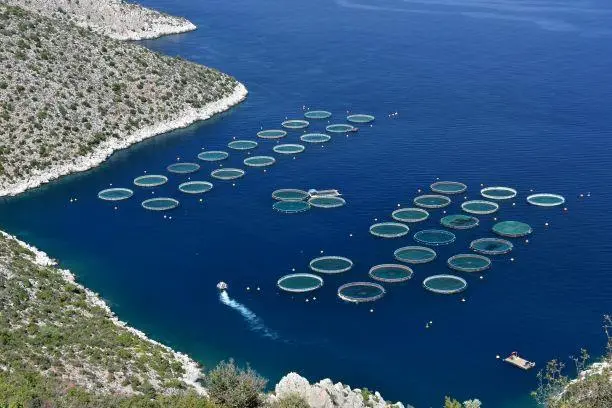
In volume and value terms, EU aquaculture in 2020 amounted to 1.1 million tonnes, with this production worth €3.6 billion. In volume terms, the main species farmed in the EU were mussels (37% share), rainbow trout (17%), seabream (9%), oysters (9%), seabass (7%) and carp (7%). The main producing countries were Spain, France, Greece and Italy.
ECA advised the main obstacles to growth continue to be the administrative burdens associated with aquaculture licensing, environmental opposition, and access to water – including conflicts of interest with some member states still not having adopted complete maritime spatial planning policies at the time of the audit.
Against this backdrop, the body is recommending the European Commission supports member states in addressing obstacles hindering the sustainable development of aquaculture; that it improves the targeting of EU funds; and enhances the monitoring of the performance of EU funding and of environmental sustainability.